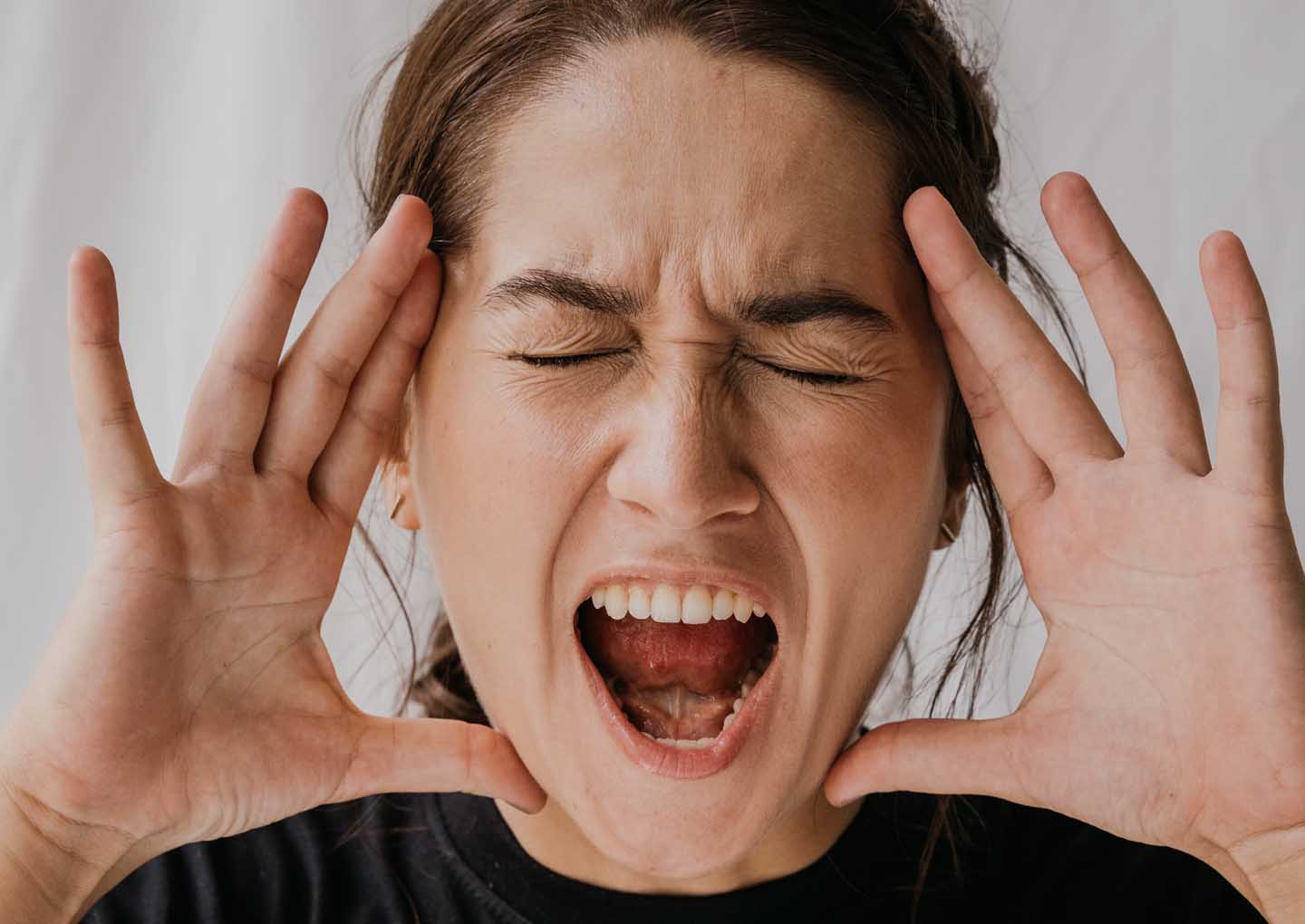
One day, I was riding in a subway train. The train was packed and I was sitting in the chair next to the window, when the train suddenly stopped in a way that when I looked at the window I saw a wall, nothing more. It came to my mind what could happen to people with panic disorder and phobias. I thought, if such a person would be here now and looking out the window, and saw this wall with a full train, so that on one side there are a lot of people wanting to get out, and on the other side a window of the train that doesn’t open, a wall, the person starts to think about it and let his fearful thoughts take over her mind, thinking that there would be no way out, that there could be shortness of breath for everyone, because the train was full, and it would be impossible to get out of there, in addition to other tragic thoughts, the panic attack would probably be triggered in this person. What we think about most, we become, even if what the thoughts are suggesting is not true. The quality of our thoughts influence what we feel.
What is a Panic Disorder?
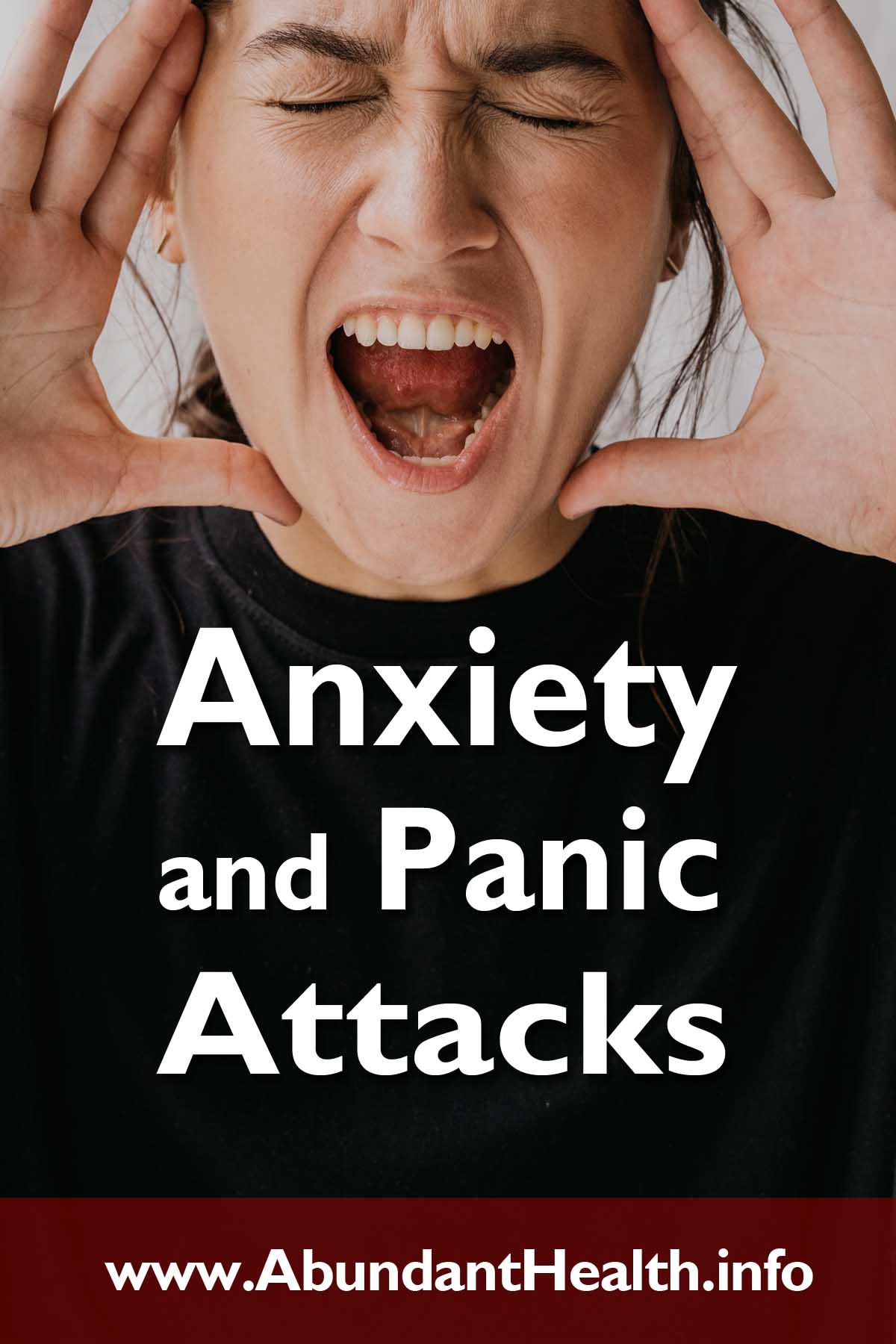
A panic attack is a sudden, very strong reaction of anxiety and fear. It is unexpected and produces symptoms of physical and emotional discomfort, causing the person in the time of the crisis to escape from that place and seek a medical emergency room, or an environment in which they will feel protected, or to be with someone with whom they will feel more secure. If you are experiencing a tragic situation such as a shootout between bandits and police, it is normal to be in a panic at that moment. But the person with panic disorder is terrified of dying or losing self-control, a feeling of depersonalization, even when there is nothing in the environment that favors this. For the diagnosis of the panic disorder, there must be repeated crises in the last weeks or months, an exaggerated concern about having new crises and at least four of the following symptoms:
- Tachycardia, which is an acceleration of the heart
- Tremors in the limbs or in the whole body
- Sweating all over the body, or just the hands and feet
- A feeling that you are going to faint
- A feeling of suffocation or difficulty in breathing
- Chest tightness or chest pain, which is usually interpreted by the person as a heart attack
- Dizziness or feeling of light-headedness
- Fear to die
- Fear of going crazy and other symptoms
About 2% of the population suffers from this disorder. It is twice as common in women as men, and usually occurs around the age of 30. However, it can happen in any age. The cause of panic disorder is not well understood by science, and there are different theories. Among them is that in the brain physiological reactions occur, starting at the place called locus cerulean. This brain center is connected to the vagus nerve, which extends to the chest and abdomen, hence the feelings of suffocation, chest tightness, gastric discomfort. If something activates this neurophysiological system in an exaggerated manner, it is generating symptoms of the panic attack. It seems that when the person is moved by phobias or by very high exaggerated anxiety, this nerve called vagus or pneumogastric nerve is activated and produces these sensations.
The person can concentrate on these bodily reactions such as the acceleration of the heart, cold in the belly, and feeding tragic thoughts: I am going to die, I am having a heart attack, and the cycle closes, so the person thinks tragically, increasing the reactions. So she enters the cycle of fear of dying, and symptoms get stronger and stronger.
It is also believed that in panic disorder, crises can be developed from mental conditioning, which the person has been doing over the time, interpreting symptoms or events in a tragic, catastrophic, imaginary way, in a way that triggers all this reaction of the panic in the future. For example, one day the person who tends to be very anxious when going up in the elevator, felt a strong pain in his chest. From then on, he associates chest pain with going up or down the elevator, and then he develops this fear of an elevator, and he can expand that fear to other closed places.
Another theory has to do with psychodynamics, the history of your emotional life. In this psychodynamic theory, the emotional conflicts of childhood and adolescence, which for some people were very difficult, can favor the emergence of very high anxiety in more vulnerable individuals. Childhood traumas, such as verbal abuse, emotional abuse, parents’ divorce when the child is young, in a very sensitive child facilitates increased anxiety, which can manifest itself by the panic attack years later. A panic attack is like an overflow of anxiety. This overflow can occur, because the person is stressed, represses feelings that need to be verbalized, or because he has conditioned himself to make a tragic interpretation of the events, and this can be modified. You can learn to think, feel and act in a healthier way.
Panic Syndrome Treatment
Excess anxiety that triggers a panic attack may decrease or not, but the person may develop healthy attitudes in self-defense. This means, that he can learn to rest, to relax, instead of always being busy, he can learn to relax even to set limits, also to say no to people. Many people mistreat themselves, they devalue themselves, they do not protect themselves from abuse, they suffer from very high anxiety, which can manifest itself in a panic attack. High anxiety and exaggerated anxiety can be the warning light, saying to the person: “Hey, you need to stop treating yourself badly, and start respecting yourself.” The treatment of panic disorder involves a few things:
- Temporary medication, for those who are experiencing excessive anxiety, which is disrupting their work and social life
- Psychotherapy
- Lifestyle care
- Orientation for family members, so that relatives understand this suffering
The medication, if necessary, must be prescribed by a psychiatrist, who will also do psychotherapy, if he is trained to do so, or he will refer the person to a psychologist. Psychotherapy is the use of psychological techniques aimed at increasing self-knowledge, and learning how to deal with your emotions. It involves also an analysis of thoughts, trying to localize negative and distorted thought patterns, often full of prejudice, and replace them with positive thoughts, of hope, of acceptance, of self-protection, of forgiveness for oneself and for other people. Psychotherapy or psychological therapy also helps the person to speak and experience repressed feelings that cause mental tension. It helps to make connections between the current suffering that the person presents, and problems in the past due to the family history.
When the person gradually understands the history of his life, in the family relationships that favored exaggerated high anxiety, he is more likely to learn to deal better with his fears, anxieties and griefs, and step by step he can learn to modify his way of dealing with suffering. Psychological therapy, counseling with experienced people, reading suitable books, participating in support groups, having moments to reflect in order to gain self-awareness, are ways of better understanding who you are, and thus facilitating emotional control.
Among the physical care that contributes to the improvement of panic disorder I can mention: first of all rest, then a balanced healthy nutrition, the practice of outdoor exercise, such as walking for example, growing a vegetable garden is extremely therapeutic for the human mind, and proper breathing. Breathing calmly and deeply, inhaling and exhaling slowly, concentrating on the breathing helps. Doing this helps to prevent the crisis from appearing or aggravating.

Types of Anxiety
Panic crises or panic disorder is a suffering linked to excessive anxiety in the person’s mind. It is like a water tank that has a problem in the float, thus not closing the water inlet, and the drain, who throws out the excess of water is clogged, so water spills over the sides of the tank. Everyone has anxiety, but not high anxiety. A panic attack is when excessive anxiety overflows in the person’s mind, causing unpleasant symptoms.
There is trait anxiety and state anxiety. State anxiety is when the person temporarily experiences high anxiety. It may be in the period of school exams, for example, in preparation for a wedding, in the days before an interview to apply for a job, and other situations. With state anxiety the person has a normal anxiety, temporarily it gets higher in the face of these events, and then it returns to its normal level. Now trait anxiety is as the name says a trait, the person already has anxiety higher than the average, higher perhaps than the siblings of the same family, even though they are children of the same father and mother. So a child with trait anxiety may be more sensitive, more vulnerable to these mental sufferings.
An Example
A young adult woman has been experiencing panic attacks and sought treatment, and the points worked with her in psychotherapeutic treatment are as follows: First she has learned to think, what kind of things accumulate tension and stress in her life that ends up in exaggerated anxiety. She was too concerned about everything, she lived with her worries, which were exaggerated, and she started to realize that. Too worried was a long-time trend in her life. It was the chronic way of living tense. Excessive worry increases anxiety, and increased anxiety can cause panic attacks. She was learning to reflect if she really needed to be so worried about too many things, she started to question herself in order to understand if worry changes something for the better, if her worry would change her reality. She started to think about these things, started to question her own too anxious mind, that is, she managed to start separating herself from the anxiety she experiences. She started to reflect on what she was thinking, this is an exercise that the person has to do, which is called self-analysis or self-observation. So she is learning to live one day at a time, one hour at a time, also learning to accept the inability to fix everything around her.
Another thing that is helping this woman a lot is talking to a family member or understanding friend about her fears, to vent her feelings. Someone who understands the problem, who is friendly, who is not the critical person and who is also able to keep a secret, because venting alleviates anxiety. This woman understood that the panic attack does not go much beyond ten minutes. She is learning to remind herself that the physical symptoms, besides the pain of the crisis, are not serious manifestations of health problems, such as that she will have a heart attack, or that she will have a stroke, or that she will be fainting, so she is learning that she has no physical disease, because she has already undergone clinical and lab tests with the results ruling out the existence of a physical disease. So if you have panic attacks and you haven’t had any exams yet, you haven’t been to the doctor, you haven’t had an appointment with a cardiologist and a general practitioner, it will be important to do that. Having verified that there is no medical alteration will help you next time so that you will not be afraid that you will die of a heart attack, because you will remember: I have already had an exam and the doctor said that I do not have any cardiac problems.
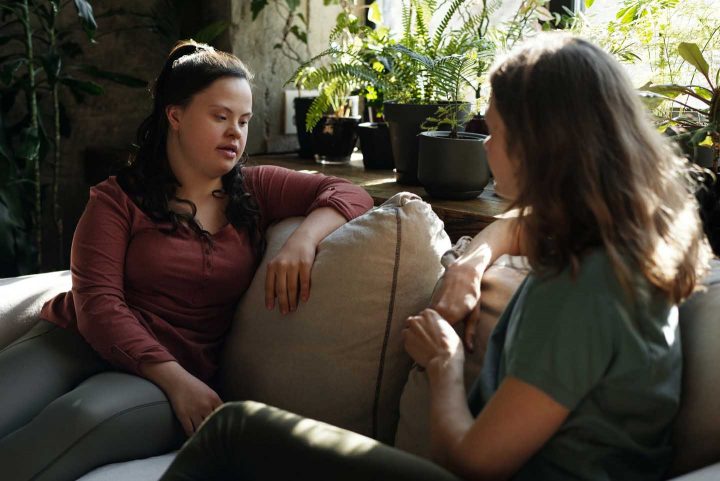
So she has learned that anxiety in a panic crisis is disproportionate to reality. Fear says that in a crisis she will die of a heart attack, or that she will lose her mind, or something that is not real, so she has been training to step back in her mind and look at the tachycardia, look at her breathlessness, observe this and think that the strong anxiety is producing this, and not a real physical failure of the heart or lungs or brain. So the moment the crisis seems to come, she can now remember this for herself, and she is making an effort to change her focus, taking that attention away from her body signals and observing objects around her, or making a rational effort to think of something else, or going to tidy up the closet, going to call a friend, she shifts the focus of her thoughts. She also tries to recall what the cardiologist said recently, that there is no physical illness, that the electrocardiogram was normal, that the exercise ergometry or electrocardiogram was normal, as well as the other tests she did.
She now understands that even when the family member with whom she lives and who does not have panic attacks thinks that what she suffers is nonsense, she does not need to feel inferior for having these crises. She now accepts that she is not less valuable because of the crises she has.
She has learned to let go of attempts to control her life, to want to exercise control over other people’s lives and behavior, which is a very stressful thing. She is discovering that she wanted to control the uncontrollable, and that it increased anxiety, stressed her out and contributed to the panic attack. Now she is able to talk about the things that bother her, without feeling repressed, as if it was forbidden to comment on them. Often the difficulty to speak, to vent is in the person who has the panic disorder, and not because of the unwillingness of others to listen.
She is already able to set limits and protect herself from over-assuming responsibilities or tasks. She is better able to protect herself from abusive people, she recognizes better that there are people without boundaries, who abuse the goodwill of others, and that when she does not protect herself by saying I can’t, I don’t want to, it won’t happen this time, when that is the right thing to do, it accumulates stress that can trigger the crisis. She now asks for things, she asks for help, she delegates tasks, she does not keep assuming everything in her life, she does not commit herself to deadlines that are too short to meet, because she says this will not work, I cannot assume that here, so she respects herself better, she is reducing the posture of omnipotence that she had, that she can do everything, will do everything, resolves everything.
She is learning that already having had panic attacks, she was very afraid of having it again, but now she can remind herself that she is not her anxiety, she is not her fear, she is greater than this, she learned that fear is something in her, but it is not her second nature. Now, she can begin to view excessive anxiety no longer as something that will dominate her mind.
Thought Control
The person with panic disorder needs to train in their mind to self-control exaggerated concerns. What does that mean? When a concern comes, that if not overcome will create a lot of anxiety, and could trigger a new panic attack, he should say to himself: “Wow, look, I am very anxious now.” He starts to observe his own anxiety, then he says to himself: “It comes to disturb me again, but now I know that I don’t have a heart problem, that thought that says I’m going to die of a heart attack, I was already at the cardiologist, I did exams, everything is normal, so I don’t need to let the ideas of dying from heart attack take over my mind. Now I understand that I won’t get out of reality, I won’t freak out, I won’t go crazy.”
So when the person who has had panic attacks develops this type of reasoning, when a threat of a new crisis arises, it means that he is starting to control his tragic thoughts, and therefore the crisis can be avoided. Because disturbing thoughts need to be controlled, and this is done using reasoning. Using logic, using the information you already have, that you do not have heart disease, that the panic crisis is temporary, it is going away and does not lead to craziness. The truth can free and heal. So to improve any mental suffering that involves a wrong way of thinking it is important to understand what this author wrote:
The thoughts must be trained… The thoughts must be controlled… Right thoughts… do not come to us naturally. We shall have to strive for them.
Ellen G. White. Mind, Character and Personality, Volume 2 p. 656
Then you train to replace tragic thoughts with healthy ones. It may not be easy initially, but with training will become less difficult. It may not be possible to prevent the fearful or tragic thought from arising in your mind, because when you see it, it is already there in your head, but it is possible to prevent it from continuing in your mind to disturb you. So the practice of deciding to stop thinking about the negative or the tragic, will strengthen the mind of the person with panic disorder, so that these unpleasant thoughts become less disturbing and less frequent, because in doing so, he is learning to cultivate healthy thoughts that do not generate excessive anxiety. I want to leave a text for you who suffers from panic attacks:
Finally, brethren, whatever things are true, whatever things are noble, whatever things are just, whatever things are pure, whatever things are lovely, whatever things are of good report, if there is any virtue and if there is anything praiseworthy—meditate on these things.
Philippians 4:8
It is interesting that this passage has translations that say: think about such things. So which thoughts are controlling your consciousness? You can train to stop the tragic and cultivate the positive. Wishing you serenity and a clear mind.
Do you need a guide to help you understand how to cope with Stress in an all inclusive approach? Learn how to combat stress, mentally, physically, emotionally and strategically in your life.