Stress Management Tools

Helps You to get Stress under Control

  • Home
  • About
  • Blog
  • The Program
  • Free Offer
  • Contact
You are here: Home / Archives for Psychology

Psychology

Why Perfectionism is Causing You Stress

July 2, 2023 by Martin Neumann

Perfectionism is quite a common character trait, that affects about 30% of the general population and increases to almost 80% among the gifted population. Besides being pretty common, perfectionism is also on the rise. It can significantly interfere with your daily life and your stress response, so it is important to identify perfectionistic character traits and find some way to deal with them.
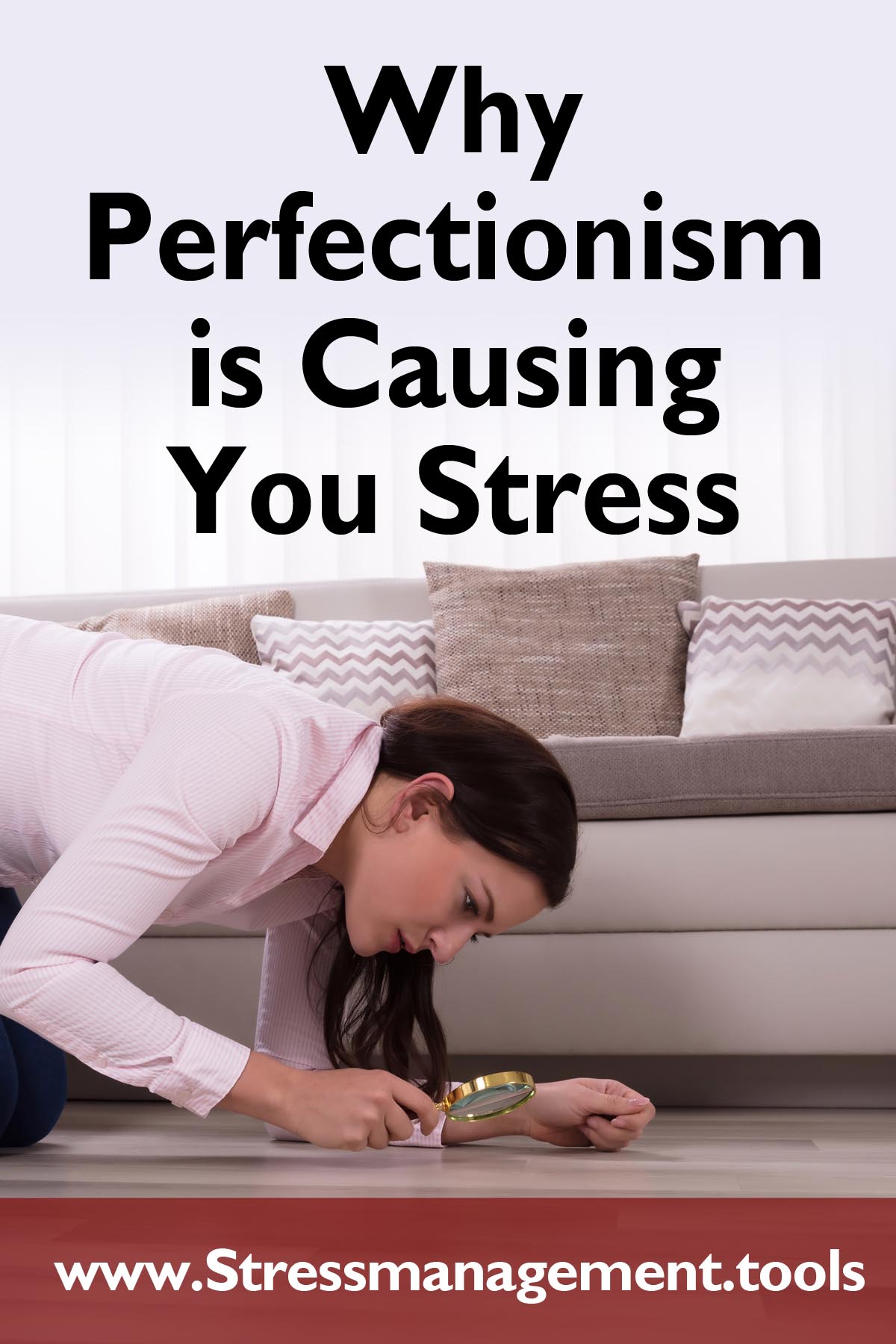
Why Perfectionism is Causing You Stress

A perfectionist has often some common traits with a high achiever. Both are people who are often pushing themselves to their limits and strive for excellence. They are very much goal oriented. But while the high achiever is celebrating his achievements, the perfectionist is only focusing on his failures, and that he missed hitting the mark he was supposed to achieve. While the high achiever strives to be the best he can be, the perfectionist just wants to avoid looking stupid because he has made a mistake. He is driven to give more than he can because he doesn’t feel to be good enough. Achieving more, looking perfect, and pleasing everyone becomes a way to define his self-worth.

Perfectionism is an effort to get a sense of self-worth through achievements. The problem is, that a perfectionist is never reaching the point of feeling that his accomplishments are sufficient or adequate, so he constantly feels bad about himself.  Perfectionism is normally linked to limited self-esteem.

The cause of perfectionism is often found in childhood and could be caused by the following parenting styles:

  • Having overly demanding parents, that expected their kids to be close to perfect, sometimes responding to any kind of shortcomings with some form of punishment. The child internalizes that it is only loveable if it is pleasing the parents and doing everything just right.
  • Having perfectionist, goal-oriented parents, that children tend to model. Sometimes parents are praising their kids excessively for achievements instead of commending them for their effort.
  • Having parents that were not emotionally available for their children, and the child trying to get the attention of parents with outstanding accomplishments or thinking to get appreciation by being perfect.
  • Having dysfunctional parents that may not know how to treat their kids appropriately. The child may not understand the reason for his parents to be alcoholic or depressed or with some other mental problems and often sees himself as the cause of the problem. In an effort to help their parents to improve, the child may try to behave and perform perfectly, thinking this will resolve their parent’s problem.
  • Growing up in a chaotical home, some children try to create an environment of control and predictability that is lacking in their home, by indulging in some perfectionistic rituals.

Perfectionists tend to hyper-focus on even the tiniest flaws. If you focus on the things you’re unable to do perfectly, you may end up doing nothing at all, out of fear of failure. When a minor setback feels like a major personal failure, that’s when perfectionism becomes a burden.

A woman being distressed about a mistake she has made

Perfectionists believe they’re committed to excellence, but they’re actually avoiding feelings of inadequacy. They define their worth according to their performance but are never satisfied with the result. Perfectionists aren’t trying to achieve something great. They’re trying to avoid failure. If you’re a perfectionist, ask yourself why. What do you gain? What does it cost you? Do you take pleasure in being perfect? How do you feel when you’re less than perfect?

Being a perfectionist has several disadvantages:

  1. You waste a lot of time. Some things don’t require a high level of attention. To spend more time than necessary is a waste of an important resource: your time. If success is important to you, allocating your time wisely is an important consideration.
  2. It creates a lot of stress. When you see only one way to be successful at something, there’s no room for error. Perfectionists aren’t happy people. There’s a constant anxiety that can’t be completely satisfied.
  3. You lose sight of the big picture. Bogging yourself down with trivial details can limit your awareness of the bigger objective.
  4. You can’t relax until you feel that everything is done and done perfectly.
  5. You’re never happy with your results. You might be satisfied, but you’re never happy.

A man typing on a typewriter and repeating the copy many times because of perfectionism

7 Signs That You’re a Perfectionist

There are some warning signs that could show that you have tendencies to perfectionism. If several of those apply to you, then you should work on your mindset and remove the root of perfectionism.

  1. You take things too far. No matter what you do, you take it to the limit. Everything has to be done as well as possible, whether it’s folding the laundry, parking the car, or doing something more meaningful.
  2. You long for your high school days. High school is perfect for perfectionists. The competition isn’t too great on average, and your achievements are witnessed by all. Your work is also clearly judged quantitatively. You know exactly where you stand.
  3. You’re judgmental of others. Your standards of acceptability are so high that no one can consistently achieve them. If you find yourself with fewer friends than you’d like, your commitment to be perfect might be the primary cause.
  4. You’re too hard on yourself. By the same token, you can’t live up to your expectations either. This leads to feelings of disappointment and shame. Are you more successful than most of the people you know, but less pleased with yourself than they are with themselves? Do you find it hard to be proud of yourself? Do you feel happy and proud when you’re successful, or do you merely feel a sense of relief?
  5. You have a hard time accepting help, because you think you can do everything by yourself. And if you delegate something, you feel the other person does not do it right, so you prefer to do it for yourself.
  6. You overthink any decision you need to make, to be sure you do the right thing.  You spend hours researching your options, decide on the best, and still regret it afterward if you find out there would have been a better option.
  7. You procrastinate excessively. The need to be perfect creates anxiety and makes it hard to get started. You know you’re in for a lot of work and self-induced drama. Under those circumstances, anyone would be hesitant to get started!

I guess you can see how a perfectionist is getting stressed out about any kind of mistake, because he is defining his self-worth by his achievements, and any mistake is considered to be fatal. If you are dealing with that problem, you need to find strategies to overcome your perfectionistic traits and define your self-worth in a healthier way.

A confident man having a healthy self-esteem

If you are a Christian, be sure to define your self-worth by the worth that your Creator has put on you. Be sure to internalize, that you have a loving Heavenly Father that takes care of you, no matter whether you have achieved to live up to your perfectionistic expectations or not. Take some Bible Promises to redefine your self-worth, like for example:

I have loved you with an everlasting love; I have drawn you with unfailing kindness.

Jeremiah 31:3

As you develop a new foundation for your self-worth, you can start to get more relaxed about your mistakes and enjoy the process of becoming the best version of yourself. Because you deserve it to put the self-constructed stress aside and live a more fulfilling life!

Do you need a guide to help you understand how to cope with Stress in an all inclusive approach? Learn how to combat stress, mentally, physically, emotionally and strategically in your life.


Get Me the Guide

Filed Under: Psychology, Thought Patterns

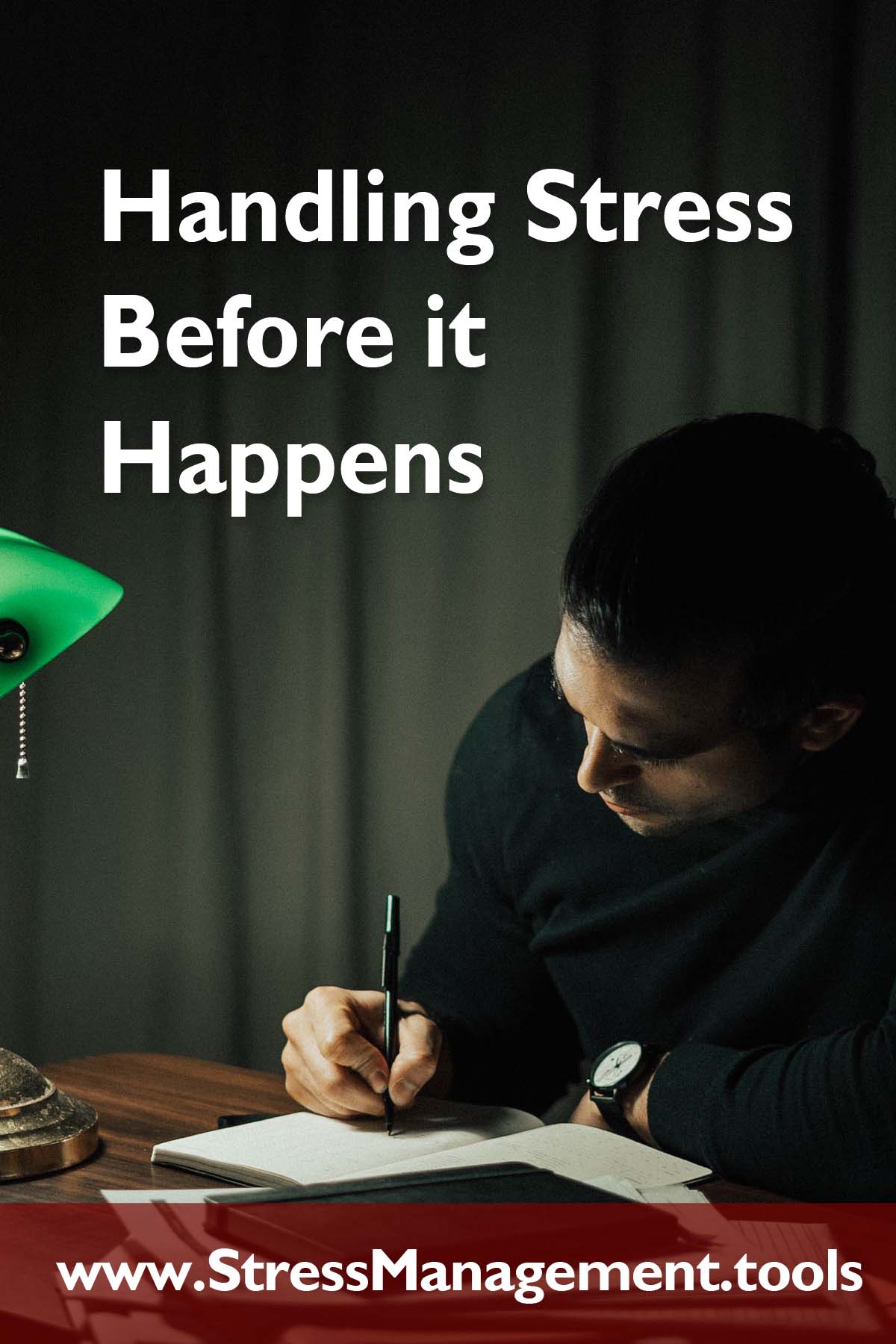
Handling Stress Before It Happens

January 30, 2022 by Martin Neumann

Handling Stress

Stress is something that everyone in the world will experience. Some of us deal with a lot of stress – others, not as much. But one thing that we all have in common is that we all have a reaction to stress.

Handling Stress Before It Happens

When something happens to cause stress, we’ll react in either positive or negative ways. The way that you deal with stress will profoundly affect your health and well-being.

Your reaction to stress on one day can affect you emotionally the next day, and even the day before if you’re bracing for it. Unfortunately, there is no escaping stress and there are varying degrees of stress and causes behind it.

Stress Happens to Everyone

There are no groups of people or any single individuals who can avoid stress. Stress doesn’t fit neatly into any one category like a one-size-fits-all event. There are different levels of stress that will vary, depending on the person who’s dealing with it.

There are also different reasons and different times for stress to occur. You might experience more stress at a certain time of the year than other people do. However, stress does fall under the heading for four basic types.

The types of stress are encounter stress, time stress, situational stress and anticipatory stress. Encounter stress has to do with the relationships in your life. This covers your intimate relationships, your work relationships and even stranger or acquaintance relationships.

The type of life that you have can often determine whether you have a high stress level due to encounter stress. People who work in jobs where there’s a great deal of emotions (such as in a hospice care group) might have a higher rate of encounter stress than other people would normally have.

Giving emotional support to a cancer patient

Time stress can occur when you’re feeling overwhelmed with everything that you have to get done – so you fret that you don’t have enough time. You “what if” that you’re not going to get everything done and your stress level rises.

An example of this would be having to be somewhere for an important meeting that you absolutely can’t miss and things crop up to put you behind. Sometimes people will engage in time stress before there’s even an issue.

This “what if” worry can make them feel anxious and depressed because they worry how it will affect their future. The panic it causes can result in even more stressful situations to occur.

Situational stress is what happens when you’re in a situation that causes immediate stress. An example of this can be a car accident, a child becoming ill or a job loss. In situational stress, it’s the situation that causes the worrying and the emotions that go along with it. This kind of stress can be short or long term.

Anticipatory stress is stress that you get because you’re anticipating something that’s coming your way. This might be having to give a speech or wanting to ask for a raise. It can also be about something that’s not even on the horizon.

It’s a fear that the other shoe is going to drop. This type of stress is the kind that has the most “what if” worry involved with it because it’s focused on things that haven’t even happened – and may never happen!

And when the things that you worried about do come to past, they often don’t look anywhere as frightening or terrible as what you thought they’d be. Often we discover that it was not really worth our worries.

Worrying About Stressful Situations Affects Your Health

Thinking about a problem or wondering what’s going to happen isn’t the same thing as worrying about it. When it crosses the line is when you begin to “what if.” You might “what if” about an event, a person or an unknown future.

Plenty of people will “what if” in their mind. Unfortunately, most of them create all sorts of “what ifs” that have a negative aspect to the thoughts. From that negative “what if” can spring a ton of stress that can turn into long term stress if the habit isn’t broken.

Worrying about future events

There’s nothing wrong with thinking “what if” when you’re trying to brainstorm and come up with a purpose or a plan to deal with stress. But if you do random “what ifs” where you let your mind wonder from one bad possibility to the next, this is futile and can even be bad for your health.

This kind of “what iffing” is a stagnant process that doesn’t get you anywhere. It’s like sitting in a rocking chair moving back and forth and expecting to get from point A to point B.

This negative “what iffing” doesn’t help anything and all you gain is fear and a sense of foreboding about the situation or your future. When you engage in unproductive, negative “what ifs,” you can start to experience a host of various health problems.

You can develop headaches or stomachaches. You might start to encounter muscle problems. Worrying about stress is bad for your heart health. When you worry about stress, studies have shown that this habit is known to cause high blood pressure, tachycardia and shortness of breath.

Worrying about stress can even cause heart disease. The reason that it can do this is because when you worry about stressful situations, your body gets an influx of stress hormones.

Having a regular dose of stress hormones puts additional pressure on your heart because of the high blood pressure that goes hand in hand with raised stress hormones.

Besides affecting your body’s health in a myriad of ways, worrying about stress affects your emotional health and your mental health, too. If you worry about stressful situations to the point that it becomes an ongoing habit, you can be at risk of having a mental breakdown.

This usually happens when thinking about and dealing with stress reaches the point where a person simply can’t deal with it any longer. When that happens, he or she can lose the ability to go about their day as they normally would.

It’s an abnormal response to stress that’s linked with worrying about stressful situations and feeling like there’s no relief for the stress in sight. When worrying about stressful situations reaches the point where someone is having trouble eating and begins to deal with insomnia, that’s the point where something must be done immediately to alleviate the worry.

The 4 Types of Pre-Meditated Stress Analysis

People cope with stress in different ways. These coping mechanisms can be labeled four different ways. The first one is problem analysis. With this type of coping mechanism, people think about the problem.

This way of thinking usually means the person is using “what if” in a positive way. They’re not simply turning the problem or situation over and over in their minds. They’re looking for how they can define exactly what the problem is.

Analyzing a problem on paper

This is the first step that often motivates people to reaching for a solution to the problem. When someone engages in problem analysis, they can see the problem objectively without internalizing it to the point that they dwell on it long term.

This kind of coping mechanism is highly effective and doesn’t lead to emotional or physical problems that can happen with dwelling on a stressful situation. The type of people who use this method are the type that are able to separate their lives and self-worth from the problem.

They can look at something that needs to be solved and then lay it down without it causing them to lose sleep. The second type of coping mechanism is plan rehearsal. Someone who copes this way is usually an analytical thinker.

He or she won’t dwell on negative “what ifs.” Instead, this person will think about what he can do to bring the situation to a resolution. Someone using this coping mechanism rarely thinks that there isn’t a solution to a situation regardless of what the problem is.

The person who deals with stressful situations this way usually comes up with several solutions and analyzes each one for the best outcome. People who use plan rehearsal don’t usually carry a stressful situation over into the next day emotionally.

Stagnant deliberation is one of the poorer methods that people use when dealing with stress. This is the type of person who will “what if” and think about the problem, but won’t get anywhere.

They don’t come up with a solution and so they don’t move forward. With stagnant deliberation your emotional and physical health can be affected to the point that it can make you ill.

The fourth coping mechanism is outcome fantasy. With this way of dealing with stress, people fantasize or daydream that they won’t have to deal with the problem because it will be somehow magically solved. This coping mechanism can affect emotional and physical health as well.

It’s rare that a person always uses just one type of coping mechanism. You can use a mixture of all of them but the type of people who use problem analysis and plan rehearsal don’t get stuck in the “what if” or the negative thinking about stressful situations. They might pause there, but they don’t get stuck.

How to Make an Action Plan Ahead of Time to Handle Stress

By knowing how to act rather than react to stress, you can handle stress before it becomes an issue. In every situation that happens, prioritize it. Ask yourself if the situation is yours to handle.

Too many of us deal with things that we don’t have to deal with. We take on other people’s stress. We handle things for friends, a spouse and coworkers that we shouldn’t take on.

It can be tempting to want to help and to want to fix someone else’s stress, but that’s a way to quickly become overwhelmed and stressed yourself!

Take action steps to handle stress before it happens by identifying where you feel the pressure start to build. If you know that you’re going to be pressed for time, then look at what has to be done.

Use to-do lists and pare it down to only the necessities to get you through that day or week. Let go of things that don’t matter in the long run for your health or happiness. Give yourself extra time to accomplish tasks and learn to say no to things – and people – that will eat up time to the point you know it will cause stress to begin.

Don’t focus on the things that you can’t control. For example, if you have a joint project with a colleague and you’re ready with your part, but he isn’t, don’t focus on what he didn’t do.

All you’re responsible for is what you were supposed to do. Let that person suffer the consequences rather than you suffering the stress. When you know that a situation is coming up that has the potential to turn stressful, take the time to write out a list of possible solutions.

For example if you’ve heard that your company is going to be laying people off, instead of worrying about it, write down all of the steps that you’ll take if it does happen. Once you do that, let it go. You’re prepared!

Don’t give in to negative “what if” thinking. You don’t want to attempt to cross bridges before you even come to them. You might find that the bridge never even appears in your life and you don’t want to waste time needlessly.

Do you need a guide to help you understand how to cope with Stress in an all inclusive approach? Learn how to combat stress, mentally, physically, emotionally and strategically in your life.
Get Me the Guide

Filed Under: Planning, Psychology, Thought Patterns

Are You Addicted to Stress?

January 2, 2022 by Martin Neumann

Addicted to Stress

When you think of things you might be addicted to, stress is never on your list, is it? Some people might put alcohol or nicotine, caffeine or even social media – but stress isn’t even considered.

Are You Addicted to Stress?

The idea of stress addiction might seem rather strange, thinking that most of us hate feeling stressed. However, many people don’t realize it, but stress can become an addiction over time. It’s all due to the subtle scientific reactions within your body, when the stress hormone cortisol floods your system and allows you to deal with harrowing situations.

Your adrenaline increases and you find yourself powering through tasks and completing projects with ease. When you’re not under pressure, you find yourself dragging on, procrastinating and struggling to the finish line.

Some people laugh this off by saying they “work better under pressure,” and this is why. It’s an addiction to the stress from a chemical standpoint. It’s not just a mental preference.

The problem is, when you start suffering from chronic stress, it not only puts your health at risk, but it also affects your personal and professional relationships. Over time, your quality of life diminishes and you reach a point where you’re unable to accomplish anything without stress – a very sad way to live your life.

What Does It Mean to Be Addicted to Stress?

Stress is something that can give you a reaction in the brain that’s a similar feeling to what you get from taking drugs or drinking alcohol. This kind of high is a result of the brain releasing chemicals that make you feel good.

Some people may not realize their stress addiction until they start analyzing their habits. If you tend to procrastinate until something happens that puts pressure on you where you get a dose of stress and use it to fuel your productivity, that’s a stress addiction.

You feel good because have a lot of energy and your feelings are high. All of this occurred because of whatever stress that happened. You can also tell if you’re addicted to stress by what your life looks like.

There’s rarely any peace within it. In fact, your life is like an advertisement for stress. You’re rarely calm and you’re always frazzled. You don’t find it boring because there’s always something going on.

There are rarely any down moments because you’re too busy racing from place to place. It feels like you practically live in your car because you’re never getting any down time.

Driving a car - Photo by Ketut Subiyanto from Pexels

Relaxation isn’t something that’s in your vocabulary. You might think about it every now and then, but you don’t ever get to do it. Or, it could be that you’ve got a full load of pressure.

There’s drama and stress and it always seems like there’s a personal or professional fire to put out. You might be stretched too thin, feeling like you’re burning the candle at both ends, but it doesn’t really bother you.

Life isn’t bad, you tell yourself. It’s just hectic and when you handle all the stressors that come your way, you end up feeling empowered, like you’ve accomplished a lot. An addiction to stress also manifests itself by what you reveal about your life to other people.

One way that people do this is by putting stuff on social media. For you, social media isn’t really a place you go to in order to see how your friends or family are doing. It’s usually all about you – how other people made you mad, hurt your feelings or took advantage of you in some way.

You’re always posting that kind of stuff on social media and the topic centers around your stress – how hectic everything has been for you or what’s going on in your day and how that turned into stress.

You might talk about why you feel so stressed out – because you didn’t sleep, haven’t eaten, aren’t making enough money at your job, had a fight with your friend and how you’ve always been the one compromising and not her or him.

Posting on social media - Photo by Edmond Dantès from Pexels

Or you might mention how angry or anxious you are because of what you went through in the past or because of emotional issues now. On your social media, you get online and bemoan often in detail what’s going on in your intimate relationship or with your family or coworkers.

You talk about what awful thing was said to you or what bad thing you had to deal with, like you had to do more than your fair share of work. You talk about the pressure that put on you and how you worked late and rushed home and didn’t even get to eat.

Stuff like that happens to everyone because life itself can be hectic. But the thing about a stress addiction is that you post things like this all the time and it’s a huge deal to you. You talk about putting gas in your car and it becomes an effort comparable to running a marathon.

Or you mention going to the grocery store and what the store was out of and how someone cut you off in line or failed to return their shopping cart. You might talk about the effort it takes to pay the bills or get the dog to the groomer.

Nothing that you talk about is ever a simple task or enjoyable. There’s always drama and stress associated with it. Whatever you do can’t just be a normal thing. It always has to be bigger and more stressful than the situation calls for and much worse than what anyone else is dealing with.

Exaggerating the voice on social media

What you don’t realize is that others on social media who also deal with stress will start to view you as a drama magnet. They’ll think that nothing in your life can ever be simple – that it always has to be bigger than it really is.

People who are addicted to drama are usually posting negative things or complaining non-stop about their life. When you talk to people at work or your friends or family, your life is all about the stress and you don’t really feel bad about all that because to you, your stress isn’t a bad thing.

It’s something that’s part of your life and you’ve become used to enjoying the high that it gives you to be a fighter. Be aware that when you begin garnering that kind of reputation, people will avoid you. This adds to your stress, but you’ll just use it to fuel your fire even more. 

Consequences for Failing to Break Your Stress Addiction

You know how life goes. There’s always something that interrupts your plans and it happens on the day when you can least afford to encounter a stressor. You might be on your way to work because you have to go over a project with your boss before the client gets there for a scheduled appointment.

But the next thing you know, you’re trapped in a traffic jam. There’s no way around it and you can’t turn back. You’re just stuck. When this happens, your body reacts and floods your system with stress hormones.

The reaction from your body is based on the fight or flight response and it’s meant to be a help to you. However, when the situation isn’t life or death, this response isn’t needed.

When this is an occasional circumstance where you get a flood or stress hormones, it’s not a big deal.

But you start to have it even when you’re dealing with a mundane stressor because you don’t know the right coping techniques to turn to. When your body is constantly getting this flood of hormones, it affects you by giving you that brain chemical high.

It’s easy to get addicted to wanting to get that boost of chemicals. You feel good to some degree when you first get it, but over time, this constant cycle of having a stress response within the body wreaks havoc on your physical health.

Over time, the overuse of your stress hormone starts to take a toll on your immune system. This happens because your body has something known as natural killer cells. These are designed to battle against serious conditions such as cancer, but these cells are also designed to fight things like bacterial or viral illnesses.

They work to protect your immunity. Stress weakens the ability of these cells to work the way that they’re supposed to, leaving you with little protection so you’re constantly catching whatever is going around.

catching a cold

It’s not just illnesses that you’ll face more often when you fail to break your stress addiction. You’ll be at a higher risk for developing conditions that are related to stress such as diabetes.

When you get stressed, it raises your glucose level – even if you don’t have the disease.

Stress can make you more likely to have a heart attack because when you’re stressed, your blood pressure goes up.

The flood of stress hormones that you get are supposed to temporarily narrow your blood vessels. But when you’re addicted to stress, these blood vessels can be constantly narrowed, which restricts blood flow and oxygen to the heart.

When you’re stressed, it can also affect your digestive health. You can develop nausea, stomach cramps and suffer from diarrhea or constipation. You can also suffer from heartburn.

People who are addicted to stress can develop reproductive problems. Women might skip a monthly cycle or they might notice that their periods last longer, while men can experience lower levels of testosterone, which is linked with impotence. 

But it’s not just your physical health that will show the signs of stress. You can also struggle with mental health. For many people, prolonged exposure to stress, such as with a stress addiction, can cause depression.

This happens because the stress hormones linger, and you don’t get that break from them that you’re normally supposed to get. It’s common for stress to have an impact on your emotions and when you constantly get that flood of stress hormones, it brings out negative feelings such as grief, which can lead to depression.

Anxiety is another consequence of not dealing with a stress addiction. You don’t have to have an anxiety disorder to develop anxiety. This is something that happens as a result of whatever stress you have in your life.

When you have anxiety, it can show up as both physical and emotional symptoms. When it has to do with your mental health, the anxiety that you experience usually reveals itself through a feeling of dread.

You might feel nervous at random times or consistently. Sometimes anxiety can show up as feeling like something is just off. You feel wary. This mental reaction can happen whenever you’re about to face a situation or when you think about that situation.

It can also happen because you fear the results of a situation. When stress is what’s behind your anxiety, then what you’re experiencing lingers and doesn’t just go away. Not dealing with stress can also lead to panic attacks.

A Panic Attack

A panic attack is what happens when you get a feeling of overwhelming fear or you experience a deep anxiety. Panic attacks can happen with or without physical side effects.

Many people who have stress and develop panic attacks have these because of something in the past that they haven’t dealt with, stress addiction, or something that they’re afraid of that might occur that hasn’t happened yet.

A panic attack is a sense of impending doom, even if nothing bad is going on at the moment or they’re not in any danger. These attacks are a clear sign for the person who has them that something needs to be treated so that it can end.

When a panic attack disrupts your daily routine and you have difficulty being able to carry on, this a severe episode and may need professional treatment. As a result of your mental health suffering because of stress, you can start feeling dissatisfied with life.

You just feel like something is missing. This can happen when you’re not happy with the person you are. You might experience self-doubt along with this dissatisfaction. You might also have low self-esteem and you don’t like what you see when you look in the mirror.

You don’t like your job, your relationships, or where you stand in life. It’s at this point that many people start turning to coping addictions to try to fill the void and feel better about themselves and their lives.

Just an addiction is not going to help you to get anywhere in life. It is not going to resolve your problems, but just adding to them. You may feel good being addicted to stress, but it does not get you anywhere. If you find that you are having a stress addiction, you need to learn techniques to deal with your stress in a more constructive way. Download the free 10 Minute Guide to Stress Management to start your journey in learning how to dominate your stress.

Do you need a guide to help you understand how to cope with Stress in an all inclusive approach? Learn how to combat stress, mentally, physically, emotionally and strategically in your life.

Get Me the Guide

Filed Under: Psychology, Thought Patterns

Mastering the Art of Letting Go

November 7, 2021 by Martin Neumann

Mastering the Art of Letting Go

Sometimes letting go is hard – like breaking an old, addictive habit. There are so many obstacles to overcome and negativity to rethink. Being stuck in your past may be blocking your health, happiness, love, success and more.

Mastering the Art of Letting Go

Mastering the art of letting go takes courage and determination. Then, and only then, can healing occur and you get a new outlook on life. When you choose to hang on to negativity, it’s like you’re choosing to take poison every day. It’s time to take action and take the steps necessary to bring positivity back into your life.

Refusing to Let Go Is Like Poisoning Yourself Slowly

When you’re burdened by negativity in your life, it’s like a chain around your neck weighing you down and keeping you from success and happiness. Refusing to let go of the negativity can bring stress of such magnitude that it is like slowly poisoning yourself.

There are many things you can get hung up in your life. You could be disappointed in yourself or someone who has hurt you. You likely think about it every day – possibly every minute – and you’re constantly giving momentum to that negativity.

It may seem impossible to let go of those feelings, but like everything else, there are ways to let go and focus on building your energy rather than letting it slowly seep away. Fear of letting go zaps your energy and keeps you from having the inner peace you need to move forward.

Letting go is like every other bad habit that you want to rectify. In the beginning, it seems impossible, but the more you practice, the easier it will get to let go of things like toxic relationships, negative thoughts and grudges.

It may be easier if you identify one thing to let go of in the beginning. Working on one issue at a time and focusing on letting go makes it easier to go on to the next issue when you’re ready.

For example, you may be trying hard to forgive someone and still hold a grudge that’s stressing you out. Forgiveness of a wrong done to you can be one of the most difficult emotions to work through.

First, realize that forgiveness doesn’t mean you’re dismissing what was done to you. What it does mean is that you’re proposing resolution for the negative thoughts and emotions you’re having about the person.

Five Things You Should Let Go of for Stress Relief

Keeping things that bother you in the forefront of your mind can cause stress that never seems to go away. There are certain stressors that are more damaging than others and can make you feel so bad about yourself and other people in your life that you become paralyzed and unable to feel happiness.

An angry woman - Photo by Andrea Piacquadio from Pexels

There are five top stressors that people have the most trouble letting go of:

  1. Anger – Feelings of resentment, revenge and bitterness may accompany anger in your life. Unless you can work your way through the anger – whether you’re angry at a person or a situation, it can affect all areas of your life.
    You can either hold on to that anger and face the many health and emotional consequences, or learn how to forgive and move on with your life.
  2. Grief – Loss of a loved one, either in death, divorce, estrangement or other way, can cause grief that is difficult to let go of. Grief is a normal response to a loss and there are five stages that you need to deal with.
    First is denial. Then, anger, bargaining, depression and, last – acceptance. You may go through only one or two of these stages, but the important thing is ending your grief by acceptance and letting it go.
  3. Resentment – Resentment is similar to anger in that it can permeate every area of your life and keep you from enjoying people and experiences. Holding on to resentment zaps your happiness.
    One popular quote about resentment likens it to taking poison and expecting the other person to die from it. With both anger and resentment, the cure involves acceptance, forgiveness and letting go.
  4. Control – Those who have a need to control others are especially vulnerable to bringing unnecessary problems into their lives. When you let go of the need to control, you’re actually gaining.
    You’re gaining the ability to accept people as they really are rather than being disappointed over and over again, because they’re not conforming to your wishes or expectations.
  5. Past – Issues that happened in the past can haunt you until you die unless you learn how to let go of all the negativity.
    It might be that you’re clinging to the past because it was a happy time for you. Because of situations you can’t control, those happy times are gone. But feeling sentimental about those old days is not going to bring them back.
    At the other hand it could be that you cling to unhappiness from the past. Developing a more positive attitude and/or forgiveness may help you move on.

The urge to hang on to anger, grief, resentment, control and the past can be overpowering, but learning how to let go of these debilitating feelings can open doors to happiness you never thought possible.

Allow Yourself to Go Through Emotions

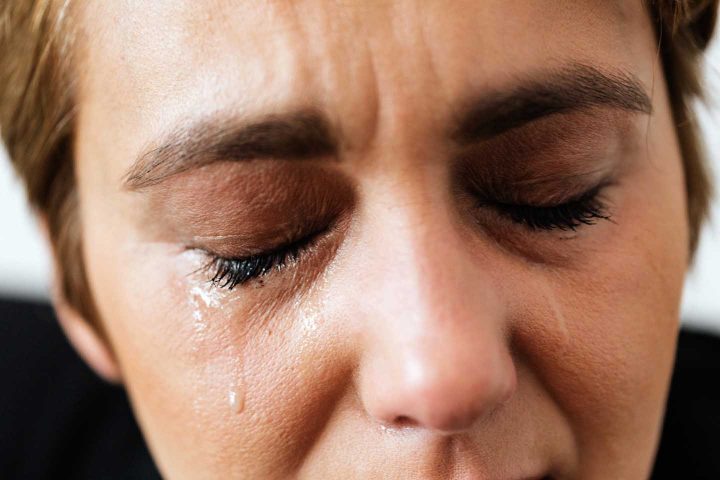
It’s difficult to let go of situations and people unless you go through an emotional process first – such as crying as much as you need to or expressing your thoughts or feelings in a way that gets it across to the other person.

A crying lady - Photo by Karolina Grabowska from Pexels

Studies have shown that bottling up such emotions as anger can increase your cancer risk, and in many other ways chip away years from your life. When you release those emotions, blood flow increases to the frontal area of the brain and helps you let more positive emotions in.

Negative and suppressed emotions play an enormous part in the future of your mental and physical health and well-being. Such emotions often lead to unhealthful coping mechanisms to try and relieve some of the pressure caused by bottling up the emotions inside of you.

Turning to drugs, alcohol, cigarettes and junk food may all play a part in trying to deal with the bottled-up emotions, but it’s clear that coping with these feelings is much better for you than holding on to them.

You may be able to put up a facade for some time – both for others and yourself – and convince yourself that you don’t have a thing in the world that’s depressing you and stressing you out. Eventually, those bottled-up feelings will explode, just like a bottle of soda that’s been shaken and all of a sudden you take off the cap.

Rather than blowing up all at once and causing all types of consequences, it’s best to vent your emotions a bit at a time – much like slowly turning the cap of the soda bottle and letting some of the fizz happen a little at a time.

You may hide your true feelings in a relationship for being afraid to get hurt, or save up the anger inside of you and then explode all of a sudden. Or, you might vent your anger on someone else.

Rather than putting yourself at risk by bottling up your emotions, try healthy ways to vent such as exercise, talking to a therapist, controlling your thoughts, journaling or another of the many ways to deal with your emotions in a constructive way.

Learn That Forgiveness Doesn’t Mean They Got Away with Anything

Learning how to forgive can release you from some negativity in your life that are weighing you down and keeping you from the happiness you desire. Forgiving has different connotations for different people.

Resentment, anger and thoughts of revenge are generally involved in situations where you want to forgive someone. That makes it more difficult to navigate through your emotional turmoil.

If a person has hurt you seemingly beyond repair, that person has control over your feelings and emotions until you can forgive and let go. The hurt may take time to heal, but when you forgive, you’ll lessen the grip of control and set yourself free.

There are many ways to forgive. Looking for the positive in a person who once hurt you is one way, and journaling helps to find those good points. You may also try empathizing with the person.

Perhaps he or she has been going through trials in his or her life that caused the negativity toward you. Or, remember similar mistakes that you have made that hurt someone that you really didn’t mean to harm.

Forgiveness does not mean that you need to return into an unsustainable relationship. It does not mean everything is the same like before. It means that you can relief yourself from the anger and bad feelings against this person that has hurt you. But protecting yourself can mean you cut some ties with that person. Protecting yourself is part of the process of letting go.

The benefits of forgiving others are many. Your mental health and acuity will improve because you’re not always thinking about negatives. That can cause a positive change in relationships and any hostility and anxiety you may feel toward people.

A woman forgiving a man - Photo by RODNAE Productions from Pexels

As for your health – letting go of anger and using the power of forgiveness can affect your blood pressure, immune system and heart. Depression is less likely to get you down and your self-esteem can be heightened.

When you forgive, a wonderful thing happens when your brain pathways aren’t trapped into letting in negative thoughts and emotions. You can choose what you want to think about and you’re not always obsessed with getting even or hating the person who hurt you.

Think about it. You owe it to yourself that the person who hurt you isn’t controlling you any longer – and that’s what the power of forgiveness can bring into your life.

Not forgiving can take away your joy in life and prevent you from moving on from paralyzed and hurt feelings to a happier and much more inspired life. Today, scientists and medical experts concur that holding on to a serious resentment can be toxic to your health – both mental and physical.

Rather than looking at forgiveness as a sign of weakness, it’s a sign of strength – that you’re in control of your own life. Maybe you say that you are not able to forgive the other person. If you are a Christian, ask God to give you strength to do that difficult step. You surely are not going to regret.

Channel Your Distress into Something Positive

Turning your hurt feelings and distress into a positive outcome is a challenge. But when you take action, everything changes. Remember the times when you had a work task that you kept procrastinating about.

If and when you took action to complete the task you gathered momentum and were successful. If you didn’t take action, you may have suffered consequences – maybe severe, such as losing your job or needing to pick up a broken relationship.

When you’re focusing on the past and all the ways you have been hurt from others, you’re not able to see all the positive things that are going on in your life. It’s a spiraling downturn of negativity that you may never get back if you don’t take steps to break this vicious cycle. Grudges, resentment and other types of pain limit what you can do and who you can be.

You may also be tolerating problems in your life that you think you can’t control. You have accepted it as a norm, but it drains your energy because you are unsatisfied with your status quo. More often though, you are able to make some kind of positive change. It may take some courage, but looking back after the fact, you will be thanking yourself for having done the right decision.

A woman happy for having done the right decision

Pursue greatness in your life rather than bend to controlling or distressful situations or people. When you’re caught in a web of feelings of revenge, toleration, grief and resentment, you may not realize the toll it’s taking. You better get over this and try to become the very best that you can be.

At the end of the day, you have a choice to make. You can decide to continue in something that is toxic to your health, your mind and your future. Or you can decide to let things go. Simply open your hands and drop this anger, hurt feelings, emotions of discontent and feelings of worthlessness of the past. Once your hands are empty, grab for something better, something that will bring you peace and happiness in your life.

Jesus says:

I have come that they may have life, and that they may have it more abundantly.

John 10,10 NKJV

God has some plans for your life. He wants to give you a new purpose, a new destination. He wants you to live your life to the fullest potential that you can possibly be. Are you ready to let things go?

Do you need a guide to help you understand how to cope with Stress in an all inclusive approach? Learn how to combat stress, mentally, physically, emotionally and strategically in your life.

Get Me the Guide

Filed Under: Attitude, Psychology

Anxiety and Panic Attacks

April 24, 2021 by Dr. Cesar Vasconcellos de Souza

Anxiety and Panic Attack

One day, I was riding in a subway train. The train was packed and I was sitting in the chair next to the window, when the train suddenly stopped in a way that when I looked at the window I saw a wall, nothing more. It came to my mind what could happen to people with panic disorder and phobias. I thought, if such a person would be here now and looking out the window, and saw this wall with a full train, so that on one side there are a lot of people wanting to get out, and on the other side a window of the train that doesn’t open, a wall, the person starts to think about it and let his fearful thoughts take over her mind, thinking that there would be no way out, that there could be shortness of breath for everyone, because the train was full, and it would be impossible to get out of there, in addition to other tragic thoughts, the panic attack would probably be triggered in this person. What we think about most, we become, even if what the thoughts are suggesting is not true. The quality of our thoughts influence what we feel.

Anxiety and Panic Attacks

What is a Panic Disorder?

A panic attack is a sudden, very strong reaction of anxiety and fear. It is unexpected and produces symptoms of physical and emotional discomfort, causing the person in the time of the crisis to escape from that place and seek a medical emergency room, or an environment in which they will feel protected, or to be with someone with whom they will feel more secure. If you are experiencing a tragic situation such as a shootout between bandits and police, it is normal to be in a panic at that moment. But the person with panic disorder is terrified of dying or losing self-control, a feeling of depersonalization, even when there is nothing in the environment that favors this. For the diagnosis of the panic disorder, there must be repeated crises in the last weeks or months, an exaggerated concern about having new crises and at least four of the following symptoms:

  • Tachycardia, which is an acceleration of the heart
  • Tremors in the limbs or in the whole body
  • Sweating all over the body, or just the hands and feet
  • A feeling that you are going to faint
  • A feeling of suffocation or difficulty in breathing
  • Chest tightness or chest pain, which is usually interpreted by the person as a heart attack
  • Dizziness or feeling of light-headedness
  • Fear to die
  • Fear of going crazy and other symptoms

About 2% of the population suffers from this disorder. It is twice as common in women as men, and usually occurs around the age of 30. However, it can happen in any age. The cause of panic disorder is not well understood by science, and there are different theories. Among them is that in the brain physiological reactions occur, starting at the place called locus cerulean. This brain center is connected to the vagus nerve, which extends to the chest and abdomen, hence the feelings of suffocation, chest tightness, gastric discomfort. If something activates this neurophysiological system in an exaggerated manner, it is generating symptoms of the panic attack. It seems that when the person is moved by phobias or by very high exaggerated anxiety, this nerve called vagus or pneumogastric nerve is activated and produces these sensations.

The person can concentrate on these bodily reactions such as the acceleration of the heart, cold in the belly, and feeding tragic thoughts: I am going to die, I am having a heart attack, and the cycle closes, so the person thinks tragically, increasing the reactions. So she enters the cycle of fear of dying, and symptoms get stronger and stronger.

It is also believed that in panic disorder, crises can be developed from mental conditioning, which the person has been doing over the time, interpreting symptoms or events in a tragic, catastrophic, imaginary way, in a way that triggers all this reaction of the panic in the future. For example, one day the person who tends to be very anxious when going up in the elevator, felt a strong pain in his chest. From then on, he associates chest pain with going up or down the elevator, and then he develops this fear of an elevator, and he can expand that fear to other closed places.

Another theory has to do with psychodynamics, the history of your emotional life. In this psychodynamic theory, the emotional conflicts of childhood and adolescence, which for some people were very difficult, can favor the emergence of very high anxiety in more vulnerable individuals. Childhood traumas, such as verbal abuse, emotional abuse, parents’ divorce when the child is young, in a very sensitive child facilitates increased anxiety, which can manifest itself by the panic attack years later. A panic attack is like an overflow of anxiety. This overflow can occur, because the person is stressed, represses feelings that need to be verbalized, or because he has conditioned himself to make a tragic interpretation of the events, and this can be modified. You can learn to think, feel and act in a healthier way.

Panic Syndrome Treatment

Excess anxiety that triggers a panic attack may decrease or not, but the person may develop healthy attitudes in self-defense. This means, that he can learn to rest, to relax, instead of always being busy, he can learn to relax even to set limits, also to say no to people. Many people mistreat themselves, they devalue themselves, they do not protect themselves from abuse, they suffer from very high anxiety, which can manifest itself in a panic attack. High anxiety and exaggerated anxiety can be the warning light, saying to the person: “Hey, you need to stop treating yourself badly, and start respecting yourself.” The treatment of panic disorder involves a few things:

  • Temporary medication, for those who are experiencing excessive anxiety, which is disrupting their work and social life
  • Psychotherapy
  • Lifestyle care
  • Orientation for family members, so that relatives understand this suffering

The medication, if necessary, must be prescribed by a psychiatrist, who will also do psychotherapy, if he is trained to do so, or he will refer the person to a psychologist. Psychotherapy is the use of psychological techniques aimed at increasing self-knowledge, and learning how to deal with your emotions. It involves also an analysis of thoughts, trying to localize negative and distorted thought patterns, often full of prejudice, and replace them with positive thoughts, of hope, of acceptance, of self-protection, of forgiveness for oneself and for other people. Psychotherapy or psychological therapy also helps the person to speak and experience repressed feelings that cause mental tension. It helps to make connections between the current suffering that the person presents, and problems in the past due to the family history.

When the person gradually understands the history of his life, in the family relationships that favored exaggerated high anxiety, he is more likely to learn to deal better with his fears, anxieties and griefs, and step by step he can learn to modify his way of dealing with suffering. Psychological therapy, counseling with experienced people, reading suitable books, participating in support groups, having moments to reflect in order to gain self-awareness, are ways of better understanding who you are, and thus facilitating emotional control.

Among the physical care that contributes to the improvement of panic disorder I can mention: first of all rest, then a balanced healthy nutrition, the practice of outdoor exercise, such as walking for example, growing a vegetable garden is extremely therapeutic for the human mind, and proper breathing. Breathing calmly and deeply, inhaling and exhaling slowly, concentrating on the breathing helps. Doing this helps to prevent the crisis from appearing or aggravating.

An anxious person sleeping -  Photo by Ketut Subiyanto from Pexels

Types of Anxiety

Panic crises or panic disorder is a suffering linked to excessive anxiety in the person’s mind. It is like a water tank that has a problem in the float, thus not closing the water inlet, and the drain, who throws out the excess of water is clogged, so water spills over the sides of the tank. Everyone has anxiety, but not high anxiety. A panic attack is when excessive anxiety overflows in the person’s mind, causing unpleasant symptoms.

There is trait anxiety and state anxiety. State anxiety is when the person temporarily experiences high anxiety. It may be in the period of school exams, for example, in preparation for a wedding, in the days before an interview to apply for a job, and other situations. With state anxiety the person has a normal anxiety, temporarily it gets higher in the face of these events, and then it returns to its normal level. Now trait anxiety is as the name says a trait, the person already has anxiety higher than the average, higher perhaps than the siblings of the same family, even though they are children of the same father and mother. So a child with trait anxiety may be more sensitive, more vulnerable to these mental sufferings.

An Example

A young adult woman has been experiencing panic attacks and sought treatment, and the points worked with her in psychotherapeutic treatment are as follows: First she has learned to think, what kind of things accumulate tension and stress in her life that ends up in exaggerated anxiety. She was too concerned about everything, she lived with her worries, which were exaggerated, and she started to realize that. Too worried was a long-time trend in her life. It was the chronic way of living tense. Excessive worry increases anxiety, and increased anxiety can cause panic attacks. She was learning to reflect if she really needed to be so worried about too many things, she started to question herself in order to understand if worry changes something for the better, if her worry would change her reality. She started to think about these things, started to question her own too anxious mind, that is, she managed to start separating herself from the anxiety she experiences. She started to reflect on what she was thinking, this is an exercise that the person has to do, which is called self-analysis or self-observation. So she is learning to live one day at a time, one hour at a time, also learning to accept the inability to fix everything around her.

Another thing that is helping this woman a lot is talking to a family member or understanding friend about her fears, to vent her feelings. Someone who understands the problem, who is friendly, who is not the critical person and who is also able to keep a secret, because venting alleviates anxiety. This woman understood that the panic attack does not go much beyond ten minutes. She is learning to remind herself that the physical symptoms, besides the pain of the crisis, are not serious manifestations of health problems, such as that she will have a heart attack, or that she will have a stroke, or that she will be fainting, so she is learning that she has no physical disease, because she has already undergone clinical and lab tests with the results ruling out the existence of a physical disease. So if you have panic attacks and you haven’t had any exams yet, you haven’t been to the doctor, you haven’t had an appointment with a cardiologist and a general practitioner, it will be important to do that. Having verified that there is no medical alteration will help you next time so that you will not be afraid that you will die of a heart attack, because you will remember: I have already had an exam and the doctor said that I do not have any cardiac problems.

An anxious woman talking to a friend - Photo by Cliff Booth from Pexels

So she has learned that anxiety in a panic crisis is disproportionate to reality. Fear says that in a crisis she will die of a heart attack, or that she will lose her mind, or something that is not real, so she has been training to step back in her mind and look at the tachycardia, look at her breathlessness, observe this and think that the strong anxiety is producing this, and not a real physical failure of the heart or lungs or brain. So the moment the crisis seems to come, she can now remember this for herself, and she is making an effort to change her focus, taking that attention away from her body signals and observing objects around her, or making a rational effort to think of something else, or going to tidy up the closet, going to call a friend, she shifts the focus of her thoughts. She also tries to recall what the cardiologist said recently, that there is no physical illness, that the electrocardiogram was normal, that the exercise ergometry or electrocardiogram was normal, as well as the other tests she did.

She now understands that even when the family member with whom she lives and who does not have panic attacks thinks that what she suffers is nonsense, she does not need to feel inferior for having these crises. She now accepts that she is not less valuable because of the crises she has.

She has learned to let go of attempts to control her life, to want to exercise control over other people’s lives and behavior, which is a very stressful thing. She is discovering that she wanted to control the uncontrollable, and that it increased anxiety, stressed her out and contributed to the panic attack. Now she is able to talk about the things that bother her, without feeling repressed, as if it was forbidden to comment on them. Often the difficulty to speak, to vent is in the person who has the panic disorder, and not because of the unwillingness of others to listen.

She is already able to set limits and protect herself from over-assuming responsibilities or tasks. She is better able to protect herself from abusive people, she recognizes better that there are people without boundaries, who abuse the goodwill of others, and that when she does not protect herself by saying I can’t, I don’t want to, it won’t happen this time, when that is the right thing to do, it accumulates stress that can trigger the crisis. She now asks for things, she asks for help, she delegates tasks, she does not keep assuming everything in her life, she does not commit herself to deadlines that are too short to meet, because she says this will not work, I cannot assume that here, so she respects herself better, she is reducing the posture of omnipotence that she had, that she can do everything, will do everything, resolves everything.

She is learning that already having had panic attacks, she was very afraid of having it again, but now she can remind herself that she is not her anxiety, she is not her fear, she is greater than this, she learned that fear is something in her, but it is not her second nature. Now, she can begin to view excessive anxiety no longer as something that will dominate her mind.

Thought Control

The person with panic disorder needs to train in their mind to self-control exaggerated concerns. What does that mean? When a concern comes, that if not overcome will create a lot of anxiety, and could trigger a new panic attack, he should say to himself: “Wow, look, I am very anxious now.” He starts to observe his own anxiety, then he says to himself: “It comes to disturb me again, but now I know that I don’t have a heart problem, that thought that says I’m going to die of a heart attack, I was already at the cardiologist, I did exams, everything is normal, so I don’t need to let the ideas of dying from heart attack take over my mind. Now I understand that I won’t get out of reality, I won’t freak out, I won’t go crazy.”

So when the person who has had panic attacks develops this type of reasoning, when a threat of a new crisis arises, it means that he is starting to control his tragic thoughts, and therefore the crisis can be avoided. Because disturbing thoughts need to be controlled, and this is done using reasoning. Using logic, using the information you already have, that you do not have heart disease, that the panic crisis is temporary, it is going away and does not lead to craziness. The truth can free and heal. So to improve any mental suffering that involves a wrong way of thinking it is important to understand what this author wrote:

The thoughts must be trained… The thoughts must be controlled… Right thoughts… do not come to us naturally. We shall have to strive for them.

Ellen G. White. Mind, Character and Personality, Volume 2 p. 656

Then you train to replace tragic thoughts with healthy ones. It may not be easy initially, but with training will become less difficult. It may not be possible to prevent the fearful or tragic thought from arising in your mind, because when you see it, it is already there in your head, but it is possible to prevent it from continuing in your mind to disturb you. So the practice of deciding to stop thinking about the negative or the tragic, will strengthen the mind of the person with panic disorder, so that these unpleasant thoughts become less disturbing and less frequent, because in doing so, he is learning to cultivate healthy thoughts that do not generate excessive anxiety. I want to leave a text for you who suffers from panic attacks:

Finally, brethren, whatever things are true, whatever things are noble, whatever things are just, whatever things are pure, whatever things are lovely, whatever things are of good report, if there is any virtue and if there is anything praiseworthy—meditate on these things.

Philippians 4:8

It is interesting that this passage has translations that say: think about such things. So which thoughts are controlling your consciousness? You can train to stop the tragic and cultivate the positive. Wishing you serenity and a clear mind.

Do you need a guide to help you understand how to cope with Stress in an all inclusive approach? Learn how to combat stress, mentally, physically, emotionally and strategically in your life.

Get Me the Guide

Filed Under: Anxiety, Psychology, Results of Stress

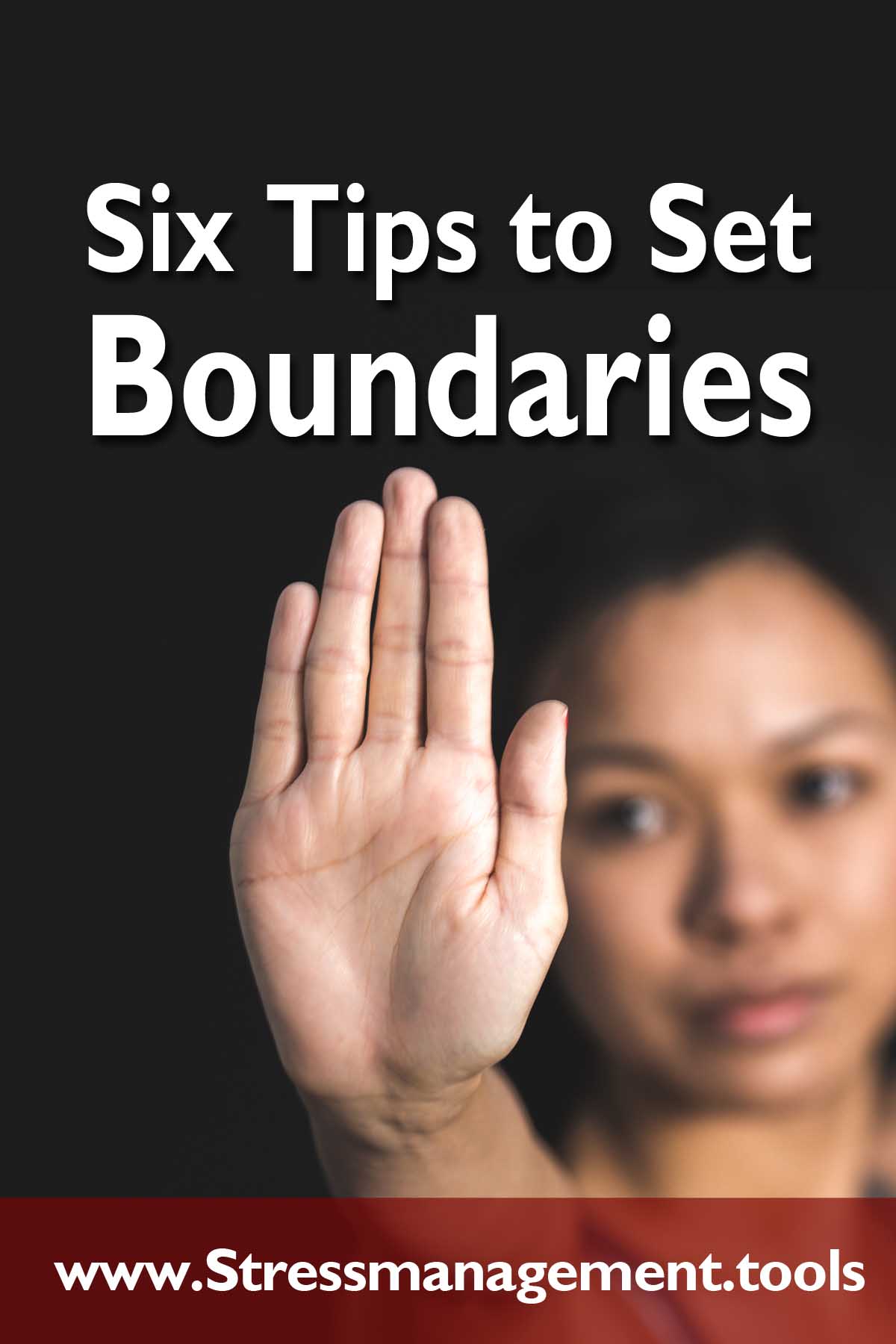
Six Tips to Set Boundaries

March 28, 2021 by Dr. Cesar Vasconcellos de Souza

Six Tips to Set Boundaries

Do you have a hard time setting boundaries? Do you usually say yes when you wanted to say no? You tackle things that you were not supposed to deal with? If so, then today’s topic is for you. Let’s get some tips that can help you set some boundaries.

Six Tips to Set Boundaries

Importance of Boundaries

You may ask: Why is it important to set Boundaries?

First, because you may be a person who didn’t know how to do this since you were a child. You may have been a victim of other abusive, dominating children, or you suffered from adults who were not sensitive to your needs as a child, needs that you did not know how to claim. Father and mother need to teach children from an early age to know how to defend themselves from abuse. You may have become an adult who still struggles with the issue of setting limits. Hence you suffer unnecessarily, assuming tasks, responsibilities that you shouldn’t have, but since you take them on, your life gets stressful, heavy and unhappy.

Boundaries are attitudes you should have and need to practice, in order to protect what is good in your life, and not allow bad things to overcome you, whether in your home, your body, at work, in your religious community, in the neighborhood and in your own mind. Limits are important. Think of the boundary between your house or apartment and the neighbor’s house or apartment. The limit can be the door, the corridor, the sidewalk, the wall, the fence, right? And what about the limits between a town and another town, between a state and another state, between one country and another country. Look how important limits are, the border is important, isn’t it? I remember a saying I read a while ago: having a neighbor is good, but put up your fence.

The fence defining the property boundary of the house

An emotionally sensitive person, if he suffered a lot in childhood relationships, he may have built up tight boundaries on his personality, in order to avoid suffering pain again. Sometimes we hide ourselves to protect from the pains we have experienced in the childhood past, to make sure they are not repeated in adulthood. But we can exaggerate our boundaries that keep us away from more intimate contact with others, and even with ourselves.

Some children may not have learned to put limits during childhood against family abuse. They may have been criticized for wanting to be alone for a few moments when it was normal for their temperament. They may have been hampered in the process of delineating their self, in the construction of an identity that separates them from others. They may have had difficulty making decisions independently. Some children and teens may have suffered in their families for being aggressively repressed when they tried to complain about something unjust and cruel. Children who grow up without having learned to set just and necessary limits for the preservation of their own identity, become adults who are generally victims of abuse in marriage, with an authoritarian husband, with an authoritarian wife, or with a co-worker, boss, or abusive business partner.

Practical Tips

Now let’s look at some tips on how to establish healthy boundaries.

First make sure you express yourself clearly. Many sensitive people, more prone to not knowing how to set boundaries, often express themselves, but not in a clear and firm way. They may say something like this: yes maybe, I’ll try, if I can, when they really wanted to say no. You can be clear, firm, and at the same time polite and tactful.

A woman shrugging her shoulders, not saying what she thinks - Photo by Polina Zimmerman from Pexels

A second tip: you have no obligation of always needing to give a reason for your decision. Think about it: you can say no thanks, I don’t want that, and that’s it. Speak politely, without shouting, and if the person insists on wanting to know the reason for your decision, you can repeat your answer and say that you do not want to explain. You have the right not to explain yourself to an abusive person, who just wants to bog you down.

The third tip on setting boundaries. Only you know whether or not you are overwhelmed. If people know that you are overwhelmed, they may not ask you for another difficult task. So say you have a lot to do or too many responsibilities around your ears.

A fourth tip: You have the right to tell a person that you will need more time to think about the decision he wants you to take right away. If you feel not safe to take the final decision right now, say that you need to think and that you will get back to them as soon as you can.

The fifth tip for you to set boundaries and protect yourself. If you think it will be easier to say no by email, by phone, by the message on your cell phone or other means, without being face to face, then use one of these means of contacting the person.

The sixth tip has to do with respecting yourself and thinking that you are on same ground with another person, or you may even be better prepared, for example to perform a certain task. Someone who is bossy, with a dominant temperament, usually chooses the best seat, the quietest place, the largest office, dictates the rules, determines tasks, doesn’t he? So do not feel or place yourself as inferior to that person, but with the same rights if you are actually in the same hierarchy. If the person doesn’t see you as someone who has the same rights as he does, when in fact you have a right, see what you can do to change that.

Make an effort to say no when it is the right thing to do. When you arrive at the final judgment, God will not ask you why you were not the same as someone else. If you don’t take better care of yourself, putting boundaries on what God expects you to be, he will ask you why you have not been the best of yourself. So think about it. You have a right to set boundaries, and if you have not learned it in childhood, you can learn it now. Protect yourself and set boundaries!

Do you need a guide to help you understand how to cope with Stress in an all inclusive approach? Learn how to combat stress, mentally, physically, emotionally and strategically in your life.

Get Me the Guide

Filed Under: Boundaries, Psychology

Next Page »

Primary Sidebar

Copyright © 2026 Stress Management Tools · Log in