Stress Management Tools

Helps You to get Stress under Control

  • Home
  • About
  • Blog
  • The Program
  • Free Offer
  • Contact
You are here: Home / Archives for Planning

Planning

12 Tips for Dealing with Stressful Work Environments

December 17, 2023 by Martin Neumann

Do you dread getting out of bed every day to go to work because your work environment is too stressful? You are not alone. 75% of employees believe that workers have more on-the-job stress than a generation ago. 62% of US workers reported having high levels of stress, involving extreme fatigue or feeling out of control. And working women tend to report higher stress levels than men.((All statistics from: Workplace Stress. American Institute of Stress))

12 Tips for Dealing with Stressful Work Environments

For many it is not only the excessive workload that causes them stress, but also people issues and the work environment.  You may find that the people you work with are intolerable or that the setup of your workplace is simply not conducive to getting things done efficiently. Dealing with stressful work environments is something many of us have to face every day, but you don’t have to let it get you down.  Instead, by learning how to deal with your stress at work you’ll be able to boost your energy and reduce frustration.

How to Deal with Stressful Work Environments

Establish a stress-reducing morning routine. When you drown a coffee in the morning, rush your kids to school, and face the traffic madness on the way to work, probably you are already stressed before starting your work. Be sure you get up early enough to eat a substantial and healthy breakfast, do your household duties without stress, and ideally get some form of exercise, even if it is a few minutes walking around the block before you slip through the office door.

Create a daily to-do list. Many times, when we are stressed out, it’s because we are not clear on what needs to be done, and important tasks may even fall through the cracks so they need to be done under time pressure. This causes our stress levels to rise quickly and uncontrollably. When you create a to-do list, it won’t matter how hectic the office gets, you’ll have a list in front of you that’ll remind you what needs to get done for that day. You’ll feel more in control when you organize your day and you’ll be able to find some peace in the chaos surrounding you.

Be clear about your priorities. Having a to-do list is a good start, but having too many items on the list is often a source of stress. Figure out every morning what are the priorities that need to get done and focus on the most important task of this list. Don´t worry about the other items on the list, you are not supposed to finish it all in one day. If your supervisor defines your schedule, check in to figure out the priorities that are most important for the day. Being clear on the priorities makes you fret less about the secondary tasks.

To do list

Practice good time management. Efficiently manage your time by setting realistic deadlines and avoiding procrastination. If you are a perfectionist, you may fall for the temptation to spend too much time on a task to get it perfect and neglect some other things in the process that get undone for lack of time. Estimate how much time you want to spend on every task, and once the time is over, look at how you can wrap it up. Sometimes we underestimate the work involved and will need some extra time, but if you are tempted to spend your time in an endless routine of polishing your work, step back for a minute and remind yourself about the other tasks that need your attention, so you do not lose out on the big picture. Be sure to schedule your jobs well ahead of their deadlines, so you do not need to accomplish them under stressful time pressure.

Take short breaks. When we are under pressure, we often think that breaks are a luxury we cannot afford. We are trying to push through the day, but pretty soon stress is piling up until we are losing our minds. Actually, we will be much more productive when scheduling some regular 5-minute breaks in a 40 to 60 minute interval. Take just a moment to get up, walk around the block, watch the birds outside the window, or get a glass of water. Then you get back to work with new energy and a concentrated mind. Soon you will realize how you can handle your workload with ease.

Detach and recover after work. Work stress tends to pile up throughout the day, and long after we have left through the office door, the work challenges are still ruminating in our minds. We can break the cycle and engage in a recovery activity right after work. Listen attentively to music on your way home. Classical music will be especially effective since it involves you mentally. Get out into nature and actively observe your environment. Watch a squirrel finding a nut or a duck caring for her chicks. Engage in a hobby when coming home, and as paradox as it seems, the more engaging and demanding the free time activity you choose, the better you can recuperate from work stress. And resist the temptation to take work home or to answer work emails in the after-hours.

Avoid distractions and multitasking. Sometimes we think the more projects we handle at the same time, the more we will get done. Actually, exactly the opposite is true. Trying to divide the attention between two tasks is a surefire recipe for becoming inefficient. Our minds are simply not made to process two things at the same time. For maximum performance, we need to concentrate on the task at hand. Get your to-do list and determine the most important task to tackle first. Then you do not touch anything else until the task is done. Be sure to switch off your cell phone and the “You´ve got mail” alerts. Let your co-workers know that you need some distraction-free time. As soon as you have got your focus on the job, go for it with all your attention.

Establish healthy boundaries. If you are known for taking on the challenges of everybody else in the company, it is a surefire way to get burnout. People get lazy if they know there is somebody else to resolve what they did not manage to do. Avoid overcommitting to other people’s projects, when you have already too much on your plate for yourself. Be very clear in communicating your boundaries and limitations. If you have planned a weekend outing with your family, make it clear that you are not available to work overtime. Everybody needs to carry a fair share of their workload and responsibilities for themselves.

Create a space conducive to concentration. If your office is open-concept, you may find the hustle and bustle around you to be distracting. If this is the case, try setting up your workspace so that everything you need is right in front of you, so you don’t have to continually get up to grab stuff.  Also, try putting up a privacy screen (if possible), or rearranging your furniture or computer screen to create a barrier of sorts between you and the rest of the office.

An office space with drawer placed to produce privacy

Be proactive in your communication. It is very tempting to assume that everybody else knows what is in your head and is on the same page with you. But in reality, misunderstandings happen frequently because of poor communication. Be sure to frequently align your priorities with your colleagues and supervisors. Assure that everybody is pulling in the same direction. When problems arise, be sure to express your thoughts calmly and assertively. Avoid bottling up emotions until you explode. And always be open for constructive feedback without going into defense mode.

Learn to delegate. It is tempting to think that you are always the best person to get the job done and there is nobody else to replace you. Continue to think like that for a while until you are burned out and have to delegate your work to somebody else. More often than we think somebody else can do your work just as well and you can give your colleagues a chance to develop new skills. Once you have delegated something, do not go back to fuss around with the work you have passed on to somebody else. Accept that your colleague may do things slightly differently. Focus on the tasks that you do best and that really will turn the ship around, but let others handle some of your nitty gritty stuff that is easy to resolve.

Move around within the company or find a better fit elsewhere.  Many people simply cannot overcome the stressful environment in which they work.  Besides, no one should work in a situation where they always feel on edge!  If you have a job that is too demanding or rarely allows you to tend to your personal life, then it may be time to find a better fit. The same is true if you feel yourself at the wrong place. Nothing is more stressful than doing something all day long that you do not like. Getting a new job can be stressful in itself, but when you find something that is right for you, you’ll notice the old way of stressful living will dissipate and you’ll be left with a happier, healthier, and more peaceful life.

Workplace stress is at an all-time high, but in many cases, you’ll be able to overcome this stress using the workplace stress tips mentioned above. If the work environment becomes too stressful and toxic to deal with, you’ll want to take action.  After all, you must put yourself first if prolonged and unmanaged stress becomes destructive to your body and mind.

Do you need a guide to help you understand how to cope with Stress in an all inclusive approach? Learn how to combat stress, mentally, physically, emotionally and strategically in your life.


Get Me the Guide

Filed Under: Planning, Stress Management

An Effective Process to Deal with a Financial Crisis

October 22, 2023 by Martin Neumann

Financial Stress can cause you sleepless nights and can be devastating. For dealing with that you need to have a good plan.

An Effective Process to Deal with a Financial Crisis

There are varying degrees of financial stress. For example, consider the stress levels in these statements:

  • “How will we pay for the vacation in Hawaii this year?”
  • “We don’t have enough money to go eat out in the restaurant, but we can have Pizza Palace deliver.”
  • “We can pay the electric bill or the gas bill, but we can’t pay both. Remember that the bank said we’d lose the car if we don’t make a payment by the 10th of the month.”

Some people are fortunate enough to have never been in the last situation, but many people aren’t so lucky. Desperate times are highly stressful times.

The good news is that it is possible to get out of a financial crisis! Alleviating such financial pressure requires a cool head and a plan.

Follow this process to reduce your financial stress and see brighter days ahead:

Gather information

Get an accurate picture about your situation. It’s easy to make yourself more upset than necessary. Ensure that you have a factual representation of what’s going on.

  • How much money are you making?
  • What are your bills?
  • How much debt do you have?
  • What resources are available to you?

Focus on solutions

If you focus on the problem, your mind is easily getting stuck in negative self-pity. You will find it hard to see a light at the end of the tunnel if you focus on the wrong thing. Commit yourself to finding solutions.  Most of us tend to focus on comfort, which is a big mistake. Nothing happens when you make yourself comfortable. You’re just distracted. Spend the vast majority of your time looking for and working on solutions.

  • You can take it easy at night before bed and focus on making yourself comfortable then to help you have a good night’s sleep.

Eliminate every unnecessary expense

Most people have several expenses that provide little to no value. Do you have a gym membership you never use? Magazine subscriptions? Expensive cell phone plan?

  • Get rid of every expense you don’t truly need. Of course, you must pay for your housing, utilities, food, medicine, and insurance. However, everything else is optional.

Determine what you can and cannot influence

Most of us worry about things we can’t control. There’s actually very little you can control. You can control your thoughts, attitude, and actions. And if you can’t do anything about it, then just accept that it is out of your hands.

  • Focus on what you can influence and avoid worrying about the rest.

Determine how every penny is being spent

When you’re under serious financial stress, it’s important to know where all of your money leaks are occurring. Discover where every cent is going each month. Track it all.

Doing accounting of the expenses

Work on a plan to boost your income

If you had enough money, your financial stress would go away. There’s always a way to make more money if you’re committed to providing more value to the world.

  • You might want to get a second job or a side hustle. It might be time to start an online business or to look for a better-paying job.

Budget

Do you have a budget? Most people don’t. Choose where your money is going before you spend it. Make a spending plan and stick to it.

Find ways to relax

The solution to stress is to either remove the source of the stress or to relax. Plan relaxation time into your schedule each day. If you’re too stressed for too long, you’re likely to end up sick. Too much stress reduces your ability to function optimally.

  • Experiment with various relaxation methods to find out what works best for you. Some healthy options include listening to your favorite music, taking a warm bath, engaging in a hobby that pleases you, playing with your kids or pets, going for a walk, or hiking on a nature trail.

Ask for help

It might be time to ask for help. Friends, family, your employer, your banker, or even your creditors can all be of help during financial challenges.

Financial stress is a leading cause of divorce, suicide, and many health issues. Financial issues can be an overwhelming challenge. Ensure that you’re working with accurate information, scaling back, boosting your income, and making a plan. Ask for help if you need it. There is a way out, although it might be challenging. Never give up!

Do you need a guide to help you understand how to cope with Stress in an all inclusive approach? Learn how to combat stress, mentally, physically, emotionally and strategically in your life.

Get Me the Guide

Filed Under: Causes of Stress, Finances, Planning

13 Things You Can Do Tonight to Make Tomorrow Morning Less Stressful

March 12, 2023 by Martin Neumann

Are mornings a mad rush at your house? By the time you find matching socks for the kids and answer the text messages that piled up overnight, you may feel like you’ve put in a full day before you even reach the office.

13 Things You Can Do Tonight to Make Tomorrow Morning Less Stressful

You can make your mornings run more smoothly. With just a bit of planning, you can have better control over the right start of your day. Take a look at these suggestions for feeling more relaxed as you start each day.

8 Ways to Save Time in the Morning

Staying on schedule is for many the biggest challenge. These time-savers will help you streamline your routine.

  1. Plan your schedule. Maybe you’re trying to cram too much into too little time. Figure out how much time you need for your usual activities. Then, you can calculate when you need to go to bed so you’ll get up in time and still be well rested each day.
  2. Organize your space. Do you know where your umbrella is? Keeping essential items in their habitual place will eliminate searching for car keys or gym bags. No need to search the entire house for each item. Put them always at the same place, and you will find them in an instant.
  3. Check the weather. Rain and snow may change your plans. Take a look at the forecast before you go to bed so you’ll be ready with rain boots or ice scrapers, and the proper clothing for each situation.
  4. Prepare breakfast. Eating breakfast gives you energy now, and makes it easier to resist snacking on junk food later. Assemble your cereal ingredients tonight so you can get going in an instant.
  5. Lay out your clothes. Hang tomorrow’s outfit at the front of your closet or on the back of your bedroom door. You already made up your mind on what you want to wear, so you just need to get dressed and get going.
  6. Simplify your look. How many products do you use in the morning? Design a simpler skin care regimen and browse around for a low-maintenance hairstyle. Saving some time will make you happier on the end of the day.
  7. Write notes. Save your brain power for more important subjects. Jot down reminders to pick up prescriptions or dry cleaning on your way to work. This way you free up your mind and nothing falls through the cracks.
  8. Shorten your commute. Studies show that the length of your commute has a dramatic effect on your health and wellbeing. Moving or changing jobs is a big decision, but you may want to explore your options. If you’re looking for a benchmark, the average one-way commute in the U.S. is 25.5 minutes.
Taking the train to commute to work

    5 Ways to Make Mornings More Peaceful

    However much you need to do, you can stay calm and focused. It’s a matter of attitude. These tips will help you enjoy mornings more.

    1. Adjust the light. Light has a powerful effect on your brain. Darkening your bedroom at night will help you to sleep better so you wake up feeling refreshed. The opposite holds true for waking up. Exposure to morning sun will banish grogginess.
    2. Skip the snooze button. Try placing your alarm clock across the room if you’re in the habit of hitting the snooze button. Those 10 minute fragments of sleep usually leave you feeling worse than if you get out of bed immediately. If you have troubles on getting out of bed, try a 5 second countdown and just launch yourself out of bed.
    3. Play music. Spend a moment before going to bet to cue up a playlist of your favorite songs. Lively music will give you energy if you’re dragging around. Gentle instrumental music will soothe your nerves if you’re apprehensive about a job interview or business presentation. Having the right music around will get you into proper mood.
    4. Download a podcast. Continue your education during your commute. Find a podcast that will teach you Roman history or the fundamentals of accounting. Or find some inspirational audiobooks. You will make better use of your time and arrive at work with an active mind.
    5. Connect with Your Creator. Take a moment each night to be grateful for your day, reflect on all the things that had happened, and thank God for your day. If there is anything to resolve, do that right at this moment. You will sleep better if you have peace of mind. At the morning when you wake up, take a moment to commit the day into God´s hand. Meditate on a bible verse and you will conduct your day with a different mindset.

    A few simple strategies can turn you into an early bird or at least make your initial hours happier and more productive. Starting the morning on a positive note will help you head off stress and feel calmer all day long. It will make quite a difference if you are off for the right start.

    Do you need a guide to help you understand how to cope with Stress in an all inclusive approach? Learn how to combat stress, mentally, physically, emotionally and strategically in your life.

    Get Me the Guide

    Filed Under: Planning, Time Management

    Plea for a Simpler Life – Less is More

    December 11, 2022 by Esther Neumann

    If my grandfather, born in 1890, were to come into my house, he would not find his way around, neither in my household nor in my office. Our present generation has so many more opportunities to shape our working world and our private lives. But life has also gotten more complicated. We need to be familiar with so many modern communication tools. So many machines and gadgets with complex procedures that we can’t figure out, do the heavy, tedious work for us. Actually, these modern technical achievements are supposed to give us more time for ourselves.

    Plea for a Simpler Life – Less is More

    When I’ve finished writing this article, I won’t have to write it clean on paper, put it in an envelope and take it to the post office for my editor-in-chief. I remain seated in my office chair and send it via the Internet. If the editor wants to, he can open and read it on his computer a few minutes later.

    What do I do with the time I’ve saved? Am I going to fold my arms, be happy about the successful article, and reflect on the essentials? I have to watch over my time, my health, my thoughts. I don’t want to plunge into the next activity like the fast swimmer with a head dive into the cold water.

    I want to take the liberty – and fortunately I can afford it – to structure my working hours for myself. Instead of getting dragged by the daily grind, I want to consciously take responsibility for my everyday life. After a few hours at the computer, it’s time to do some gardening or kitchen work. Every now and then a nature walk is allowed. During this time, I come up with all sorts of things.

    Sowing seeds in the garden

    Most people live outside of their “assets”. It’s not just about money, about consumption, but also about time, about food, about relaxation. It’s not about asceticism, but about simply doing without the superfluous, which we find difficult to deal with anyway.

    Too many pounds make me short of breath. Why did I eat so much again? I have been wanting to lose a few pounds for a long time! Yes, I can afford a pumpkin pie with whipped cream every now and then. Tomorrow, however, there will be an apple for dessert – and I’ll simply enjoy it! Actually, a fruit day every now and then is good for my health. Or should I try just drinking tea for a whole day? That’s definitely good for me and I’m happy when I’ve grown beyond myself and my appetite.

    While I’m tidying up, I can go through my closet. What has accumulated there, such an abundance! I haven’t worn this lovely piece in a year. That’s why my friend recently said to me: “I always see you in the same sweater.” Both pieces are still in good condition: so wash one of them and off it goes to the thrift store. There’s still enough in the closet.

    A man struggles with a pile of clothes

    What else can I get rid of in order to live a simpler life? How was it last night before falling asleep? I was worried and anxious about the future. The car is getting in his years, the roof of the house would need some repairs. The winter is still long and the wood supplies are running out. All this costs money. Where does it come from? How am I going to do this? Then even the past came into play. Do you still remember the mistake you made back then? You really weren’t fair to your child. Hopefully it hasn’t been hurt and is getting over that.

    Fears and worries about the future, lingering in the past are robbing me the strength and time to simply live in the now. And I can only live in the now. Have I ever experienced anything in the past or done anything in the future? The answer is simple: I live in the now. I can cope with today, this attitude gives me strength, but today I don´t get what I need for tomorrow.

    So I can also simplify my thoughts, I can remove the superfluous. Simply by not brooding too much over things I can’t change; but also, simply by looking forward to the new day every morning, to the sun that will rise again, even if the weather should remain cloudy, it’s still there. For me, every new day is an invitation to simply live – or live simply – simply in both senses.

    It’s up to me to shape my day to be simpler, to find joy in the simple things of everyday life, in the opening of a flower, in the laughter of a child, in the surprised expression on my work colleague’s face when I have greeted him with enthusiasm and wished him a very good day.

    An opening flower

    No amount of possessions can buy me the joy of life. Proverbs 13:7 says, “There is one who makes himself rich, yet has nothing; And one who makes himself poor, yet has great riches.” If I give in to every wish and fulfill it, then I cannot be happy in the long run. Neither money nor confirmation, not even success can still my longing for a fulfilling life. True joy comes from living a simple life, enjoying nature, being accepted by my circle of friends and feeling safe with my God, Creator and Sustainer.

    Do you need a guide to help you understand how to cope with Stress in an all inclusive approach? Learn how to combat stress, mentally, physically, emotionally and strategically in your life.

    Get Me the Guide

    Filed Under: Planning, Simplifying

    5 Ways to Keep Financial Stress Under Control

    September 18, 2022 by Martin Neumann

    Financial Stress

    Right now, financial stress is causing a lot of turmoil for individuals and families around the globe. Actually, 87% of Americans are stressed about ever rising prices.((Stress in America 2022 https://www.stress.org/daily-life)) While many in the media might downplay it and tell consumers things might not be as bad as they seem, the truth is many are fearful about the economic outlook. Do you know how to navigate your finances in the midst of a financial crisis? This can be an important tool to control your stress in this difficult times.

    5 Ways to Keep Financial Stress Under Control

    It started with an influx of rising prices for groceries, which were blamed on supply chain shortages. Then gas prices skyrocketed, and blame was put on a distant war. Rent and mortgages are tripling and displacing many people from their homes.

    It’s hard to remain calm when you’re finding that your dollar doesn’t stretch as far as it once did. Inflation and recessions are something we’ve been through before, but that doesn’t mean you have to sit idly by watching as your money struggles increase.

    Instead, you can be an action-taker who doesn’t succumb to the stress of economic hardships and implement a plan that not only sustains your way of life, but allows you to thrive under poor financial conditions nationwide.

    Don’t Be Afraid to Know the Truth About Where You Stand

    You can’t stay stress-free if you don’t know the truth about what state your finances are in. Some people actively avoid looking into this because they feel it’s a dire situation and it’s easier to turn a blind eye than to face the reality of it.

    There’s a level of guilt and shame knowing you’ve let your finances spiral out of control, but in this situation, you have to set that aside and handle your money so that things don’t get worse and put you in danger of a financial catastrophe.

    Start with the roof over your head and the utilities that you need, such as water, electricity, phone and Internet. If you’re spending money on things like cable or streaming plans, jot those down, too.

    Next, figure out how much you currently spend on food and gas as well as medical needs, clothing, and other bills. Once you’ve compiled those numbers, go through other debt you make regular payments on – such as retail and credit cards, loans, etc.

    Doing accounting to determine a budget

    Don’t get overwhelmed. This is a starting point for you to begin gaining control over the health of your bank account. You can’t do anything if you’re ignorant to the ruth of the matter.

    Make sure you know the total amount due, the date it’s due, the minimum amount you need to pay each month, and the interest rate (if applicable). You’re going to want to meet your monthly needs first then plan for the repayment and pay off of the loans and debt that is weighing you down.

    By the end of this exercise, you might feel like this burden is a lot to handle, but now you get to attack the money situation in a way that lets you breathe easy once again, so look to the immediate future from this day forward and don’t harp on what you’ve done in the past.

    Know Your Necessities Versus Wants

    For many, it’s hard to differentiate between needs and wants. Sometimes, you get so used to having something in your life that you feel as if it’s a necessity, when it’s really not.

    You can chalk some things up as necessities easily, like food, electricity, gas, mortgage (or rent), and so on. You might easily be able to mark off a Starbucks or fast food as a want that you don’t really need.

    The key will be for you to get tough on yourself and truly identify what’s necessary and what you can do without (at least for the time being). This doesn’t mean you have to always go without something, but you’re tightening up for a temporary pause while you get your financial worries cleaned up.

    With the needs versus wants, you’re going to have to make some important decisions. Some things will be defined as a necessity, but the way in which you handle it financially is detrimental to you.

    For example, you need clothes. But you don’t need designer clothes from an expensive store. You could get away with cheaper shops, hand-me-downs or even thrifting if necessary, depending on your current financial state.

    Selecting clothes at the thrift store

    The same goes with food. You need food – but you don’t need to order Door Dash three times a week from your favorite restaurants. You can plan and cook meals at home on a budget.

    You might find working out to be a necessity for good health, but it doesn’t mean you have to keep your expensive gym membership. Instead, you can work out at home or outdoors.

    These are decisions that might be difficult for you to explain to the rest of your family. But if you’re in charge of the financial health of your household, it may be a discussion you have to have.

    Your kids may feel like they need Netflix, but the truth is, it’s a luxury that not everyone can afford. They may say they need their phone, but they don’t need unlimited text and minutes if you can’t afford a plan like that.

    Go through your list to identify what’s necessary and what’s simply a desire to have, and if something is in the necessity column, look for ways you can alter spending to save you money.

    Start Operating on a Budget That Works

    Budgets are the self-control you need to get yourself on the right track financially. Most people don’t live on a budget, instead spending whatever comes in and hoping they can make it until the next payday.

    You have to have willpower and control over what you allow to be spent out of your income. In normal times you should have a three-pronged system where you have money going toward necessities, some toward an emergency fund and a tiny bit toward things you don’t need, but want. If you have debts, you of course pay them back before creating an emergency fund.

    Your budget has to fit within your income. So that may mean that instead of spending $250 a week at the grocery store, you only allow yourself $200 or even $175. To achieve these budgetary goals, you’ll need to spend some times planning.

    You may need to create an affordable meal plan with rice and beans or pasta dishes that stretch far, fruits that are in season selling for a cheaper price, and store brands instead of brand name products.

    If, to date, you’ve allowed everyone to pretty much place an order from the store for whatever meals they want, you might need to start preparing one meal for the entire family that everyone has to eat.

    A family working together on meal preparation

    Instead of using fresh broccoli crowns, you might use a bag of frozen ones and save money that way. Do the same with every expense you have when you’re preparing a budget.

    Allot a specific amount for gas. If that means you can’t drive somewhere, then that’s what it means. You may need to carpool or take public transportation. You can also plan your errands strategically so that you’re traveling in a logical order and not zigzagging all over town back and forth.

    If you come to an item in your necessities list and it looks as if your budget has run out already, look over it again and see what can be cut or transformed in terms of spending that will open up new funds for the necessity in question.

    Living on a budget can be uncomfortable in the beginning. But the reality is, once you get used to it, you can feel peace of mind knowing you’ve properly planned for your spending in a way where you know your needs will be met.

    Get Everyone in the House to Pitch In

    When it comes to tackling a financial crisis, this is not a task you do silently on your own while everyone else lives life as usual. It’s important for your spouse and children to be aware of what you’re working on.

    It’s important that you approach it the right way. You don’t want to start crying and talking in a panic about how broke you are or how you worry about losing the roof over your head or not being able to eat.

    Kids don’t need to know the intricate details. What they can know is that right now, the nation (and world) is experiencing some high prices and limited income, so everyone has to be onboard to tighten up spending and get through this.

    When kids know there’s something happening, they will want to help out. They’ll know not to ask for luxuries like a new gaming system or a big birthday party with their entire class being invited to an expensive place.

    You can reward their ability to pitch in with ideas such as inexpensive meals the family may all like or family outings that don’t cost a penny. You might take turns letting them choose from this sort of thing so that they feel like they’re assisting mom and dad in their efforts to get through a financial tough spot.

    A family going for an outing

    Your spouse will definitely need to be onboard to help. Sometimes, only one parent or spouse handles all of the finances. No matter what the situation is, in terms of debt you’ve accumulated, now is the time to be honest with them so they can be mindful of their spending, too.

    They need to know that lunch will be meal prep and not fast food, that the morning Starbucks is off the budget for now, and that now is not the time to upgrading things that can wait.

    Because you might be working longer hours or even just stressed from handling the finances, it’s important that you get everyone to help in other ways, too. They can help with chores to allow you to either work on a side hustle in the evenings or do the other things you need to do to work within your budget, like cooking dinner or fixing lunches for the following day.

    You might have teens who are old enough to work. If so, let them get a job so that they can begin earning their own money for extra activities or even new clothes if they want something trendy that you can’t afford in that moment.

    Make Your Income Grow Steadily

    Taking care of your income and spending based on what you have coming in and going out now is a priority. But when the dust settles and you have a budget and plan working for you, it’ll be time to bump up your earnings to take the pressure off a bit.

    You may want to look into getting some extra income. Start with your current career. Have you been there long enough or have any qualifications that will make you eligible for a raise? Is there a different position within the company you could apply for in order to earn more?

    What about adding on a second job? Some people work more than one job just during tough financial times so that they can afford their needs and wants better. You could have one fulltime job and a parttime job a few hours per week.

    If you want to, you can also add a side hustle. This is similar to a second job, but you’re usually working more for yourself or as a freelancer than being a permanent employee who is assigned work hours.

    If you have a car, you might want to sign up for companies like Uber, Uber Eats, Lyft, Door Dash and other delivery services or rideshare programs. Even if the payout is not much, you’ll set your own hours and earn money that includes tips.

    You can also start your own online business if you want. There are many options for people who may need to be home with their kids in the evenings, but still want to add to their income streams.

    You can teach some classes online for kids, and parents will be willing to pay for getting their kids up to par on subjects that they were falling behind. Sometimes they are even willing to invest in teaching their kids some extracurricular skills.

    Teaching online as a side income

    Freelance workers online can do administrative work for companies or entrepreneurs. You can do administrative tasks, ghostwrite content for brands who need things like blog posts, emails and eBooks, or create graphics if you’re good with programs like Photoshop.

    You might want to create your own info products like video or text courses. Or, start a blog where you make recommendations for a niche audience where you earn a commission for every sale that goes through. It will take some time to learn the trade of online marketing, but if you get it right, it can give you a steady income.

    There are many different platforms you can use to promote something and earn money – including Amazon, Etsy, ClickBank, Share-a-Sale, Commission Junction, Warrior Plus and JVZoo. Don’t sit idly by trying to survive on your current income when there are endless opportunities at your fingertips that can alleviate the financial stress you currently feel.

    Now you need to decide how much time you want to spend on extra jobs. If you are threatened by a mortgage foreclosure, you may want to get some extra money at any price. But if you alleviated your debts, you need to decide between some extra income to sustain your lifestyle, or simplifying your lifestyle and having extra spare time to spend with your family.

    As a conclusion, financial planning is essential if your finances are tight, and will help you to overcome even a tough economic crisis like we are passing through right now. That will help you quite a bit to get an important stress factor under control.

    Do you need a guide to help you understand how to cope with Stress in an all inclusive approach? Learn how to combat stress, mentally, physically, emotionally and strategically in your life.

    Get Me the Guide

    Filed Under: Finances, Planning

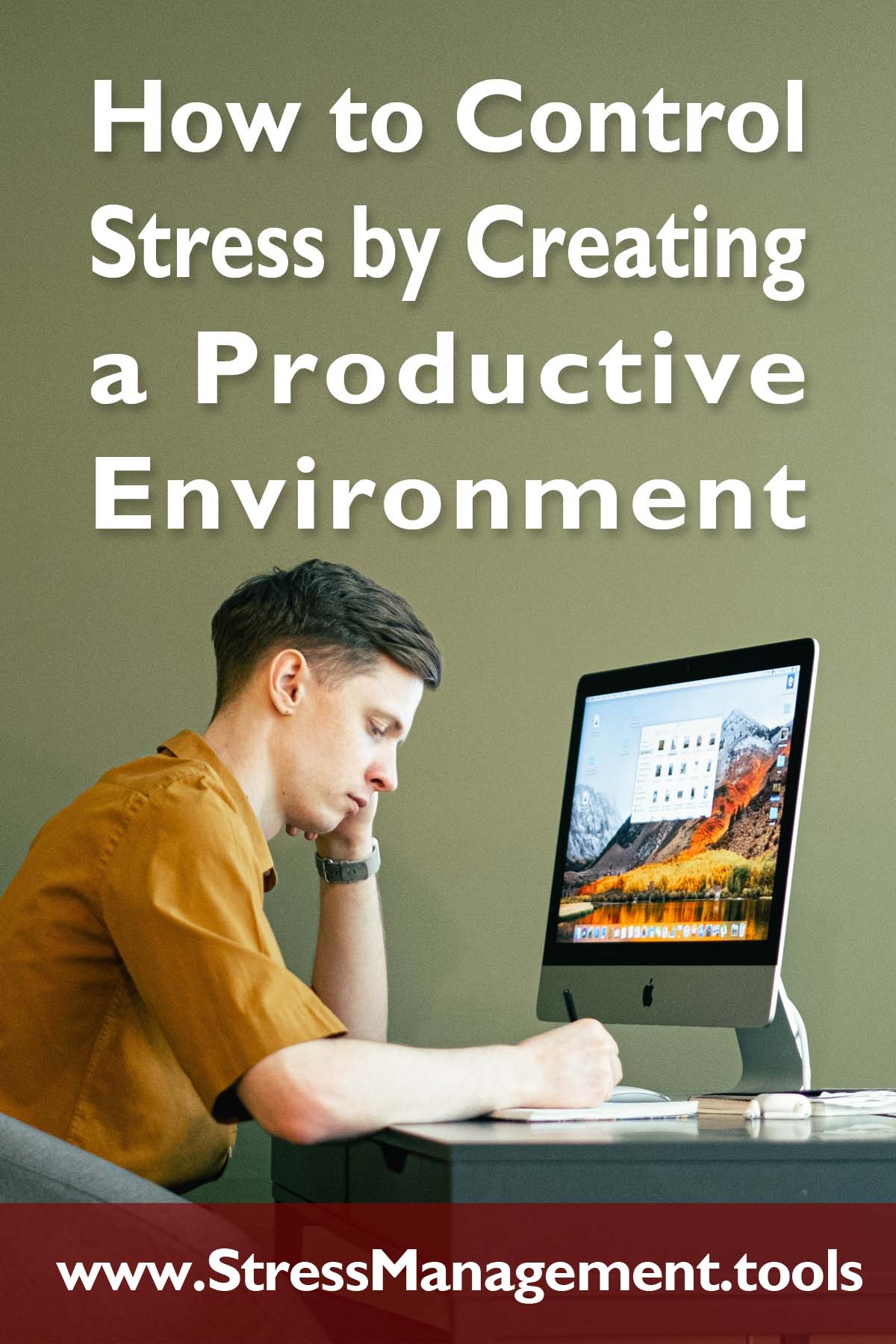
    How to Control Stress by Creating a Productive Environment™

    March 27, 2022 by Barbara Hemphill

    Productive Environment

    How often do you feel stressed looking at papers piled on your desk, browsing through hundreds (and for many people, thousands!) of emails, or searching for your glasses, a book, a form, or a piece of equipment?

    How to Control Stress by Creating a Productive Environment

    Your ability to accomplish any task or goal is directly related to your ability to find what you need when you need it – and that ability is essential to any organization in order to accomplish its mission, serve its customers, minimize legal risks, and reduce overhead costs. In other words, good business requires what I call a “Productive Environment™” – an intentional setting in which everyone can accomplish their work and enjoy their lives.

    While current economic conditions require organizations to do “more with less” and technology rushes forward, individuals are overwhelmed with “too much” – of everything – email, paper, projects, meetings, and interruptions. So what can you do to overcome these obstacles? The first step is eliminating physical, digital, and “systems” clutter. 

    While offices are cluttered with paper, and our computers with electronic files, other types of clutter, such as unused office supplies and outdated equipment, also cost money and take up precious real estate. And then there are those unidentified business cards you collected at networking events months, even years ago, and the mustard packets from the take-out that are how old?

    Because most people have never been given a process for eliminating the clutter in their lives, and unless they are “born organized,” were brought up in a family where it was role-modeled, or worked with someone who taught them, they are left to their own devices – which rarely works.

    A cluttered desk

    So that explains “physical and digital clutter,” but what is “systems clutter?”  A little girl observed her mommy cutting the end off of the ham before she put it in the oven.  “Why do you cut off the end of the ham, Mommy?” she asked. “I don’t know,” her mother replied.  “Go ask Grandma.  That’s what she always did.”  The little girl ran to her grandmother and asked the question.  Her grandmother replied, “Oh, honey! I didn’t have a pan big enough for the whole ham so I cut off the ends so it would fit!”  

    How many systems are you holding onto that are not contributing to a profitable, sustainable business?

    Few employees are willing to take the risk of getting rid of something for fear someone else – especially the boss – might want it.  Besides, it’s boring work, and they have “real work” to do!  So here are four simple questions to ask yourself in order to make your office a more productive environment.

    1. Is this item helping me accomplish my work or enjoy my life?
    2. Who else might find this item valuable?
    3. What’s the worst possible thing that would happen if I didn’t have it? 
    4. If I got rid of it, and I was wrong, could I live with the consequences?

    So here’s my challenge for you!  It’s always easy to see what other people need to do to make their workspace more productive, but how productive is your environment? Let’s find out! Click here to get your Productive Environment Score™ now.

    And if you’re the boss, be sure to ask about our “Productive Environment Day™” — a one-day event educating and empowering all your employees to make your office a “Productive Environment™” which truly reflects the quality of your products and services, and where everyone can accomplish their work and enjoy their lives! 

    Filed Under: Planning, Simplifying

    Next Page »

    Primary Sidebar

    Copyright © 2026 Stress Management Tools · Log in