Stress Management Tools

Helps You to get Stress under Control

  • Home
  • About
  • Blog
  • The Program
  • Free Offer
  • Contact
You are here: Home / Blog

Blog

Finding Peace In Your Crazy-Busy World

March 24, 2024 by Vicki Griffin

We live in a topsy-turvy, fast-paced world. It’s easy in the rush of crammed, hectic schedules to neglect life’s most important priorities. There is more to life than increasing its speed.((Mahathma Gandhi)) Our lives can easily become so busy…but oh, so barren. God has a special four-part “peace plan” to guide, strengthen, and inspire you with hope and energy. Let’s explore these vital elements of stress protection, physical and mental health, and spiritual vitality. Daily applying these four principles will help you flourish instead of flounder as you face life’s challenges and demands.

Finding Peace In Your Crazy-Busy World

1. A Lifestyle that Promotes Peace

Lifestyle is a major factor that affects mental, physical, social, and spiritual health. Lifestyle choices matter, especially the ones we repeat every day. They have a profound effect on brain function, which is the seat of your thinking, emotions, and decisions. “Many of the fundamental tools for the care and feeding of the brain are everyday matters. Physical and mental exercise, proper nutrition, and adequate sleep will help anyone gain cognitive clarity and emotional stability.”((Ratey, J. User’s Guide to the Brain, p. 356. Vintage Books, 2002.)) Power up your lunch and supper with crunchy, colorful fresh vegetable salads, greens, and beans. Try healthy vegetarian entrees instead of fatty meats and fried food. You won’t crave snacks with this delicious, high-fiber fare. Want real brain energy and body vigor? Water is the beverage of choice between meals instead of soda and coffee!

2. Attitudes that Produce Peace

Your mind, brain, and body are in constant communication through many different systems. Your thoughts and attitudes have a powerful effect on the rest of your body, especially your immune, nervous, and digestive systems. We can literally think ourselves into a frenzy, but God promises His peace, “perfect peace” to the one whose mind is centered upon Him (Isaiah 26:3). He invites us to trust Him with every circumstance of our life. A thankful attitude is associated with better physical and mental health, and even a longer life. “A contented mind, a cheerful spirit, is health to the body and strength to the soul.”((Ellen G. White, Counsels on Health (Mountain View, California: Pacific Press Publishing Association, 1949), 344.)) This is an attitudinal discipline that focuses on God’s truth and solutions rather than fear, circumstances, and unreliable emotions.

A woman looking into a mirror with a positive smile

3. Spiritual Principles that Secure Peace

“Spiritual well-being is at the center of a healthy lifestyle.”((Am J Crit Care 1995;4(1):77-81.)) To meet our deepest longings, God has provided spiritual principles that bring true life satisfaction. This does not come with wealth, fame, popularity, or even perfect health. It comes through making peace with God—in entering into a saving relationship with Him. Studies confirm that “Religious commitment may play a beneficial role in preventing mental and physical illness, improving how people cope with mental and physical illness, and facilitating recovery.”((Arch Fam Med 1998;7(2):118-24.)) Our natural hearts are not drawn to God, but we need Him. We are drawn to God because of our need—and God’s healing love which draws us. “We love Him because He first loved us” (1 John 4:19). God’s love is the foundation of a relationship with Him and healthy relationships with each other. We connect with God through prayer and learning about Him in His life-giving Word, the Bible. “In the day of my trouble I will call upon You, for You will answer me” (Psalm 86:7).

4. Faith that Preserves Peace

Faith is more than positive thinking—it is connecting with the living God who seeks to restore all that sin has broken and taken away. Jesus never promised an absence of problems. Jesus said: “These things I have spoken to you, that in Me you may have peace. In the world you will have tribulation; but be of good cheer, I have overcome the world” (John 16:33). Faith is the conviction that God will guide you and give you power through both good times and bad. Faith says, “Either make the problem smaller, or me bigger!” God has a plan and He cares for you in a very personal way. “For I know the thoughts that I think toward you, says the Lord, thoughts of peace and not of evil, to give you a future and a hope” (Jeremiah 29:11).

A man in nature meditating and praying

God’s Peace Plan can be Yours. Hulda Crooks experienced God’s peace plan in her lifestyle, attitude, trust in God, and faith. She was a sickly, sedentary, overweight woman for many years. She became a vegetarian, which improved her mental and physical health. But when she experienced the loss of her husband and son, she fell into depression. Hulda began walking which not only relieved her depression—it also eliminated more of her physical maladies, including constant fatigue.

Conquering Life’s Mountains. Hulda also began practicing a positive, faith-based attitude that gave her the “altitude” to stay inspired and be an inspiration to others! From aged 63 to well into her 90s, she completed 23 Mt. Whitney climbs, backpacked 212 miles of the John Muir Trail, climbed 86 Southern California peaks, and held 8 world records for seniors over the age of 80. This spunky late-bloomer caught and taught inspiration as a motivational speaker, and was affectionately known as “Grandma Whitney.” A mountain peak of Whitney is named “Crooks Peak” in her honor. God’s peace plan was fulfilled in Hulda’s life—and it can be fulfilled in yours too! Would you like to experience the fullness of Gods power, promise, and plan for your life? His peace plan is for you!

Do you need a guide to help you understand how to cope with Stress in an all inclusive approach? Learn how to combat stress, mentally, physically, emotionally and strategically in your life.

Get Me the Guide

This article was originally published on the Time to Get Ready website.
Filed Under: Habits, Healthy Lifestyle, Nutrition, Spirituality, Stress Management

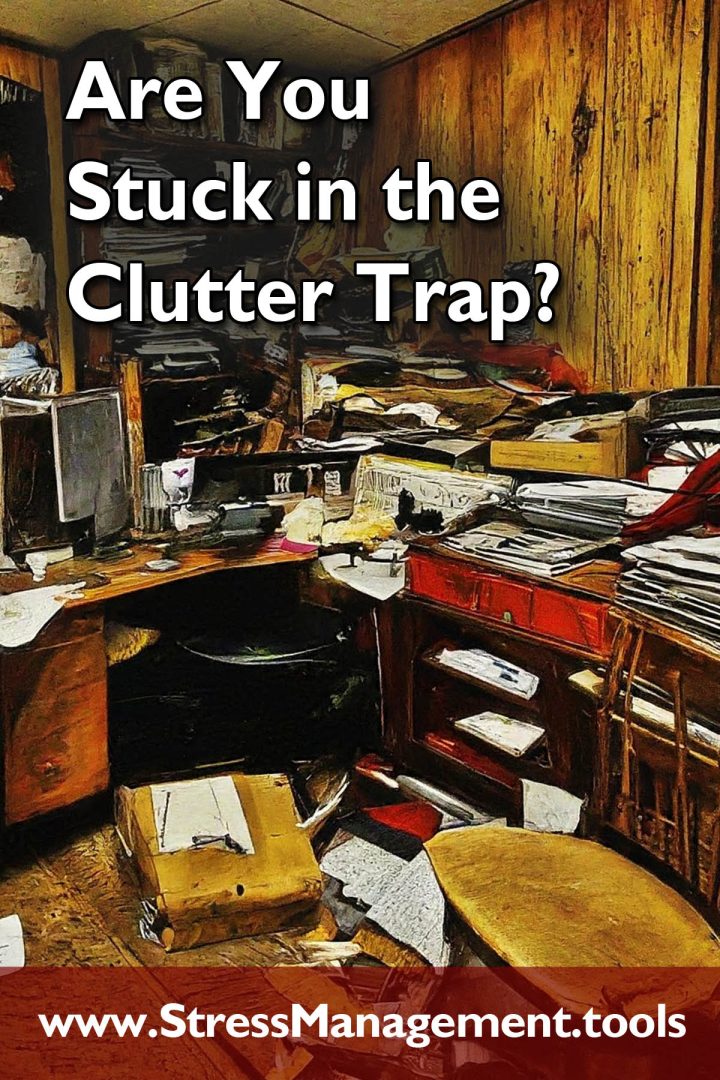
Are You Stuck in the Clutter Trap?

February 18, 2024 by Barbara Hemphill

You arrived on earth without clutter. Your parents and doting relatives started you on a pathway to accumulation. By the time you were a year old, you had mounds of functional clothing, twenty outfits suitable for dress-up, too many stuffed animals to fit in your bed, custom-sized furniture, a silver spoon, and a plastic Winnie-the-Pooh bowl. Perhaps there was also your christening gown: an heirloom already packed safely away waiting for the next generation. You had not even become a toddler yet, and you had already embarked on the road to the clutter trap.

Are You Stuck in the Clutter Trap?

Perhaps your most treasured possession during this time was a favorite “blankie.” This was one item that just made you feel good when you dragged it everywhere you went. You also had a rattle that served two valuable functions. It made noise, and it was handy to chew on when your gums hurt. And the most attractive item in your crib area was that mobile of the shiny fish that swam above your head. Even at this early age, you were surrounded by some things you loved, some things you found useful, and some things you found beautiful.

And there was other “stuff” too. There were broken toys, clothes you were rapidly outgrowing, a quilt someone made that felt scratchy. These were the beginnings of clutter in your life. But were you caught in the clutter trap?

No! You weren’t trapped because you didn’t care. You didn’t interrupt your life’s work (eating, playing, sleeping, and saying “no”) to worry about any of this. Your caretakers worried about them on your behalf.

By the time you became an adult, the story was different. While you were still surrounded by clothing, toys, furniture, and heirlooms, by now you had added two hair dryers, four televisions, three telephones, a computer, a washing machine, a lawnmower, a partridge-in-a-pear tree-decoration and other machinery for life. Friends, family, and colleagues had given you gifts, paintings, china, and things you never used, and didn’t particularly like. But you could never quite decide to get rid of them.

Here Comes the Clutter Trap

Although 50 to 95 percent of your life is operating very well, and you feel successful in most areas, you sometimes:

  • Feel overwhelmed when you look at your closet or the garage or attic
  • Put off important things because they seem too massive to tackle in your current state of mind
  • Avoid having people visit your home or office because it looks too messy
  • Tremble at the thought of an audit, because you probably couldn’t find supporting records
  • Spend hours looking for your car insurance documents
  • Get headaches, neck and back tension, or grind your teeth because you can’t seem to find a place to relax anywhere
  • Wonder what is wrong with you that you can’t seem to stay organized
  • Consider taking yet another time management course to get it all under control
  • Yearn to escape to a desert island.

Here’s the simple truth. Everything — everything — you have in your life either nourishes you or drains you. It either supports your dreams and desires or sabotages them. If too much stuff in your immediate environment drains you, you are caught in the Clutter Trap.

A distressed woman cleaning up boxes of household clutter

The Clutter Trap is a state of cumulative disorder that diminishes your physical, mental, emotional, spiritual, or financial health. It is a dangerous threat to your productivity, your prosperity, and your peace of mind. Underestimate that threat at your own peril.

The Clutter Trap is more than an occasional temporary mess you make while finishing a project or getting dinner ready. It is a multiplicity of messes. It is chronic, cumulative, chaotic, cramping, creeping disorder.

Your Family and Your World Needs Your Best

Suppose you wake up tomorrow with a kindly presence whispering gently in your ear. “You are such a great person, we have decided to give you your heart’s desire of the most ideal setting in which to live and work.” You float half-awake with welcome visions of a sun-drenched easy chair, a penthouse office, a water view, an inviting golf course just outside, cloud-soft carpets, luxurious furniture, relaxing aromas, fragrant flowers, harmonious sounds, peace, calm, and order everywhere around you, and just the right amount of stimulation to keep your juices flowing.

A Businessman in his penthouse office looking at a golf course and water view below

Then you open your eyes–and reality strikes! First, you see the exercise machine draped in yesterday’s gym clothes, then the closet door you hate to open for fear of being smothered by the crushing mass of things stuffed inside, then the stack of newspapers left from last weekend, then the smudge on the wall from some mysterious source, then the carpet that could use vacuuming, and finally the torn-out travel article you read last night, as you imagined a dream vacation away from all this.

“Oh well,” you say to yourself, “I’ll clean up tomorrow. Meanwhile, I’d better brush my teeth and get going. This is a very busy day. The clutter can’t be that important.”

And maybe you are seriously wrong. Maybe the clutter is enormously important. Think back to those waking moments when you imagined the ideal setting for your life and work. Think of how you would feel, act, and respond in such a setting. Would that setting help you feel focused, vigorous, strong, talented, generous, energetic, calm, relaxed, powerful, productive, or peaceful? Then remember how you felt when reality hit. You may have felt overwhelmed, drained, depleted, depressed, or at least discouraged.

Now picture going into your day without the clutter. Which setting inclines you toward your most satisfying results and your most nourishing relationships? How much difference could the right setting make to your ability to focus, to respond fully to all the opportunities of your day, to develop fresh solutions for the challenges you face, to return home and be a more loving partner and parent, to link with your neighbors to create a stronger sense of community?

Very few people are truly impervious to their setting. Most of us just pretend we are. We make promises to ourselves to take care of the clutter later. In the meantime, we walk around as incomplete, diminished versions of the fully resourceful, fully generous people we could be.

And our family and our world need our best. Setting matters. Freedom from clutter is not just a selfish pursuit of our own comfort or convenience. It is not just a luxury that makes our setting “nicer” or “cleaner” or “safer.” That freedom also unlocks us from distraction and distress, so we can connect and contribute more abundantly to our family, our community, our world. As one client said, “Save the planet, starting in my attic!”

Where will you start?

And if you are interested to learn from Barbara how to organize your physical and digital clutter, you can sign up for a free webinar.

Do you need a guide to help you understand how to cope with Stress in an all inclusive approach? Learn how to combat stress, mentally, physically, emotionally and strategically in your life.

Get Me the Guide

Filed Under: Causes of Stress

Make Driving a Less Stressful Experience

January 14, 2024 by Martin Neumann

A recent Time Magazine story reported that Americans spend an average of 204 hours a year commuting, and for most workers, that means driving their car.

Make Driving a Less Stressful Experience

The same article cited numerous studies about the effects of so much time on the road, including increased levels of blood sugar and cholesterol, higher rates of depression and anxiety, and lower rates of cardiovascular fitness, life satisfaction, and happiness.

It’s no wonder that driving can put significant stress on your body and mind. You need to force yourself to stay alert. You wonder about what you’re missing while you’re stuck in traffic. You may even be fuming about another driver who cut you off or almost rear-ended you.

If you’re starting to think that the situation is out of your control, think again. There is much that can be done to make your driving experience less stressful and bring you to your destination with a calm mind.

Take some of the stress out of your daily drive with the following proven strategies.

Managing the Situation

  1. Budget more time. Traffic jams are less frustrating when you’re not running late. Give yourself an extra 10 or 15 minutes for any trip.
  2. Plan your route. Check online for construction work and accidents to avoid. Just ensure that your alternate routes will really save you time and not take you too far out of your way. Consider using apps like Waze to help you find the fastest route with real-time updates.
  3. Switch your hours. If your boss is cooperative, you may be able to avoid rush hour completely. Ask about telecommuting or coming in an hour earlier or later. Maybe you could do it part of the week or on a trial basis.
  4. Bring entertainment. Stock up on audiobooks and podcasts. Listen to your favorite music. The time will pass more quickly and you may learn valuable lessons.
  5. Limit distraction. Avoid phone use, eating, and other activities that will divert your attention from the road. Turn off the notifications on your phone or switch it off completely until you reach your destination.
  6. Make yourself comfortable. Adjust the seats and mirrors so that you are comfortably seated and have a perfect view without needing to stretch out too far. Adjust the temperature so that it just feels right.
  7. Sit up straight. Your posture could be creating aches and stiffness that make any irritation worse. Draw back your shoulders, open your chest, and lift your head if you have a tendency to hunch over the steering wheel.
  8. Eat something. Is your stomach rumbling? Enjoy a small, balanced meal before you leave home. Being energized with a good breakfast gets you into better conditions to face the rush hour traffic.
  9. Stay Hydrated. Be sure to have a water bottle at hand, because being well hydrated will help you concentrate better. On hot summer days you will need some extra fluid intake to stay with a clear mind.
  10. Sleep well. Driving when you’re exhausted is dangerous. Call a cab or pull over to avoid harming yourself or someone else.
  11. Take breaks. On long road trips, stop and get out of your car at least every 2 hours. Walk around and stretch your arms and legs. Give a stretch to your spine, rotate your head and go back to the road refreshed and with a clear mind.
  12. Practice Regular Maintenance. Keeping your car well maintained will prevent breakdowns and unexpected issues which can be a quite stressful experience.
A woman driving in a car

Managing Your Reaction

  1. Breathe deep. Whether you’re dealing with backseat drivers or merging on a busy highway, use your breath to soothe yourself. Inhale and exhale fully and slowly.
  2. Develop compassion. Instead of becoming angry with another driver who seems rude or aggressive, imagine the stress they might be under. Try to empathize.
  3. Evaluate your role. Switch your attention from making judgments about other drivers to examining your own actions. Assess your emotions and question your assumptions. Be willing to forgive your fellow commuters when they make a mistake.
  4. Practice patience. Accept that traffic jams, road construction, and unexpected events are part of the driving experience. Cultivate patience to handle those situations without getting frustrated.
  5. Avoid road rage. If you encounter aggressive drivers, try not to engage with them. Stay calm, avoid making eye contact, and focus on your own driving. Responding aggressively can easily escalate the situation.
  6. Practice Gratitude. Instead of focusing on the negatives of other drivers and the road congestion, focus on the positive aspects of your journey. Be grateful for your comfortable car, your ability to make the trip, and any positive experience along the way.
  7. Leave your work stress behind. If possible, try to leave work-related stressors behind when getting into the car. Create a boundary so that your stress is not overflowing to other areas of your life and focus on a positive experience during your way home.
  8. Lay off the horn. Remember that your horn is not a comment button. Use it gently and only when necessary to get another driver’s attention.
  9. Play it safe. When you see driving that is clearly aggressive or erratic, keep your distance. Your safety should come first.

Make driving more pleasant by thinking creatively about your transportation options and changing your attitude. You may be able to shorten your commute or at least make it more enjoyable.

Do you need a guide to help you understand how to cope with Stress in an all inclusive approach? Learn how to combat stress, mentally, physically, emotionally and strategically in your life.

Get Me the Guide

Filed Under: Causes of Stress, Stress Management

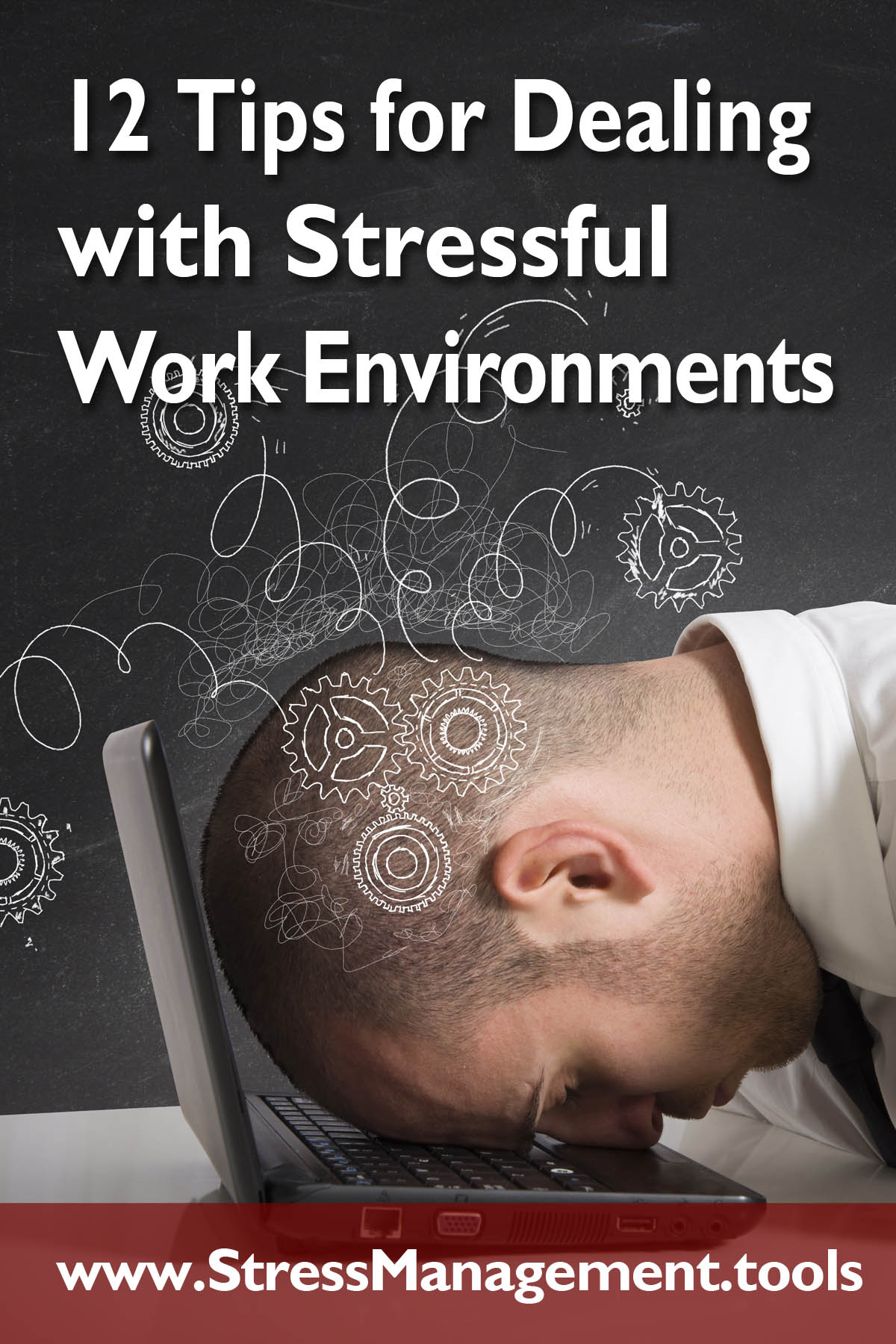
12 Tips for Dealing with Stressful Work Environments

December 17, 2023 by Martin Neumann

Do you dread getting out of bed every day to go to work because your work environment is too stressful? You are not alone. 75% of employees believe that workers have more on-the-job stress than a generation ago. 62% of US workers reported having high levels of stress, involving extreme fatigue or feeling out of control. And working women tend to report higher stress levels than men.((All statistics from: Workplace Stress. American Institute of Stress))

12 Tips for Dealing with Stressful Work Environments

For many it is not only the excessive workload that causes them stress, but also people issues and the work environment.  You may find that the people you work with are intolerable or that the setup of your workplace is simply not conducive to getting things done efficiently. Dealing with stressful work environments is something many of us have to face every day, but you don’t have to let it get you down.  Instead, by learning how to deal with your stress at work you’ll be able to boost your energy and reduce frustration.

How to Deal with Stressful Work Environments

Establish a stress-reducing morning routine. When you drown a coffee in the morning, rush your kids to school, and face the traffic madness on the way to work, probably you are already stressed before starting your work. Be sure you get up early enough to eat a substantial and healthy breakfast, do your household duties without stress, and ideally get some form of exercise, even if it is a few minutes walking around the block before you slip through the office door.

Create a daily to-do list. Many times, when we are stressed out, it’s because we are not clear on what needs to be done, and important tasks may even fall through the cracks so they need to be done under time pressure. This causes our stress levels to rise quickly and uncontrollably. When you create a to-do list, it won’t matter how hectic the office gets, you’ll have a list in front of you that’ll remind you what needs to get done for that day. You’ll feel more in control when you organize your day and you’ll be able to find some peace in the chaos surrounding you.

Be clear about your priorities. Having a to-do list is a good start, but having too many items on the list is often a source of stress. Figure out every morning what are the priorities that need to get done and focus on the most important task of this list. Don´t worry about the other items on the list, you are not supposed to finish it all in one day. If your supervisor defines your schedule, check in to figure out the priorities that are most important for the day. Being clear on the priorities makes you fret less about the secondary tasks.

To do list

Practice good time management. Efficiently manage your time by setting realistic deadlines and avoiding procrastination. If you are a perfectionist, you may fall for the temptation to spend too much time on a task to get it perfect and neglect some other things in the process that get undone for lack of time. Estimate how much time you want to spend on every task, and once the time is over, look at how you can wrap it up. Sometimes we underestimate the work involved and will need some extra time, but if you are tempted to spend your time in an endless routine of polishing your work, step back for a minute and remind yourself about the other tasks that need your attention, so you do not lose out on the big picture. Be sure to schedule your jobs well ahead of their deadlines, so you do not need to accomplish them under stressful time pressure.

Take short breaks. When we are under pressure, we often think that breaks are a luxury we cannot afford. We are trying to push through the day, but pretty soon stress is piling up until we are losing our minds. Actually, we will be much more productive when scheduling some regular 5-minute breaks in a 40 to 60 minute interval. Take just a moment to get up, walk around the block, watch the birds outside the window, or get a glass of water. Then you get back to work with new energy and a concentrated mind. Soon you will realize how you can handle your workload with ease.

Detach and recover after work. Work stress tends to pile up throughout the day, and long after we have left through the office door, the work challenges are still ruminating in our minds. We can break the cycle and engage in a recovery activity right after work. Listen attentively to music on your way home. Classical music will be especially effective since it involves you mentally. Get out into nature and actively observe your environment. Watch a squirrel finding a nut or a duck caring for her chicks. Engage in a hobby when coming home, and as paradox as it seems, the more engaging and demanding the free time activity you choose, the better you can recuperate from work stress. And resist the temptation to take work home or to answer work emails in the after-hours.

Avoid distractions and multitasking. Sometimes we think the more projects we handle at the same time, the more we will get done. Actually, exactly the opposite is true. Trying to divide the attention between two tasks is a surefire recipe for becoming inefficient. Our minds are simply not made to process two things at the same time. For maximum performance, we need to concentrate on the task at hand. Get your to-do list and determine the most important task to tackle first. Then you do not touch anything else until the task is done. Be sure to switch off your cell phone and the “You´ve got mail” alerts. Let your co-workers know that you need some distraction-free time. As soon as you have got your focus on the job, go for it with all your attention.

Establish healthy boundaries. If you are known for taking on the challenges of everybody else in the company, it is a surefire way to get burnout. People get lazy if they know there is somebody else to resolve what they did not manage to do. Avoid overcommitting to other people’s projects, when you have already too much on your plate for yourself. Be very clear in communicating your boundaries and limitations. If you have planned a weekend outing with your family, make it clear that you are not available to work overtime. Everybody needs to carry a fair share of their workload and responsibilities for themselves.

Create a space conducive to concentration. If your office is open-concept, you may find the hustle and bustle around you to be distracting. If this is the case, try setting up your workspace so that everything you need is right in front of you, so you don’t have to continually get up to grab stuff.  Also, try putting up a privacy screen (if possible), or rearranging your furniture or computer screen to create a barrier of sorts between you and the rest of the office.

An office space with drawer placed to produce privacy

Be proactive in your communication. It is very tempting to assume that everybody else knows what is in your head and is on the same page with you. But in reality, misunderstandings happen frequently because of poor communication. Be sure to frequently align your priorities with your colleagues and supervisors. Assure that everybody is pulling in the same direction. When problems arise, be sure to express your thoughts calmly and assertively. Avoid bottling up emotions until you explode. And always be open for constructive feedback without going into defense mode.

Learn to delegate. It is tempting to think that you are always the best person to get the job done and there is nobody else to replace you. Continue to think like that for a while until you are burned out and have to delegate your work to somebody else. More often than we think somebody else can do your work just as well and you can give your colleagues a chance to develop new skills. Once you have delegated something, do not go back to fuss around with the work you have passed on to somebody else. Accept that your colleague may do things slightly differently. Focus on the tasks that you do best and that really will turn the ship around, but let others handle some of your nitty gritty stuff that is easy to resolve.

Move around within the company or find a better fit elsewhere.  Many people simply cannot overcome the stressful environment in which they work.  Besides, no one should work in a situation where they always feel on edge!  If you have a job that is too demanding or rarely allows you to tend to your personal life, then it may be time to find a better fit. The same is true if you feel yourself at the wrong place. Nothing is more stressful than doing something all day long that you do not like. Getting a new job can be stressful in itself, but when you find something that is right for you, you’ll notice the old way of stressful living will dissipate and you’ll be left with a happier, healthier, and more peaceful life.

Workplace stress is at an all-time high, but in many cases, you’ll be able to overcome this stress using the workplace stress tips mentioned above. If the work environment becomes too stressful and toxic to deal with, you’ll want to take action.  After all, you must put yourself first if prolonged and unmanaged stress becomes destructive to your body and mind.

Do you need a guide to help you understand how to cope with Stress in an all inclusive approach? Learn how to combat stress, mentally, physically, emotionally and strategically in your life.

Get Me the Guide

Filed Under: Planning, Stress Management

Four Habits That Can Reduce Your Stress Levels

November 19, 2023 by Martin Neumann

We all have habits. Some of those habits are more helpful for us than others. What if yours could help you to control your stress?

4 Habits That Can Reduce Your Stress Levels

We are all exposed to stress. It becomes problematic if we are facing high levels of chronic stress. Some of us face more stress than others. For instance, if you’re in a particularly challenging job, or you’re struggling with your relationship, you might find that your stress levels are overly high.

The good news? There are simple things you can do to reduce your stress levels!

Here are 4 simple stress-reducing habits to develop:

Journaling

Journaling is an often-underestimated practice. Writing down your thoughts and feelings helps you to organize them more effectively. This can also help with processing complex ideas or coming up with creative solutions for your challenges.

  • There are tons of ways to get started with journaling. Some people simply grab a notepad and a pen and get to it. Others prefer using journaling apps that come with prompts to guide them. It’s all about finding what works for you.
  • You can use many different styles. Some like to write in the format of a letter to themselves or someone they have issues with. That can help to let go of traumatic events of the past. You can also write down some keywords or abstract thoughts. Choose any format that works for you.
  • If you don’t want to waste paper, or simply prefer typing, don’t worry. You can create your journal just as well on your computer.
A woman sitting in a lawn writing a journal

Exercise

If you’re constantly facing high levels of stress, you might think you don’t have time to exercise. After long days at work or tough days looking after the kids, sometimes all you want to do is sit down and relax.

  • While there’s nothing wrong with taking a break, it does help to get more physical activity into your schedule whenever you can. Making a regular dose of exercise part of your daily schedule could make a huge impact on your life.
  • You could do something simple, like walking the dog or taking a bike ride. Or you could look into joining health classes and learning how to do something new. There are even classes you can take online these days.
  • Exercise is great for boosting endorphins, strengthening self-esteem, and protecting you against a range of ailments.
  • Try to get in an exercise block close to your stressor. If you had a stressful phone call, get up and run three times around the block. Get a walk just before going to work if you expect some stressful events to happen that day.
A couple walking at the beach

Enjoy some music

Here’s a hobby we can probably all get behind. Who doesn’t love music?

  • Music is capable of influencing our mood. It can make us feel motivated or relaxed. Therapists and medical professionals often recommend listening to music for its health-enhancing properties.
  • Music can be a fantastic way to relieve stress, physically and emotionally, and it can even reduce your stress perception, by allowing you to relax more completely.
  • There are tons of ways to add a little music to your day. You can play your favorite songs on your commute to work or just play some music in the background when you’re cooking in the kitchen.
  • Choose wisely the music you use at every occasion. Different music styles can produce different effects on the body. Choose a music that will fit the occasion and is aligned with your personal taste. It will help you to reduce your stress levels and give a boost to your mood.
A woman with headphones listening to relaxing music

Socialize

Finally, it’s worth remembering from time to time that human beings are social creatures. When we’re feeling sad, stressed, or less than our best, it’s common to want to isolate. However, the best thing you can usually do during these difficult times is to connect with others.

  • You don’t need to be face-to-face to feel the benefits. Whenever possible you can give a friend or family member a call or video chat with them.
  • If you do happen to have access to someone nearby that you love, arrange to have a cup of tea with them or just give them a hug the next time you’re nearby.
  • Remembering that you’re not in this alone is great for your mood, and socializing can significantly strengthen your confidence too.

Instilling these enjoyable habits into your daily routines will have a positive impact on your life, while greatly reducing your stress levels. Try it! You’ll like it!

Do you need a guide to help you understand how to cope with Stress in an all inclusive approach? Learn how to combat stress, mentally, physically, emotionally and strategically in your life.

Get Me the Guide

Filed Under: Uncategorized

An Effective Process to Deal with a Financial Crisis

October 22, 2023 by Martin Neumann

Financial Stress can cause you sleepless nights and can be devastating. For dealing with that you need to have a good plan.

An Effective Process to Deal with a Financial Crisis

There are varying degrees of financial stress. For example, consider the stress levels in these statements:

  • “How will we pay for the vacation in Hawaii this year?”
  • “We don’t have enough money to go eat out in the restaurant, but we can have Pizza Palace deliver.”
  • “We can pay the electric bill or the gas bill, but we can’t pay both. Remember that the bank said we’d lose the car if we don’t make a payment by the 10th of the month.”

Some people are fortunate enough to have never been in the last situation, but many people aren’t so lucky. Desperate times are highly stressful times.

The good news is that it is possible to get out of a financial crisis! Alleviating such financial pressure requires a cool head and a plan.

Follow this process to reduce your financial stress and see brighter days ahead:

Gather information

Get an accurate picture about your situation. It’s easy to make yourself more upset than necessary. Ensure that you have a factual representation of what’s going on.

  • How much money are you making?
  • What are your bills?
  • How much debt do you have?
  • What resources are available to you?

Focus on solutions

If you focus on the problem, your mind is easily getting stuck in negative self-pity. You will find it hard to see a light at the end of the tunnel if you focus on the wrong thing. Commit yourself to finding solutions.  Most of us tend to focus on comfort, which is a big mistake. Nothing happens when you make yourself comfortable. You’re just distracted. Spend the vast majority of your time looking for and working on solutions.

  • You can take it easy at night before bed and focus on making yourself comfortable then to help you have a good night’s sleep.

Eliminate every unnecessary expense

Most people have several expenses that provide little to no value. Do you have a gym membership you never use? Magazine subscriptions? Expensive cell phone plan?

  • Get rid of every expense you don’t truly need. Of course, you must pay for your housing, utilities, food, medicine, and insurance. However, everything else is optional.

Determine what you can and cannot influence

Most of us worry about things we can’t control. There’s actually very little you can control. You can control your thoughts, attitude, and actions. And if you can’t do anything about it, then just accept that it is out of your hands.

  • Focus on what you can influence and avoid worrying about the rest.

Determine how every penny is being spent

When you’re under serious financial stress, it’s important to know where all of your money leaks are occurring. Discover where every cent is going each month. Track it all.

Doing accounting of the expenses

Work on a plan to boost your income

If you had enough money, your financial stress would go away. There’s always a way to make more money if you’re committed to providing more value to the world.

  • You might want to get a second job or a side hustle. It might be time to start an online business or to look for a better-paying job.

Budget

Do you have a budget? Most people don’t. Choose where your money is going before you spend it. Make a spending plan and stick to it.

Find ways to relax

The solution to stress is to either remove the source of the stress or to relax. Plan relaxation time into your schedule each day. If you’re too stressed for too long, you’re likely to end up sick. Too much stress reduces your ability to function optimally.

  • Experiment with various relaxation methods to find out what works best for you. Some healthy options include listening to your favorite music, taking a warm bath, engaging in a hobby that pleases you, playing with your kids or pets, going for a walk, or hiking on a nature trail.

Ask for help

It might be time to ask for help. Friends, family, your employer, your banker, or even your creditors can all be of help during financial challenges.

Financial stress is a leading cause of divorce, suicide, and many health issues. Financial issues can be an overwhelming challenge. Ensure that you’re working with accurate information, scaling back, boosting your income, and making a plan. Ask for help if you need it. There is a way out, although it might be challenging. Never give up!

Do you need a guide to help you understand how to cope with Stress in an all inclusive approach? Learn how to combat stress, mentally, physically, emotionally and strategically in your life.

Get Me the Guide

Filed Under: Causes of Stress, Finances, Planning

Next Page »

Primary Sidebar

Copyright © 2026 Stress Management Tools · Log in