Stress Management Tools

Helps You to get Stress under Control

  • Home
  • About
  • Blog
  • The Program
  • Free Offer
  • Contact
You are here: Home / Blog

Blog

5 Teas That Reduce Stress and Support Sleep

September 24, 2023 by Martin Neumann

Stress is called the silent killer for a reason. From panic attacks to trouble sleeping, a dose of stress can do a number of things with your health. Yet most of us are so used to keep up with the hamster wheel of chronic stress that we tend to ignore the issue until it’s too late.
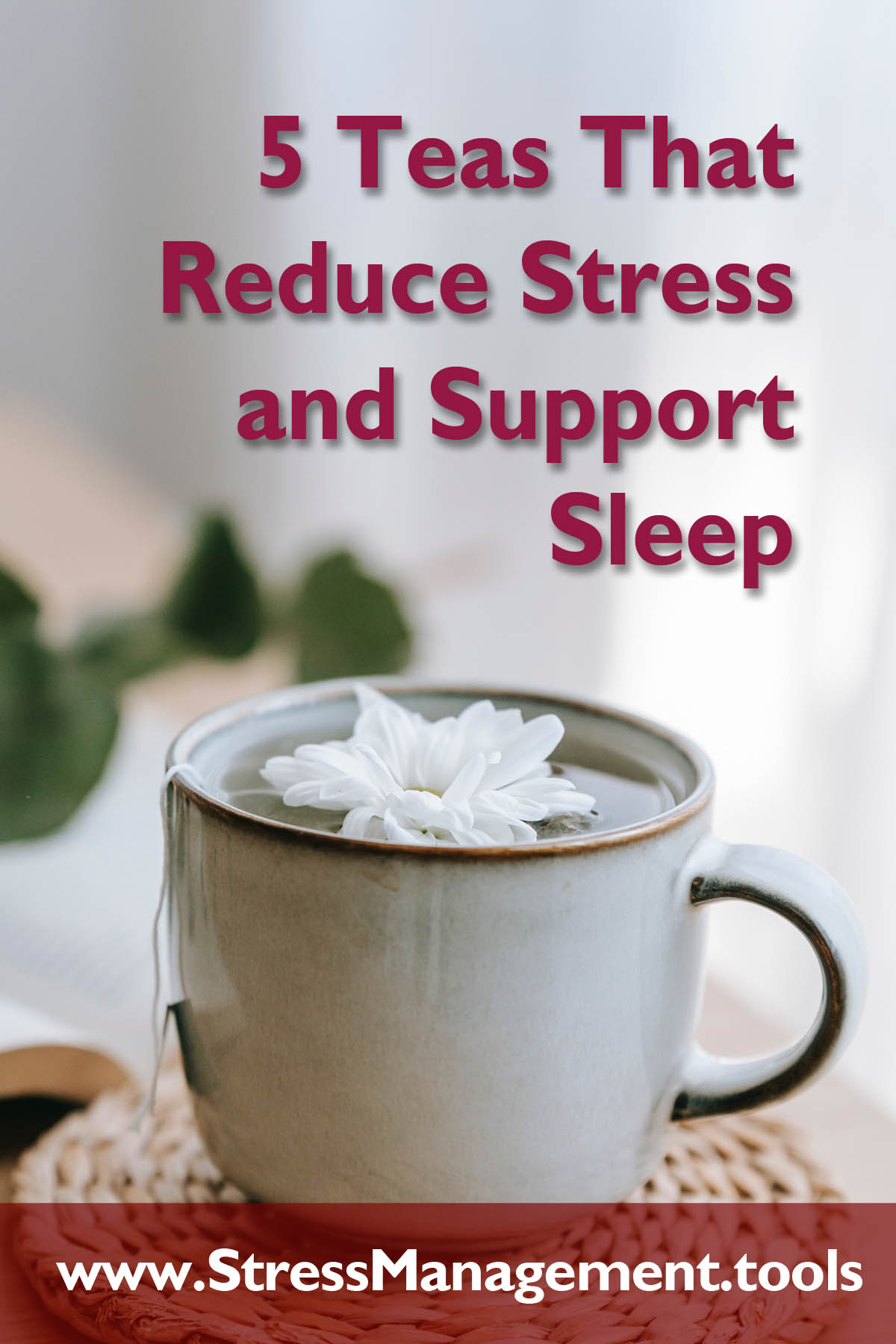
5 Teas That Reduce Stress and Support Sleep

Excessive stress will quickly be felt on our quality of sleep, which in turn will increase our stress hormones. So implementing some calming teas into our night time routine can do wonders to control our stress. Not only do these teas promote relaxation, but they may help the estimated 30% of the population who suffer from chronic sleeplessness and insomnia too.((Roth T. Insomnia: definition, prevalence, etiology, and consequences. J Clin Sleep Med. 2007 Aug 15;3(5 Suppl):S7-10. PMID: 17824495))

Consider enjoying a cup of one of these teas each day:

1. Chamomile Tea. Probably the best-known choice for relaxation, chamomile tea is an ancient remedy for inflammation, anxiety, and insomnia. Some experts say that the effects of chamomile are similar to that of a mild tranquilizer.

  • Chamomile is packed full of a substance called apigenin, which helps to decrease anxiety and initiate sleep. Studies have found that drinking around 400mg of chamomile extract a day can improve sleep quality.((Adib-Hajbaghery M, Mousavi SN. The effects of chamomile extract on sleep quality among elderly people: A clinical trial. Complement Ther Med. 2017 Dec;35:109-114. doi: 10.1016/j.ctim.2017.09.010.))
  • Further research has also gone on to show that postpartum women suffering from poor sleep quality were soothed with chamomile tea.
  • While not everyone will respond well to chamomile, the gentle taste and relaxing aroma are a great place to start if you suffer from stress.

Chamomile flowers

2. Valerian Tea. The valerian herb is another substance that has appeared throughout the centuries as a cure for nervousness and insomnia. The product was also used in England during World War II as a way to relieve stress caused by air raids.((Valerian. Fact Sheet for Health Professionals. National Institutes of Health))

  • Valerian is one of the most popular sleep aids in the world today, and it’s available in both liquid and capsule form, as well as a tea. Researchers believe that valerian root may improve GABA levels in the body, which can improve sleepiness, and reduce anxiety.((Dorn M. Wirksamkeit und Verträglichkeit von Baldrian versus Oxazepam bei nichtorganischen und nichtpsychiatrischen Insomnien: Eine randomisierte, doppelblinde, klinische Vergleichsstudie [Efficacy and tolerability of Baldrian versus oxazepam in non-organic and non-psychiatric insomniacs: a randomised, double-blind, clinical, comparative study]. Forsch Komplementarmed Klass Naturheilkd. 2000 Apr;7(2):79-84. German. doi: 10.1159/000021314.))
  • Studies into valerian root for insomnia indicate that it can reduce the amount of time it takes for a person to fall asleep at night and improve the quality of the sleep too. These studies also indicate minimal side effects after using valerian. There are no issues such as morning drowsiness to detract from the experience.((Leathwood PD, Chauffard F, Heck E, Munoz-Box R. Aqueous extract of valerian root (Valeriana officinalis L.) improves sleep quality in man. Pharmacol Biochem Behav. 1982 Jul;17(1):65-71. doi: 10.1016/0091-3057(82)90264-7.))

A girl smelling a valerian flower

3. Lavender. There are few things more relaxing than the smell of lavender. This sweet and soothing herb is championed for its ability to reduce stress and improve sleep quality. The substance is available in tea form as a way of encouraging relaxation and stronger sleeping patterns.

  • According to one study, women who drank and enjoyed the aroma of lavender tea for two weeks had less fatigue than their counterparts.((Chen SL, Chen CH. Effects of Lavender Tea on Fatigue, Depression, and Maternal-Infant Attachment in Sleep-Disturbed Postnatal Women. Worldviews Evid Based Nurs. 2015 Dec;12(6):370-9. doi: 10.1111/wvn.12122.))
  • Other studies indicate that reductions in heart rate and heart rate variability were evident in women who inhaled the scent of lavender for 12 weeks, twice per week.((Chien LW, Cheng SL, Liu CF. The effect of lavender aromatherapy on autonomic nervous system in midlife women with insomnia. Evid Based Complement Alternat Med. 2012;2012:740813. doi: 10.1155/2012/740813.))
  • Try sweetening this tea with honey for a unique sleeping experience.

Lavender

4. Lemon Balm. Lemon balm is an herb that actually comes from the mint family. It is great for reducing stress and improving relaxation. Evidence suggests that lemon balm could be effective at increasing GABA levels, which improve sleepiness.

  • Further studies show up to a 42% reduction in symptoms of insomnia after patients took a lemon balm extract for 15 days.((Cases J, Ibarra A, Feuillère N, Roller M, Sukkar SG. Pilot trial of Melissa officinalis L. leaf extract in the treatment of volunteers suffering from mild-to-moderate anxiety disorders and sleep disturbances. Med J Nutrition Metab. 2011 Dec;4(3):211-218. doi: 10.1007/s12349-010-0045-4.))
  • The warm and refreshing lemon balm tea could be an incredible benefit to your night-time routine, and the flavor will likely appeal to plenty of people.

Lemon Balm

5. Passionflower. Made from the dried stems, flowers, and leaves of the Passiflora plant, passionflower tea is a traditional solution to feelings of anxiety and insomnia. Studies indicate that this substance may be suitable for improving sleep quality and insomnia.((La Forge T. Drink A Cup of Passionflower Tea Every Night for Better Sleep. Healthline, May 31, 2019))

  • A study among 40 adults found that those drinking passionflower tea for one week reported a significantly better quality of sleep than their counterparts.((Ngan A, Conduit R. A double-blind, placebo-controlled investigation of the effects of Passiflora incarnata (passionflower) herbal tea on subjective sleep quality. Phytother Res. 2011 Aug;25(8):1153-9. doi: 10.1002/ptr.3400.))
  • Further studies have shown that a combination of passionflower and other relaxing substances like valerian root can be excellent for treating insomnia.

Passionflower

Sip Your Way to Sleep

Many delightful herbal teas are now making their way into the market as powerful sleep aids. Although these teas won’t eliminate the underlying cause of your sleeping or stress issues, they can help you to get the relaxation you need.

For those suffering from high levels of anxiety and stress, the teas above offer a natural solution to common issues like insomnia. However, if you are using these teas for sleep improvement, try to avoid using any sweeteners, as these could increase your blood sugar levels and make you feel more awake.

For a natural and pleasant alternative to pharmaceuticals, consider trying these teas to help relieve stress and support a great night of sleep that refreshes you.

Filed Under: Natural Remedies, Stress Management

10 Tricks to Deal with High Stress Days

August 27, 2023 by Martin Neumann

We all have days that are considerably more challenging and stressful than others. Unfortunately, stress is hard on both the mind and body.

10 Tricks to Deal with High Stress Days

If stress passes pretty quickly, we normally recuperate fine. When the high stress days are lining up, then they really start to take its toll. And what’s worse, you could even become so used to being in this “high state of alert” that you start to feel like it’s normal! Don’t let this happen to you.

Maybe you are at this point that you know you need to take some action to control your stress. Although you certainly need some tools to figure out the root cause of your stress and deal with it, sometimes it is good to have some techniques that can help you relax and strengthen your self-soothing abilities.

When you’re struggling to stay calm, relaxed, and focused, try some of these strategies:

  1. Breathe deeply. Breathe in for 5 seconds and hold it for 5 seconds. While inhaling your belly should go out, which is called abdominal breathing and involves your maximum lung capacity. Now exhale for 5 seconds. Do this 10 times and focus only on your breathing, forgetting your problems around you. Oxygenating your brain can do wonders to get your emotions under control. Just don´t try so hard that you will tense up.
  2. Take a walk. Practice your deep breathing during your walk, focusing on your breathing, walking, and surroundings. Look what you can observe in nature around you so that you can take off your thoughts from your problems more easily.
  3. Get some good exercise. Any time of day is a good time to exercise. Comfortably tired is what you’re looking for. Work out your frustrations by going for a run or swim. Hit the weights and show them who is boss. Any exercise will do as long as there is some intensity involved. Shuffleboard isn’t going to cut it.
  4. Sit outside. A little time at the beach or park can work wonders. Find a relaxing spot with pleasant scenery. Pay attention to what’s going on around you, enjoy some warm rays of the sun and keep your mind off your challenges. Even 10 to 15 minutes can greatly reduce your stress.
  5. Take a day off. Everyone needs a break once in a while. Actually, in order to be productive, you need a weekly day of rest. However, on your day off, it’s important to avoid just sitting around and brooding about all of your current difficulties. Take your mind off of your world to something that lifts you up. Do some activities that you enjoy. Visit a friend. Volunteer at a homeless shelter. Helping others in their problems could make you realize that your problems are not that big after all.
  6. Read. Find something engrossing to read. The ideal book would be able to take your mind off of your world for a few hours. Ask your friends for some recommendations, or if you’re like most people, you probably have a couple of books on the shelf that you’ve never gotten around to. Now is the perfect time to read it.
  7. Listen to music. In order to go to sleep at night, you probably want some really relaxing music. At other moments of the day, it can be a bit more involving. Classical music is excellent in order to involve your mind, but other styles can do if you prefer. Avoid though aggressive beats, since they are able to increase your stress levels.
  8. Disconnect. No phone and no computer. Turn off everything that connects you to the outside world. Then you can really relax. Enjoy your day without distractions and find some other activities that are fulfilling to you.
  9. Take a nap. There’s no better way to start over than to take a nap. When you wake up, it feels like another chance to start your day over. What happened before your nap is in the past! Now you are energized to deal with your problems and move on.
  10. Get out with people that are fun. Get your buddies together and go for a walk. Or have dinner with the friend that always makes you laugh. It’s easy to get caught up in our own little world. Being with others can jolt you out of that perspective, and having a healthy social network is key to good stress control.
A couple relaxing at sunset

Don’t let high stress get you down. The key is to actively do something about it. Some people develop a habit of being paralyzed when things start going sideways, but this does nothing to make you feel better or solve your stressful issues.

Actively relax so you’ll be better able to tackle your challenges. Use these tips to minimize the pressure and anxiety you’re feeling and take control of yourself and the situation. Dealing with your challenges effectively is crucial to living the peaceful and fulfilling life you deserve.

Do you need a guide to help you understand how to cope with Stress in an all inclusive approach? Learn how to combat stress, mentally, physically, emotionally and strategically in your life.

Get Me the Guide

Filed Under: Healthy Lifestyle, Stress Management

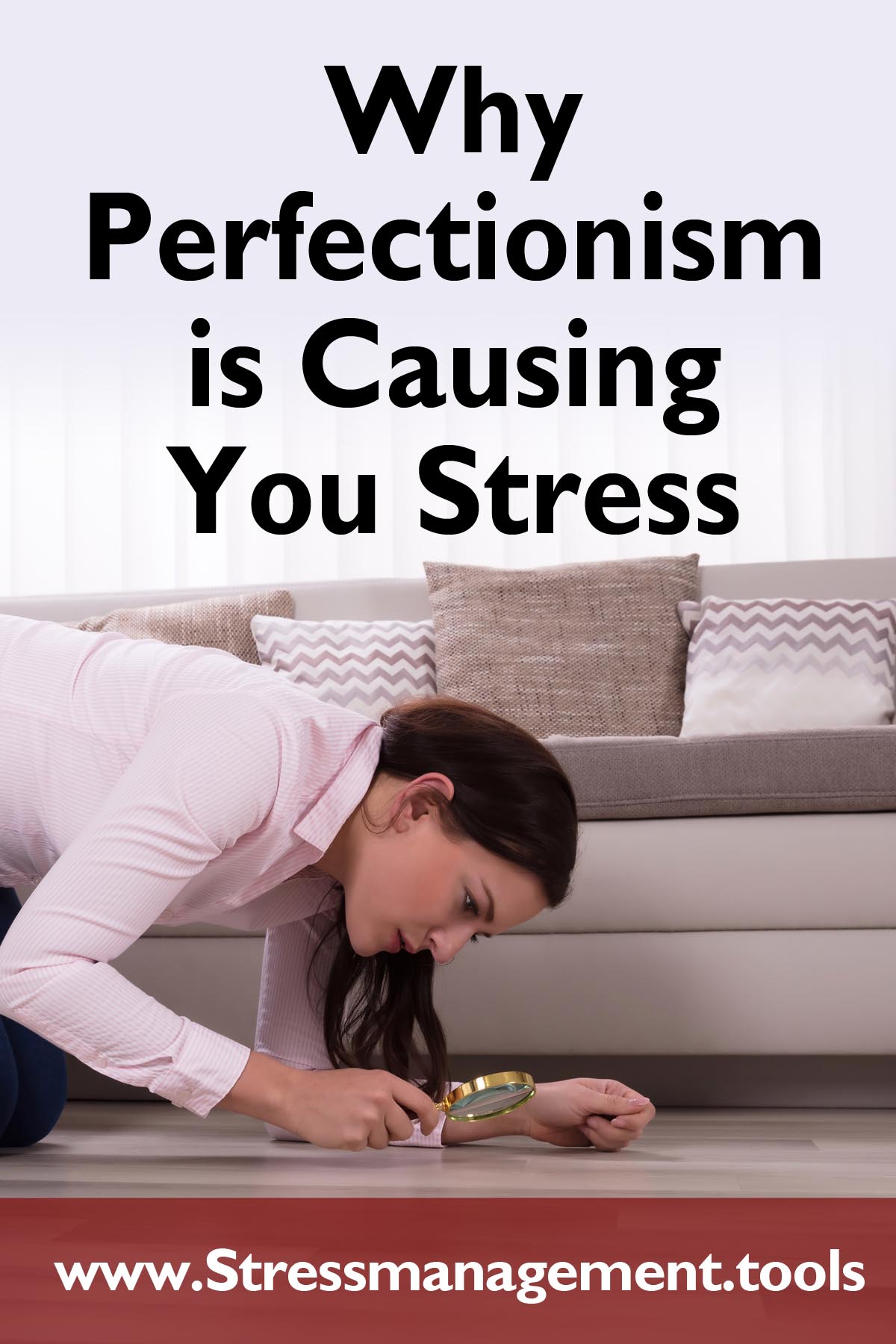
Why Perfectionism is Causing You Stress

July 2, 2023 by Martin Neumann

Perfectionism is quite a common character trait, that affects about 30% of the general population and increases to almost 80% among the gifted population. Besides being pretty common, perfectionism is also on the rise. It can significantly interfere with your daily life and your stress response, so it is important to identify perfectionistic character traits and find some way to deal with them.

Why Perfectionism is Causing You Stress

A perfectionist has often some common traits with a high achiever. Both are people who are often pushing themselves to their limits and strive for excellence. They are very much goal oriented. But while the high achiever is celebrating his achievements, the perfectionist is only focusing on his failures, and that he missed hitting the mark he was supposed to achieve. While the high achiever strives to be the best he can be, the perfectionist just wants to avoid looking stupid because he has made a mistake. He is driven to give more than he can because he doesn’t feel to be good enough. Achieving more, looking perfect, and pleasing everyone becomes a way to define his self-worth.

Perfectionism is an effort to get a sense of self-worth through achievements. The problem is, that a perfectionist is never reaching the point of feeling that his accomplishments are sufficient or adequate, so he constantly feels bad about himself.  Perfectionism is normally linked to limited self-esteem.

The cause of perfectionism is often found in childhood and could be caused by the following parenting styles:

  • Having overly demanding parents, that expected their kids to be close to perfect, sometimes responding to any kind of shortcomings with some form of punishment. The child internalizes that it is only loveable if it is pleasing the parents and doing everything just right.
  • Having perfectionist, goal-oriented parents, that children tend to model. Sometimes parents are praising their kids excessively for achievements instead of commending them for their effort.
  • Having parents that were not emotionally available for their children, and the child trying to get the attention of parents with outstanding accomplishments or thinking to get appreciation by being perfect.
  • Having dysfunctional parents that may not know how to treat their kids appropriately. The child may not understand the reason for his parents to be alcoholic or depressed or with some other mental problems and often sees himself as the cause of the problem. In an effort to help their parents to improve, the child may try to behave and perform perfectly, thinking this will resolve their parent’s problem.
  • Growing up in a chaotical home, some children try to create an environment of control and predictability that is lacking in their home, by indulging in some perfectionistic rituals.

Perfectionists tend to hyper-focus on even the tiniest flaws. If you focus on the things you’re unable to do perfectly, you may end up doing nothing at all, out of fear of failure. When a minor setback feels like a major personal failure, that’s when perfectionism becomes a burden.

A woman being distressed about a mistake she has made

Perfectionists believe they’re committed to excellence, but they’re actually avoiding feelings of inadequacy. They define their worth according to their performance but are never satisfied with the result. Perfectionists aren’t trying to achieve something great. They’re trying to avoid failure. If you’re a perfectionist, ask yourself why. What do you gain? What does it cost you? Do you take pleasure in being perfect? How do you feel when you’re less than perfect?

Being a perfectionist has several disadvantages:

  1. You waste a lot of time. Some things don’t require a high level of attention. To spend more time than necessary is a waste of an important resource: your time. If success is important to you, allocating your time wisely is an important consideration.
  2. It creates a lot of stress. When you see only one way to be successful at something, there’s no room for error. Perfectionists aren’t happy people. There’s a constant anxiety that can’t be completely satisfied.
  3. You lose sight of the big picture. Bogging yourself down with trivial details can limit your awareness of the bigger objective.
  4. You can’t relax until you feel that everything is done and done perfectly.
  5. You’re never happy with your results. You might be satisfied, but you’re never happy.
A man typing on a typewriter and repeating the copy many times because of perfectionism

7 Signs That You’re a Perfectionist

There are some warning signs that could show that you have tendencies to perfectionism. If several of those apply to you, then you should work on your mindset and remove the root of perfectionism.

  1. You take things too far. No matter what you do, you take it to the limit. Everything has to be done as well as possible, whether it’s folding the laundry, parking the car, or doing something more meaningful.
  2. You long for your high school days. High school is perfect for perfectionists. The competition isn’t too great on average, and your achievements are witnessed by all. Your work is also clearly judged quantitatively. You know exactly where you stand.
  3. You’re judgmental of others. Your standards of acceptability are so high that no one can consistently achieve them. If you find yourself with fewer friends than you’d like, your commitment to be perfect might be the primary cause.
  4. You’re too hard on yourself. By the same token, you can’t live up to your expectations either. This leads to feelings of disappointment and shame. Are you more successful than most of the people you know, but less pleased with yourself than they are with themselves? Do you find it hard to be proud of yourself? Do you feel happy and proud when you’re successful, or do you merely feel a sense of relief?
  5. You have a hard time accepting help, because you think you can do everything by yourself. And if you delegate something, you feel the other person does not do it right, so you prefer to do it for yourself.
  6. You overthink any decision you need to make, to be sure you do the right thing.  You spend hours researching your options, decide on the best, and still regret it afterward if you find out there would have been a better option.
  7. You procrastinate excessively. The need to be perfect creates anxiety and makes it hard to get started. You know you’re in for a lot of work and self-induced drama. Under those circumstances, anyone would be hesitant to get started!

I guess you can see how a perfectionist is getting stressed out about any kind of mistake, because he is defining his self-worth by his achievements, and any mistake is considered to be fatal. If you are dealing with that problem, you need to find strategies to overcome your perfectionistic traits and define your self-worth in a healthier way.

A confident man having a healthy self-esteem

If you are a Christian, be sure to define your self-worth by the worth that your Creator has put on you. Be sure to internalize, that you have a loving Heavenly Father that takes care of you, no matter whether you have achieved to live up to your perfectionistic expectations or not. Take some Bible Promises to redefine your self-worth, like for example:

I have loved you with an everlasting love; I have drawn you with unfailing kindness.

Jeremiah 31:3

As you develop a new foundation for your self-worth, you can start to get more relaxed about your mistakes and enjoy the process of becoming the best version of yourself. Because you deserve it to put the self-constructed stress aside and live a more fulfilling life!

Do you need a guide to help you understand how to cope with Stress in an all inclusive approach? Learn how to combat stress, mentally, physically, emotionally and strategically in your life.

Get Me the Guide

Filed Under: Psychology, Thought Patterns

7 Top Tips To Reduce Stress at Home

June 4, 2023 by Martin Neumann

Are you feeling the pressure at home? Do you find it hard to unwind? Stress affects us all in different ways and can be damaging to our health.

7 Top Tips To Reduce Stress at Home

Fortunately, there are several steps we can take to manage stress, especially in the home. This is important as we spend a vast amount of our time at home, and identifying how to reduce stress in our home life can make other areas of our lives more productive.

The small steps we take can make a big difference. A significant factor in beating stress is to have a plan of action and not let it overwhelm you.

Consider these top tips to reduce stress at home:

Clean, tidy rooms make a difference

When you are trying to reduce stress, having a clean, organized environment can be crucial. Whether you clean once a week or spend some time each day putting things together, keeping your space free from clutter and dirt will positively impact your mood.

  • Having a specific space for your essential items and ensuring they’re within easy reach can enhance productivity and reduce stress.
  • Having a calm, clean space to relax and entertain can keep anxieties at bay and provide you with a safe, calming haven to retreat to.

Write down your thoughts

Sometimes our thoughts race and our minds become jumbled. Write down your most pressing worries in a journal. You could write about relationship concerns, money, or construct a to-do list for the next day.

  • Writing your thoughts down is a brilliant way to release your worries and organize your mind, so you can see things more clearly.
  • You’ll find your thoughts are less cluttered and you have more time to enjoy the present moment.

Eat properly

When we are out on the go, we can neglect our stomachs, grabbing a quick pick-me-up here and there and not paying attention to our nutritional needs.

  • Whatever your schedule looks like, take time in the home to cook meals. Plan nutritious meals rich in fruits, vegetables, whole grains, and nuts.
  • The act of cooking alone can de-stress you, as you can have fun and focus all of your energies entirely on creating a delicious dish at that moment.
  • Cook with friends, your partner, children, or visitors you have for the weekend! If you take time out at home to fuel your body, you will fuel your mind.
Fruits - Photo by Karolina Grabowska from Pexels

Get a garden

You may think that you have already enough on your plate and do not need to add any to your workload. But getting out into the garden and having a workout digging at your soil can be very relaxing. And if you have no backyard, even putting some pots on your balcony or your windowsill can be a good start.

  • Spending time in nature can be very relaxing. Even if it is just a few minutes a day, find a moment to get out and take care of your plants. Watch like your tomatoes are growing, flowering, and getting fruits.
  • Enjoy the moment of being outside and involved in a different activity. Forget about the worries of the day and be present in the moment when you unleash your creativity in developing your gardening space. Notice the scents, colors, textures, and sounds around you and the calming effect they have on your soul.
  • Feel the satisfaction and accomplishment of harvesting some fresh and organic food that you have grown with your own hands. Start slow and with easy to care varieties and step up as your experience grows.

Create a relaxing sleep environment

Getting proper sleep is so important in controlling your stress. It gives your body and mind an opportunity to rest and rejuvenate.  It regulates your hormones and improves your mood. Good sleep is extremely crucial for stress control.

  • Set up your bedroom to be a relaxing, peaceful environment. Get rid of any distracting clutter and distractions like TV. Your bedroom should be reserved for relaxation.
  • Create an environment conducive to sleep. During the night the room should be completely dark and silent, have a comfortable bed, and a temperature slightly cooler than the rest of the house. If needed, consider using eye shades and earplugs, in case you cannot create the environment you need to relax.
  • Limit your screen time before going to bed. The blue light emitted by screens can interfere with the production of melatonin. Avoid using electronic devices like Computers, TVs, tablets, and cell phones for an hour before bedtime and engage in screen-free activities that help you to relax.
  • Develop a relaxing bedtime routine. Involve in activities that are relaxing and signal your body to wind down. That can include a warm bath, relaxing music with candlelight, reading a book, having a chat with your partner, or drinking a calming tea.
  • Be sure to sort out your thoughts before hitting the bed, like resolving a conflict with your partner or paying an unpaid bill. If you are worried, pray to God and ask Him to give you peace and calmness.
A woman sleeping

Decorate your space

Get your creative mind in gear and turn your home into a tranquil paradise. Buy matching furnishings with the colors you love. Fill the room with plants and a few accessories that represent you. Even a few tweaks in decorating your space can make a huge impact.

  • We can’t always control how our workspaces look or the dull, joyless spaces we sometimes find ourselves in. We can, however, control how our abode looks, and this calming project can help you feel in control as you spruce up your space!

Separate work and home spaces

In a world where we’re increasingly working from home, one way to banish stress is to have a section in your home dedicated to work and separate areas dedicated to relaxing.

  • Avoid taking your laptop to bed with you or eating in the same space you associate with work. Keep them separate to keep your mind clutter-free.
  • Have set time for your work and know to switch off when you are in your free time.

There are so many effective ways to manage stress at home. When your professional life is stressful, create a safe, supportive home life where you can banish stress, unwind, and make memories that you want to remember for many days to come.

Do you need a guide to help you understand how to cope with Stress in an all inclusive approach? Learn how to combat stress, mentally, physically, emotionally and strategically in your life.

Get Me the Guide

Filed Under: Adults, Phases of Life

7 Ways to Reduce Stress in Your Relationships

May 7, 2023 by Martin Neumann

Relationships can be a wonderful thing. They’re a chance to connect with someone on a deeper, more emotional level, and even discover new things about yourself. However, when you’re sharing your life with someone else, things can sometimes be stressful too.

7 Ways to Reduce Stress in Your Relationships

The unfortunate truth is that everyone will feel stress connected to their relationship at one time or another. You might be worried about approaching a complex topic with your partner, or you could be facing a challenge together, like an unpaid bill.

The key to success is ensuring that you don’t allow stress to take over your relationship. Instead, figure out how to work things out together, and you could make your relationship stronger than ever.

Here are some of the best ways to reduce stress in your relationship.

1. Listen

Lack of effective communication is one of the most common issues that many people encounter in their relationships. Either they don’t know how to approach their other half when they want to talk, or they don’t know how to listen when their partner comes to them.

The most important way to minimize stress and strengthen your relationship at the same time is to listen to each other. Recognize the symptoms of stress in your partner, such as moodiness, restlessness, or agitation, and ask them if they want to talk about it.

If your partner wants to talk to you about their stress, the important thing to remember is that you don’t necessarily need to fix their problem.

Most of the time, when your partner is stressed, they know you can’t handle everything for them. Instead, they just want an opportunity to vent and get some basic reassurance. Sit, listen, and only offer advice if asked for it.

A couple talking to each other

2. Always Be Yourself

Relationships only work when people are honest with each other.

When you’re attracted to someone, and a relationship is just starting out, it’s tempting to try and build an image of yourself that matches what you think the other person wants. However, the reality is that it’s impossible to keep up with this charade long-term.

You’ll end up causing yourself a lot of additional stress if you attempt to be someone who you’re not.

At the same time, your other half is going to get the sense that something isn’t right. This causes stress for them because their mind will try to help them figure out what’s going on.

Ultimately, being honest will save you both a lot of stress and tension. If your partner doesn’t love the real you, it likely wouldn’t have worked out anyway.

3. Practice Self Care

Sometimes, the best way to care for a relationship is to look after yourself.

Stress is contagious. If your other half notices that you’re constantly stressed, they’re going to start picking up on that feeling too. Sometimes, this can lead to your partner becoming self-conscious, or feeling nervous that they’re doing something wrong. Even if you explain, self-doubt can linger.

Try to take care of yourself to avoid a buildup of stress in your life. Be sure to get enough sleep, do some daily exercise, and work on a healthy diet. Try to get your partner on board with that plan whenever you can.

A couple walking

4. Be Open in Your Communication

Communication and honesty are the pillars of a great relationship.

Most of the time, stress and arguments come from us trying to guess the thoughts of the other. For instance, if you notice that your partner is a little withdrawn one night, you might find yourself wondering whether it’s because you didn’t make their favorite meal.

Even if your partner tells you that’s not the case, if they don’t give an explanation of their state, the thought will grow larger in your head, causing feelings of resentment, anger, and upset. You start getting defensive, and that’s where arguments begin.

If you’re honest about why you’re acting a certain way, and explain your feelings to your partner frequently, there’s less room for assumptions to cause problems.

5. Use More I Instead of You in Communicating

Often we tend to enter the blame game by pointing fingers and accusing our partner. We can take off a lot of the pressure if we learn to speak more about how I am feeling about the situation instead of the mistakes that you are making. This is an important step to get out of that blame game, and it will help us a lot to get more cooperation from our partner.

For example, instead of blaming your partner: “You are coming home late again, and you do not even bother to give me a call!”, maybe you can reword that and say: “I am frustrated if I prepare supper for you and the food is getting cold. Can you call me next time when you come home late?” Instead of focusing on the mistake of the other, you are focusing on your own feeling about the situation, and you offer a solution, how your partner can help you in the future. Do you see how that can change instantly the climate of your communication? 

6. Express Gratitude

Take some time to express gratitude and tell your partner what you appreciate about them. If you keep a positive mindset, it will remove a lot of tension and stress.

It is so easy to get wrapped up in negative thoughts and feelings, and more than often it is not more than our perspective of life around us. If you just take some time and express what you like about the other, and acknowledge their little acts of kindness, it can quickly change the atmosphere you are experiencing at home.

A couple being grateful for each other

7. Stop Being Harsh to Each Other

Finally, if there’s one thing you can do to reduce stress and arguments in your relationships, it’s to give each other a break.

When we fall in love, it’s easy to place another person on a pedestal. We see them as perfect and believe they can do no wrong. Unfortunately, that’s not the case. Eventually, you’ll begin to notice your partner making mistakes.

The important thing at this time is to let your partner know that, while you might be disappointed by the mistakes they made, you can get through it together.

Giving each other a break and forgiving your loved one for the things they do wrong is essential to reducing stress. Remember, you’re both only human.

Keep these ideas in mind. They can help you to reduce relationship stress on a daily basis and make your lives more fun and fulfilling.

Do you need a guide to help you understand how to cope with Stress in an all inclusive approach? Learn how to combat stress, mentally, physically, emotionally and strategically in your life.

Get Me the Guide

Filed Under: Adults, Phases of Life

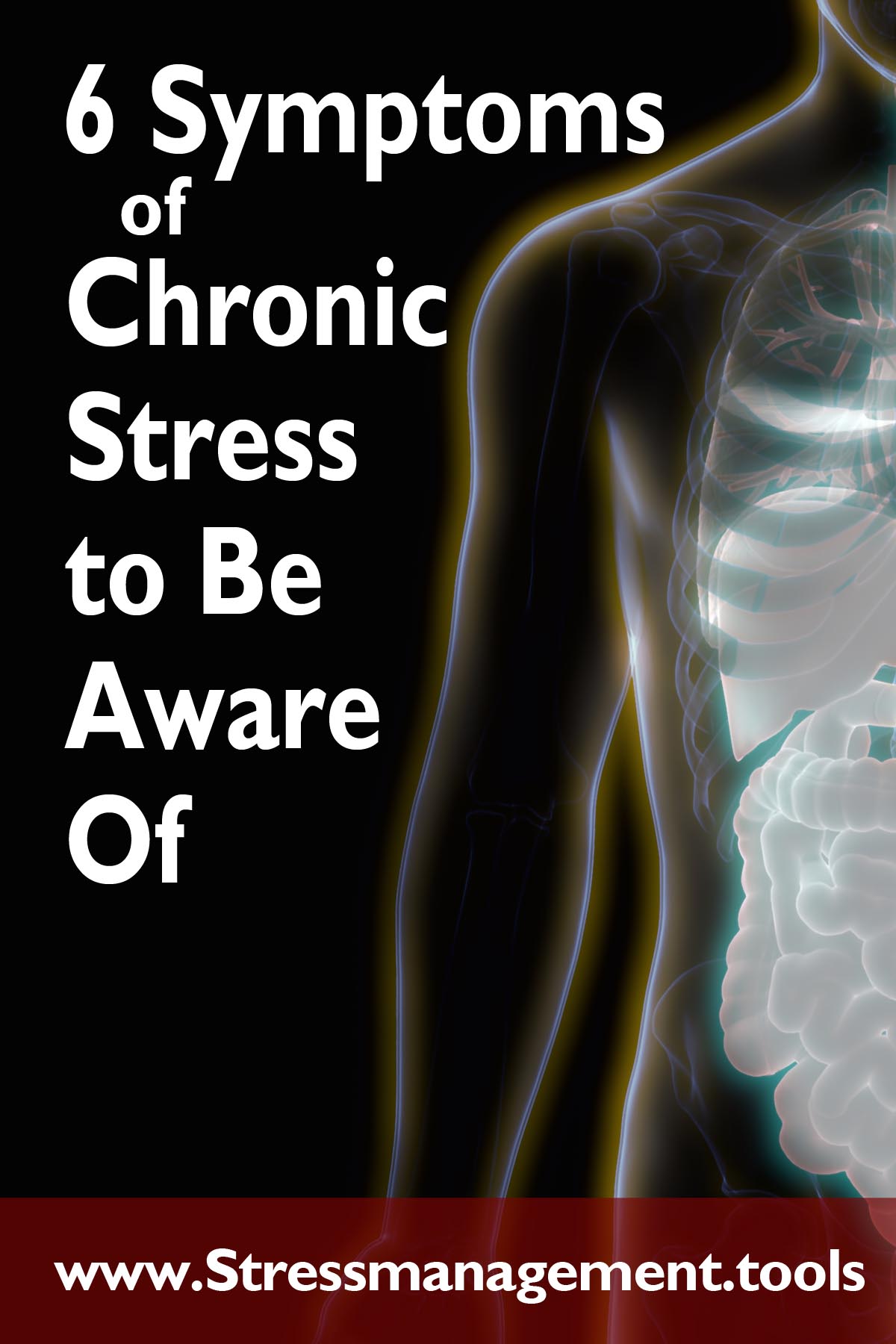
6 Symptoms of Chronic Stress to Be Aware Of

April 9, 2023 by Martin Neumann

Are you suffering from stress? Everyone has moments of stress from time to time, such as when you’re stuck in traffic, or you have a hard day at the office. But, for some people, stress can also become a serious issue.

6 Symptoms of Chronic Stress to Be Aware Of

Expose yourself to too much chronic stress and you’re putting yourself at significant risk of a range of health challenges. In fact, experts say that stress is directly connected to many of the main causes of premature death.((https://www.miamiherald.com/living/article1961770.html))

The good news is that there are numerous ways you can begin to manage your stress. However, before you get started, it’s important to be able to recognize the symptoms of stress.

Be aware of these red flags:

  1. Tooth or jaw pain. Yes, stress does affect your teeth, more than you might think. If you’ve noticed soreness in your jaw or pain in your gums, then it might be because you’re dealing with feelings of stress.((https://www.guardiandirect.com/dental-care/6-ways-stress-affects-teeth))
    • Grinding your teeth is often something that you may not even realize you’ve been doing until you get to the dentist, and they berate you for signs of bruxism.
    • Grinding and tensions resulting from stress can cause extra strain and soreness in your jaw. If you do notice signs of discomfort in your jaw, check with your dentist to ensure that you’re doing everything you can to protect your teeth.
  2. Your memory is getting worse. As your schedule becomes more overwhelming, and you end up with more things to think about each day, it’s easy to brush off issues with forgetfulness. However, if your memory is really letting you down lately, it could be because of stress.
    • High levels of cortisol can impair the function of the hippocampus, a brain region crucial for memory fixation. Prolonged stress can even cause a shrinkage of the hippocampus.
    • Paying attention to where you lose track of your train of thought could show you where you have too much on your plate. It might be time to slow down.
  3. Your digestion isn’t right. Digestive health and stress are closely connected. You might have noticed during stressful periods in the past that you tend to have challenges with heartburn, diarrhea, and constipation. These are all common gastrointestinal symptoms of stress.((https://www.health.harvard.edu/diseases-and-conditions/the-gut-brain-connection))
    • Your stomach will often churn and feel uncomfortable when you’re stressed because feelings of anxiety cause the body to produce additional digestive acid, which can lead to stomach ulcers.
    • Stress can make your intestines more sluggish. That can easily lead to constipation.
A man sitting at the toilet because of constipation
  1. You’re always thirsty. If you’re constantly suffering from a major thirst, it’s worth speaking to a doctor. Excessive thirst can be a sign of things like diabetes. However, you could also be dehydrated because of excess stress.
    • First of all, increased cortisol levels will make your blood glucose levels rise, which causes dehydration since the body tries to flush out the extra glucose through the urine.
    • Cortisol is produced by the adrenal glands, which are responsible as well to produce hormones that regulate the fluid levels in your body. If you suffer chronic stress, it can easily wear out your adrenal glands and cause a number of hormonal imbalances.
    • Although upping your H2O intake shouldn’t cause any problems, it’s still a sign of a long-term problem that’s important to rectify.
  2. Your muscles are sore. Sore muscles often happen as a result of tension. If you’re under a ton of stress, your body responds by involuntarily tensing up. This can gradually lead to more body pain over time, because your muscles aren’t used to being under that much strain.
    • Excessive cortisol during chronic stress will increase muscle tightness.
    • The same way you suffer from soreness from grinding your teeth, you could experience soreness elsewhere in your body because you’re placing more pressure on your muscles. A good massage or a hot bath might help in the shorter term, but eventually you’ll need to tackle the root cause of your stress.
  3. Your sleep is messed up. If you’re having trouble with falling asleep at night, it could be because stress is making it harder for you to relax.
    • It’s likely that you spend a lot of time thinking about the things that worry you when you’re in bed.
    • If you suffer from insomnia, you will wake up tired the next morning, which increases your stress hormones and easily drives you into a vicious cycle.
    • You might also notice that you’re having more odd dreams because of your stress.
    • On the other hand, some people experience a desire to sleep more often when they’re stressed. This could be an indication that you’re not just suffering from stress, but that you’re having issues with anxiety and depression too. Consider speaking to your doctor about these issues, who should be able to offer some personalized guidance.  

As you can see, it’s critical to your health and wellbeing that you learn to relieve stress. Make it a priority to take care of yourself by reducing your stress. And if you see those warning signs coming up that stress is getting out of control, you need to take immediate action to implement a successful stress management plan. Check out the Stress Management Tools to see how the program can help you to get stress under control.

Filed Under: Health Concerns, Results of Stress

« Previous Page
Next Page »

Primary Sidebar

Copyright © 2026 Stress Management Tools · Log in