Stress Management Tools

Helps You to get Stress under Control

  • Home
  • About
  • Blog
  • The Program
  • Free Offer
  • Contact
You are here: Home / Archives for Healthy Lifestyle

Healthy Lifestyle

Finding Peace In Your Crazy-Busy World

March 24, 2024 by Vicki Griffin

We live in a topsy-turvy, fast-paced world. It’s easy in the rush of crammed, hectic schedules to neglect life’s most important priorities. There is more to life than increasing its speed.((Mahathma Gandhi)) Our lives can easily become so busy…but oh, so barren. God has a special four-part “peace plan” to guide, strengthen, and inspire you with hope and energy. Let’s explore these vital elements of stress protection, physical and mental health, and spiritual vitality. Daily applying these four principles will help you flourish instead of flounder as you face life’s challenges and demands.
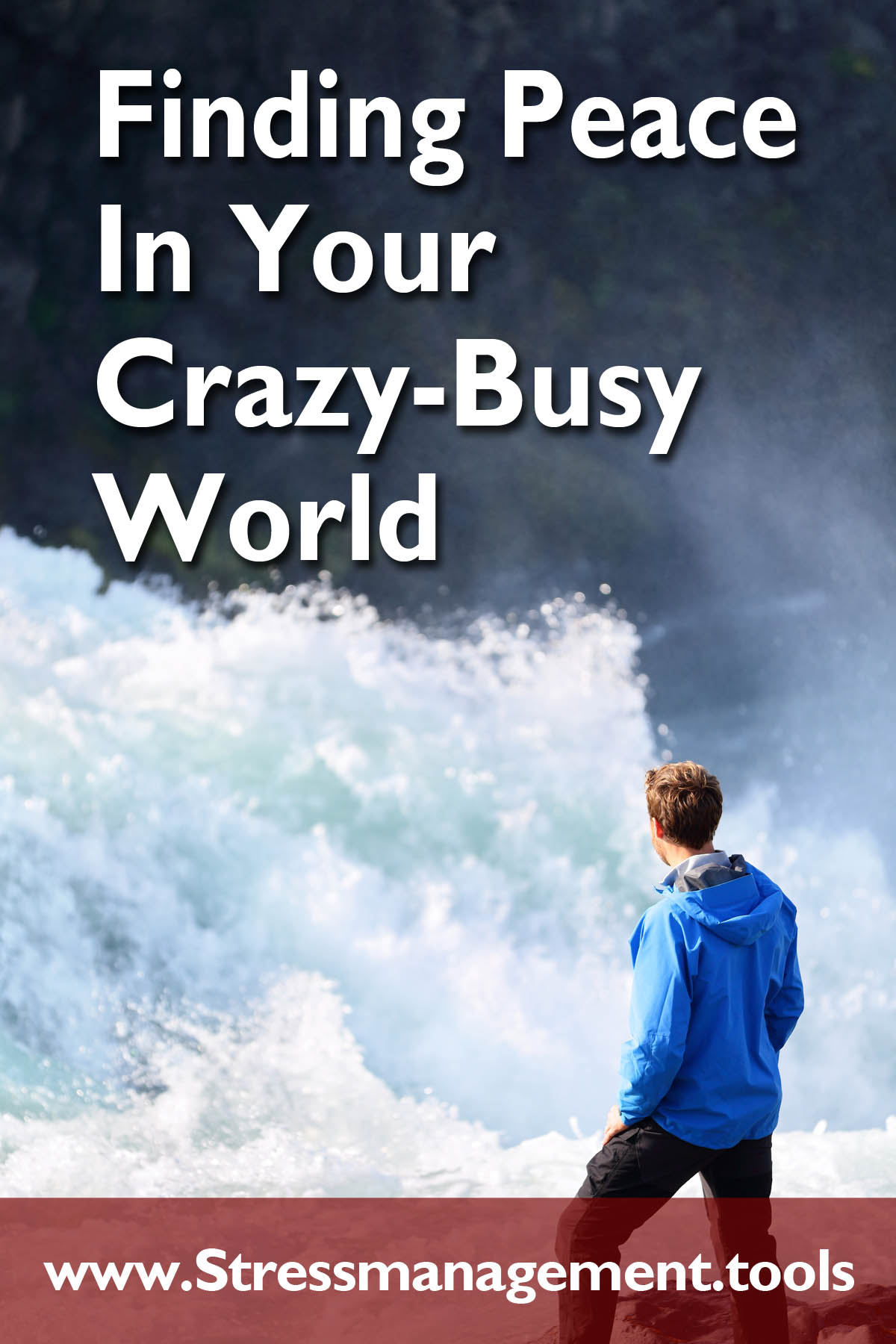
Finding Peace In Your Crazy-Busy World

1. A Lifestyle that Promotes Peace

Lifestyle is a major factor that affects mental, physical, social, and spiritual health. Lifestyle choices matter, especially the ones we repeat every day. They have a profound effect on brain function, which is the seat of your thinking, emotions, and decisions. “Many of the fundamental tools for the care and feeding of the brain are everyday matters. Physical and mental exercise, proper nutrition, and adequate sleep will help anyone gain cognitive clarity and emotional stability.”((Ratey, J. User’s Guide to the Brain, p. 356. Vintage Books, 2002.)) Power up your lunch and supper with crunchy, colorful fresh vegetable salads, greens, and beans. Try healthy vegetarian entrees instead of fatty meats and fried food. You won’t crave snacks with this delicious, high-fiber fare. Want real brain energy and body vigor? Water is the beverage of choice between meals instead of soda and coffee!

2. Attitudes that Produce Peace

Your mind, brain, and body are in constant communication through many different systems. Your thoughts and attitudes have a powerful effect on the rest of your body, especially your immune, nervous, and digestive systems. We can literally think ourselves into a frenzy, but God promises His peace, “perfect peace” to the one whose mind is centered upon Him (Isaiah 26:3). He invites us to trust Him with every circumstance of our life. A thankful attitude is associated with better physical and mental health, and even a longer life. “A contented mind, a cheerful spirit, is health to the body and strength to the soul.”((Ellen G. White, Counsels on Health (Mountain View, California: Pacific Press Publishing Association, 1949), 344.)) This is an attitudinal discipline that focuses on God’s truth and solutions rather than fear, circumstances, and unreliable emotions.

A woman looking into a mirror with a positive smile

3. Spiritual Principles that Secure Peace

“Spiritual well-being is at the center of a healthy lifestyle.”((Am J Crit Care 1995;4(1):77-81.)) To meet our deepest longings, God has provided spiritual principles that bring true life satisfaction. This does not come with wealth, fame, popularity, or even perfect health. It comes through making peace with God—in entering into a saving relationship with Him. Studies confirm that “Religious commitment may play a beneficial role in preventing mental and physical illness, improving how people cope with mental and physical illness, and facilitating recovery.”((Arch Fam Med 1998;7(2):118-24.)) Our natural hearts are not drawn to God, but we need Him. We are drawn to God because of our need—and God’s healing love which draws us. “We love Him because He first loved us” (1 John 4:19). God’s love is the foundation of a relationship with Him and healthy relationships with each other. We connect with God through prayer and learning about Him in His life-giving Word, the Bible. “In the day of my trouble I will call upon You, for You will answer me” (Psalm 86:7).

4. Faith that Preserves Peace

Faith is more than positive thinking—it is connecting with the living God who seeks to restore all that sin has broken and taken away. Jesus never promised an absence of problems. Jesus said: “These things I have spoken to you, that in Me you may have peace. In the world you will have tribulation; but be of good cheer, I have overcome the world” (John 16:33). Faith is the conviction that God will guide you and give you power through both good times and bad. Faith says, “Either make the problem smaller, or me bigger!” God has a plan and He cares for you in a very personal way. “For I know the thoughts that I think toward you, says the Lord, thoughts of peace and not of evil, to give you a future and a hope” (Jeremiah 29:11).

A man in nature meditating and praying

God’s Peace Plan can be Yours. Hulda Crooks experienced God’s peace plan in her lifestyle, attitude, trust in God, and faith. She was a sickly, sedentary, overweight woman for many years. She became a vegetarian, which improved her mental and physical health. But when she experienced the loss of her husband and son, she fell into depression. Hulda began walking which not only relieved her depression—it also eliminated more of her physical maladies, including constant fatigue.

Conquering Life’s Mountains. Hulda also began practicing a positive, faith-based attitude that gave her the “altitude” to stay inspired and be an inspiration to others! From aged 63 to well into her 90s, she completed 23 Mt. Whitney climbs, backpacked 212 miles of the John Muir Trail, climbed 86 Southern California peaks, and held 8 world records for seniors over the age of 80. This spunky late-bloomer caught and taught inspiration as a motivational speaker, and was affectionately known as “Grandma Whitney.” A mountain peak of Whitney is named “Crooks Peak” in her honor. God’s peace plan was fulfilled in Hulda’s life—and it can be fulfilled in yours too! Would you like to experience the fullness of Gods power, promise, and plan for your life? His peace plan is for you!

Do you need a guide to help you understand how to cope with Stress in an all inclusive approach? Learn how to combat stress, mentally, physically, emotionally and strategically in your life.

Get Me the Guide

This article was originally published on the Time to Get Ready website.
Filed Under: Habits, Healthy Lifestyle, Nutrition, Spirituality, Stress Management

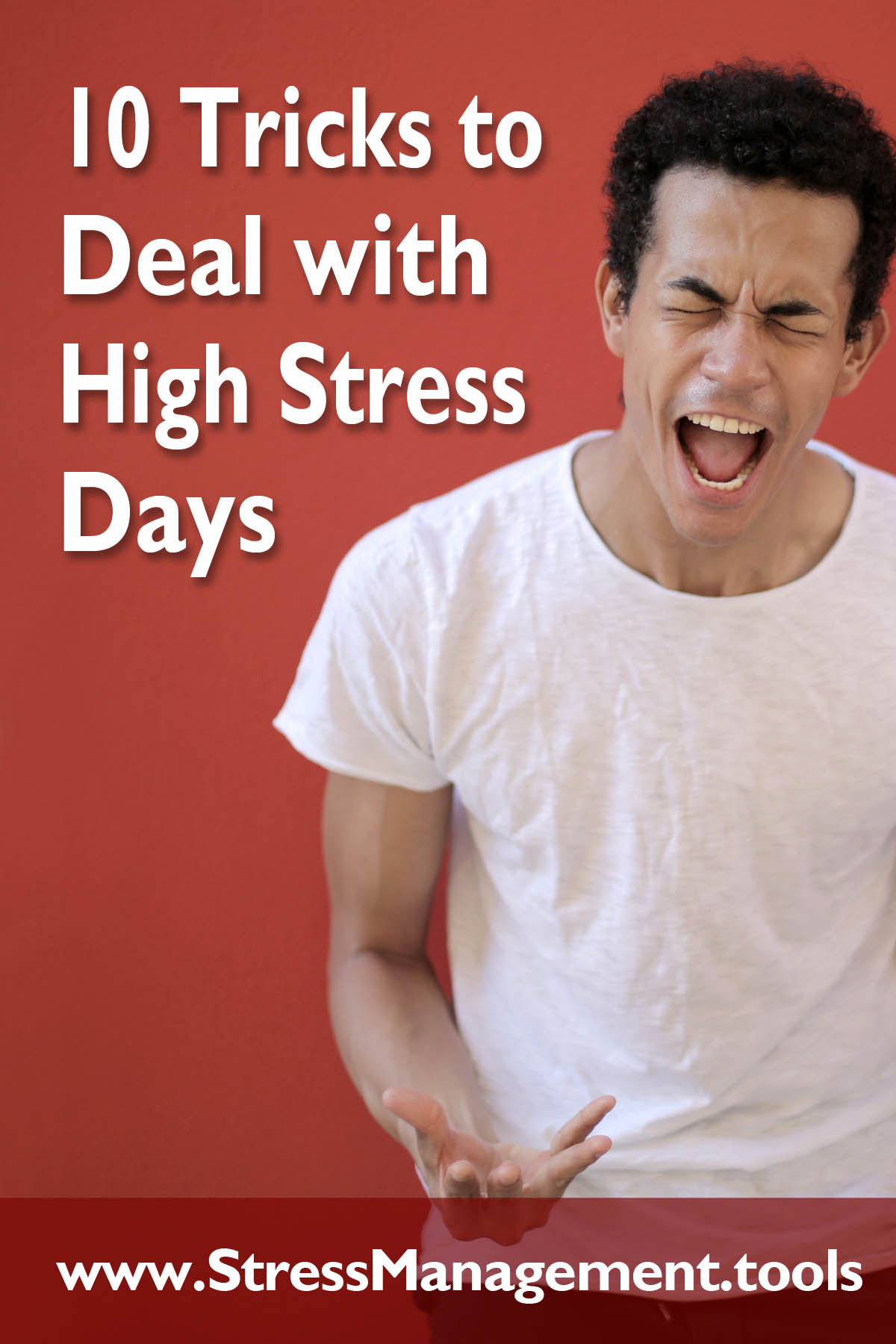
10 Tricks to Deal with High Stress Days

August 27, 2023 by Martin Neumann

We all have days that are considerably more challenging and stressful than others. Unfortunately, stress is hard on both the mind and body.

10 Tricks to Deal with High Stress Days

If stress passes pretty quickly, we normally recuperate fine. When the high stress days are lining up, then they really start to take its toll. And what’s worse, you could even become so used to being in this “high state of alert” that you start to feel like it’s normal! Don’t let this happen to you.

Maybe you are at this point that you know you need to take some action to control your stress. Although you certainly need some tools to figure out the root cause of your stress and deal with it, sometimes it is good to have some techniques that can help you relax and strengthen your self-soothing abilities.

When you’re struggling to stay calm, relaxed, and focused, try some of these strategies:

  1. Breathe deeply. Breathe in for 5 seconds and hold it for 5 seconds. While inhaling your belly should go out, which is called abdominal breathing and involves your maximum lung capacity. Now exhale for 5 seconds. Do this 10 times and focus only on your breathing, forgetting your problems around you. Oxygenating your brain can do wonders to get your emotions under control. Just don´t try so hard that you will tense up.
  2. Take a walk. Practice your deep breathing during your walk, focusing on your breathing, walking, and surroundings. Look what you can observe in nature around you so that you can take off your thoughts from your problems more easily.
  3. Get some good exercise. Any time of day is a good time to exercise. Comfortably tired is what you’re looking for. Work out your frustrations by going for a run or swim. Hit the weights and show them who is boss. Any exercise will do as long as there is some intensity involved. Shuffleboard isn’t going to cut it.
  4. Sit outside. A little time at the beach or park can work wonders. Find a relaxing spot with pleasant scenery. Pay attention to what’s going on around you, enjoy some warm rays of the sun and keep your mind off your challenges. Even 10 to 15 minutes can greatly reduce your stress.
  5. Take a day off. Everyone needs a break once in a while. Actually, in order to be productive, you need a weekly day of rest. However, on your day off, it’s important to avoid just sitting around and brooding about all of your current difficulties. Take your mind off of your world to something that lifts you up. Do some activities that you enjoy. Visit a friend. Volunteer at a homeless shelter. Helping others in their problems could make you realize that your problems are not that big after all.
  6. Read. Find something engrossing to read. The ideal book would be able to take your mind off of your world for a few hours. Ask your friends for some recommendations, or if you’re like most people, you probably have a couple of books on the shelf that you’ve never gotten around to. Now is the perfect time to read it.
  7. Listen to music. In order to go to sleep at night, you probably want some really relaxing music. At other moments of the day, it can be a bit more involving. Classical music is excellent in order to involve your mind, but other styles can do if you prefer. Avoid though aggressive beats, since they are able to increase your stress levels.
  8. Disconnect. No phone and no computer. Turn off everything that connects you to the outside world. Then you can really relax. Enjoy your day without distractions and find some other activities that are fulfilling to you.
  9. Take a nap. There’s no better way to start over than to take a nap. When you wake up, it feels like another chance to start your day over. What happened before your nap is in the past! Now you are energized to deal with your problems and move on.
  10. Get out with people that are fun. Get your buddies together and go for a walk. Or have dinner with the friend that always makes you laugh. It’s easy to get caught up in our own little world. Being with others can jolt you out of that perspective, and having a healthy social network is key to good stress control.
A couple relaxing at sunset

Don’t let high stress get you down. The key is to actively do something about it. Some people develop a habit of being paralyzed when things start going sideways, but this does nothing to make you feel better or solve your stressful issues.

Actively relax so you’ll be better able to tackle your challenges. Use these tips to minimize the pressure and anxiety you’re feeling and take control of yourself and the situation. Dealing with your challenges effectively is crucial to living the peaceful and fulfilling life you deserve.

Do you need a guide to help you understand how to cope with Stress in an all inclusive approach? Learn how to combat stress, mentally, physically, emotionally and strategically in your life.

Get Me the Guide

Filed Under: Healthy Lifestyle, Stress Management

How Fasting Improves Mental Health and Stress Control

November 13, 2022 by Martin Neumann

Fasting Improves Stress Control

There are many different motives why people choose to do fasting. Some will do it to lose weight, others to clean the body, and often it is done for religious purposes. While all of that can be achieved when done properly, many do not realize that fasting has a positive effect on our mental health and stress control.

How Fasting Improves Mental Health and Stress Control

What is Fasting?

Fasting is a routine whereby you decide not to eat food for a certain time. Several metabolic adjustments occur during fasting. Some forms of fast restrict even liquid intake, which can get detrimental to the health very quickly. A fast for health reason is often done in the form of intermittent fasting, where food intake is alternated with a few hours of fasting.

Skipping food for some hours can help increase the level of ketones in your body. They are produced when energy from carbohydrates is used up and the liver depends on breaking down fat to supply energy in form of ketones. They are not only influencing health and aging, but are also beneficial in improving brain health. However, fasting offers still some more advantages. It has a great benefit to our mental health in a way that is not well known by many people.

Common Types of Fasting

Before we go into full detail about how fasting helps mental health, it is important to state the different types of fasting. The most common types of fasting are:

16/8 fasting: 16/8 fasting is very common and is all about fasting and eating intermittently. Every day you eat within an allowed period of eight hours, after which you will fast for the next 16 hours.

5:2 Approach: The 5:2 approach is about eating regularly five days every week. For 2 days of the week (not in a row), you would then limit your food to a single very light meal of about 500-600 calories.

Alternate-Day Fasting: That is the toughest form of intermittent fasting, where you alternate between days where you eat what you want and days where you eat nothing at all. It can lead to weight loss and improved health, but it is hard to stick to this protocol for the long run.

Intermittent Fasting Concept

The Dangers of Improper Fasting

Fasting is fine when done correctly, but if done in the wrong way, it can do more harm than good. If we go into long fasting periods, metabolism will slow down and make it more difficult to shed those extra pounds in the long run. Pregnant women, breastfeeding mothers, children and very frail people should be more cautious with fasting, and diabetics should be closely monitored to avoid complications. It is important to learn how to fast correctly in order to reap the maximum benefits.

Fasting to Help Increase Your Mental Health

Fasting can be used to increase your mental health in various ways. From improving brain function to reversing mild cognitive impairments in older people, fasting has several benefits to mental health.

Here are 6 ways fasting can improve your mental health:

Enhances mental functioning: Each time we fast, our bodies have fewer toxic materials passing through the lymphatic and blood systems. This way, we can think clearly. During fasting, the energy which the body usually uses for food digestion will then be used by the brain. Initially, you will not be able to detect any change until a few days into the fasting. This is because the body usually takes some time to adjust to the new routine. Also, when you first begin fasting, you may suffer headaches or other pains. But as soon as the body adapts to the new routine, your brain will begin functioning optimally. This will result in better memory, clearer thoughts, and enhanced functioning of other body senses.

Improves brain function among older adults: Fasting can improve specific parts of brain function as people grow older. This works especially with mild cognitive impairment, which is usually associated with seniors as this is a phase they experience before dementia. It can cause problems with thinking or memory and is reversible. Clinical studies have confirmed that mild cognitive impairment can be reversed with fasting.

A smart elderly person working on a computer

Empowers the brain: Fasting can lead to a short-term restriction on calories. This can help the brain produce more anti-depressant chemicals. Since fasting causes the body to produce ketones from available fats, our brains use this as fuel. With the brain being boosted by ketones, intermittent fasting can be used to treat the symptoms of Alzheimer’s disease, Parkinson’s disease, as well as many other neurodegenerative diseases.

Helps with autophagy: Fasting is also important to mental health due to its ability to trigger autophagy. This is a necessary process whereby the brain cleanses itself from all the trash it accumulates during the day. Autophagy is a process of self-cleaning whereby the all cells of the body, including the brain are cleaning themselves and get rid of old debris and damaged cells. Autophagy is a process that happens efficiently after a fasting period of 16-20 hours, which is easily achieved with intermittent fasting. It helps the brain to create healthier and newer cells.

Improve your memory: It has been proven clinically that our memory is improved significantly when we restrict the hours we eat. Some studies have shown that intermittent fasting can help improve memory in humans.

Reduce stress and anxiety: Fasting has been proven to help improve issues of mental health, which include depression, anxiety, and stress. A recent study conducted was able to prove that people who fasted during a certain period like Ramadan showed improvements in anxiety, stress, as well as symptoms of depression. Any kind of intermittent fasting will give you this benefit. The study revealed that the depression and anxiety levels of the participants went down after intermittent fasting.

Conclusion

Intermittent fasting is good for our health, increases longevity and is beneficial for our brain. When we are stressed, we should think more often about intermittent fasting as a way to deal with the challenges in a more efficient way. It is easy to implement and can give you a long-lasting benefit in your stress control. With that many benefits, what are you waiting for?

Do you need a guide to help you understand how to cope with Stress in an all inclusive approach? Learn how to combat stress, mentally, physically, emotionally and strategically in your life.

Get Me the Guide

Filed Under: Healthy Lifestyle, Nutrition Tagged With: Intermittent Fasting

5 Simple Lifestyle Changes for Stress Relief

October 16, 2022 by Martin Neumann

Lifestyle Changes for Stress Relief

Did you know that around 74% of people said in a recent study, that they’ve felt so stressed that they’ve been unable to cope?((Results of the Mental Health Foundation’s 2018 study. https://www.mentalhealth.org.uk/explore-mental-health/mental-health-statistics/stress-statistics)) You may not be at that point quite yet, but it’s worth making some simple lifestyle changes to reduce your stress levels before you get there.

5 Simple Lifestyle Changes for Stress Relief

The good news is that there are ways you can cut back on feelings of stress each day, from the comfort of your own home. Here are some of the top tips.

Exercise

Exercise is the number one way to handle stress.

When you’re feeling overwhelmed, you might not fancy rushing out to the gym for a sweat session. However, exercise is an amazing way to get endorphins – and positive feelings – rushing through your body. People who exercise regularly are less likely to suffer from anxiety than their counterparts.((M.H.M. De Moor, et.al. Regular exercise, anxiety, depression and personality: A population-based study. Preventive Medicine, Volume 42, Issue 4, 2006,Pages 273-279
https://doi.org/10.1016/j.ypmed.2005.12.002))

When you exercise – even only a little – you reduce the amount of stress hormones in your body and replace them with handy endorphins, which help to boost your mood.

Exercise can also improve sleep quality, which is often negatively affected by anxiety and stress. When you get enough sleep, you’re more capable of dealing with stressful feelings.

To get the most out of your exercise routine, find an activity you enjoy and mix it in with your schedule – even if it’s just a stretching session each night.

Get Social

Do you ever get the urge to isolate yourself when you’re stressed or nervous? You’re not alone. However, withdrawing from your social group could make your stress worse. Being part of a group of people who love and care for you will help to get you through tough times.

One study found that spending time with friends helps to release the natural stress reliever – oxytocin. Some professionals even call the socializing response the “tend and befriend” approach, rather than the “fight or flight” that we’re used to with stress.((Taylor SE, et.al. Biobehavioral responses to stress in females: tend-and-befriend, not fight-or-flight. Psychol Rev. 2000 Jul;107(3):411-29. doi: 10.1037/0033-295x.107.3.411))

If you can’t meet with someone face to face, find another way to connect. You can call a friend or loved one to vent some of the things you’re stressed about. Get into a video meeting, or just send someone a text if it helps.

Make Yourself Laugh

Have you ever noticed that it’s difficult to keep focusing on the things that make you feel anxious or stressed when you’re laughing? Laughter is genuinely good for your health, both from a physical and a mental perspective. It helps to relieve tension in your muscles and decreases your stress response.

A group of friends laughing.

Over time, regular periods of laughter can improve your mood and help your immune system to work better. According to a study of people suffering with cancer, people who laughed most experienced more stress relief than those who just distracted themselves.((Bennett MP, Zeller JM, Rosenberg L, McCann J. The effect of mirthful laughter on stress and natural killer cell activity. Altern Ther Health Med. 2003 Mar-Apr;9(2):38-45. PMID: 12652882.))

Read a funny book or talk to a friend who frequently makes you laugh. Being able to laugh about your own mistakes can be very much relieving stress. Even if you’re just giggling at something on TV, let it out.

Practice Self-Care Activities

We could all benefit from investing more time and effort into ourselves. We live in a society where it’s increasingly common for people to prioritize working too much or barely getting any sleep. However, these are the kinds of things that increase your stress.

Sometimes, it’s important to look at your life and ask yourself what you need to feel better. That could mean taking the time that you need for yourself and saying “no” when others ask you for help. It’s not selfish if you have reached your limits – it’s about giving yourself the help you need first.

Good self-care could also mean changing your routine. Go to bed earlier or change your menus so that you’re eating healthier food. Invest time and energy into things that make you feel good – even if it’s just having a long bubble bath.

Try Something New

Finally, sometimes all you need to get rid of stress is a new passion.

With that in mind, why not try something new? Take an art class with a pal and see whether being creative each day could help you to eliminate anxiety.There are plenty of studies that indicate that creative activities can reduce your anxiety levels.

If art isn’t your thing, try learning how to cook. Taking a class that teaches you how to create delicious and nutritious meals is an excellent way to get a new hobby going. When you’re cooking, you’ll be focused on what you’re doing in the kitchen, rather than spending all of your energy worrying about the things that bother you. Plus, learning how to cook could help you to eat healthier too!

Maybe you want to volunteer in a local organization in order to see the satisfaction in the faces of those you have helped. It can be very much rewarding and take away your focus from the worries of everyday life. Plus when you are in touch with people who are much worse off than you, then your struggles do not seem so big after all.

Try one of these effective strategies the next time you’re feeling stressed. Get in the habit of using them regularly and you’ll find greater enjoyment in your daily life. And get the 10 Minute Guide to Stress Management in order to get a clear plan on how you can control your Stress.

Do you need a guide to help you understand how to cope with Stress in an all inclusive approach? Learn how to combat stress, mentally, physically, emotionally and strategically in your life.

Get Me the Guide

Filed Under: Healthy Lifestyle

Dr. Forest for Stress Control

August 21, 2022 by Martin Neumann

Are you suffering from stress? Maybe it is time to clear your head and calm down. While the forest is essential for our entire ecosystem, it also does wonders to relax our mind and calm us down. Let us discuss some of the benefits of walking in the forest for a healthier mind, body and soul!

Dr. Forest for Stress Control

For all of Your Senses

More than a third of the US territory is covered by forest. In Canada it is around 40% and can reach 80% in some regions. A walk through the forest is a special experience. All senses are stimulated. If you listen closely, it rustles, swishes, chirps, cracks and twitters everywhere. If you draw the air deep into your lungs, the smells are also extremely diverse. They vary greatly depending on the type of forest. Forests with fir trees smell very different than those with broadleaf trees. And if a mushroom is nearby, experienced noses can also smell it.

Then comes the touch! Who recognizes the trees by feeling the bark with closed eyes? A young birch feels very different from an old oak. Opening the eyes again, we see a lot of green, which makes the mood rise and the pulse drop. On average, hospital patients who are allowed to look out into the countryside from their bed need much less care and painkillers than their fellow sufferers who only see bare walls in front of them.

And when you have hiked uphill through a forest and your eyes can wander unhindered above the tree line from mountaintop to mountaintop, the third dimension, the depth of space, is experienced in a breathtaking manner. Isn’t that a wonderful way to relax after staring for so long at the TV and computer screens?

A hiker in the mountains looks at the forest below the tree line

The modern world of work and leisure primarily demands our senses of hearing and sight. A walk through the forest stimulates all other senses as well. When walking on leaves and moss you can almost smell the carpet you are walking on. You can feel the wind on your face and sense the fresh coolness of a spring. This stimulus to the senses is not felt to be unpleasant like the sensory stimuli of civilization with their loud and hectic excesses.

Hiking also stimulates our sense of movement. An entire network of nerve sensors controls and monitors our movement and orientation behavior. And what is used will be strengthened. Gradually, the joy of movement increases and demands more. This is particularly important for our children. In order to compensate the many sedentary activities, you absolutely need to find a balance when hiking in nature. A lot of children have lost interest in nature. Walks in the woods in particular are great for arousing children’s curiosity about the wonders of nature. However, this requires some preparation on the part of the adult companions. Who knows more than five wild herbs, birds, flowers or trees?

Space for Encounter

Basic social needs are also met when hiking. Most people go hiking with a companion. Wonderful conversations then arise quite casually. There is an openness that breaks down barriers in casual conversation, in an environment that is beneficial to health. Friendships are formed or strengthened along the way. Positive encounters with others activate our messenger substances so much that dopamine, oxytocin and endogenous opiates are increasingly released. All of these messenger substances help us to lead a happier and more satisfied life.

Two hikers in a conversation

Furthermore, if someone can say: “The forest is my church”, the divine dimension is added. Experiences in nature bring us closer to our Creator. After all, HE gave us the task of preserving and using nature. If we strike up a happy song while hiking, we can even infect other hikers with our happy nature. I especially appreciate on the hiking experience the leaving, but also the arriving. When I leave, I free myself from everyday worries and obligations. I can empty my head, discover new perspectives in life, cast off role constraints, find experiences. Investing in experiences brings happiness, not investing in stuff.

Refueled!

And then arriving: the warm shower that washes away the sweat, stretching out comfortably on the sofa, the thought that you have now earned all this makes everyday life seem more attractive again. I have arrived back home or in the security of a shelter.

The forest offers something special in every season. In summer it is a blessing to hike in the forest. It protects us from the scorching summer sun. We experience an intense interplay of light and shadow. In autumn, it enchants our senses with a firework of colors. In winter we can read tracks in the snow and observe wildlife.

Trees that have shed their leaves have a special charm. They reveal their growth to us. We can almost read what experiences the tree has behind it. And in spring he promises us a new beginning, a new start, new growth and life.

If we look at the forest and hiking from the listed perspectives, we can give the forest a very special title: Doctor Forest. It virtually helps us to regain our health. Let us use it in this sense in the coming days and weeks! Happy hiking!

Do you need a guide to help you understand how to cope with Stress in an all inclusive approach? Learn how to combat stress, mentally, physically, emotionally and strategically in your life.

Get Me the Guide

Filed Under: Exercise, Healthy Lifestyle

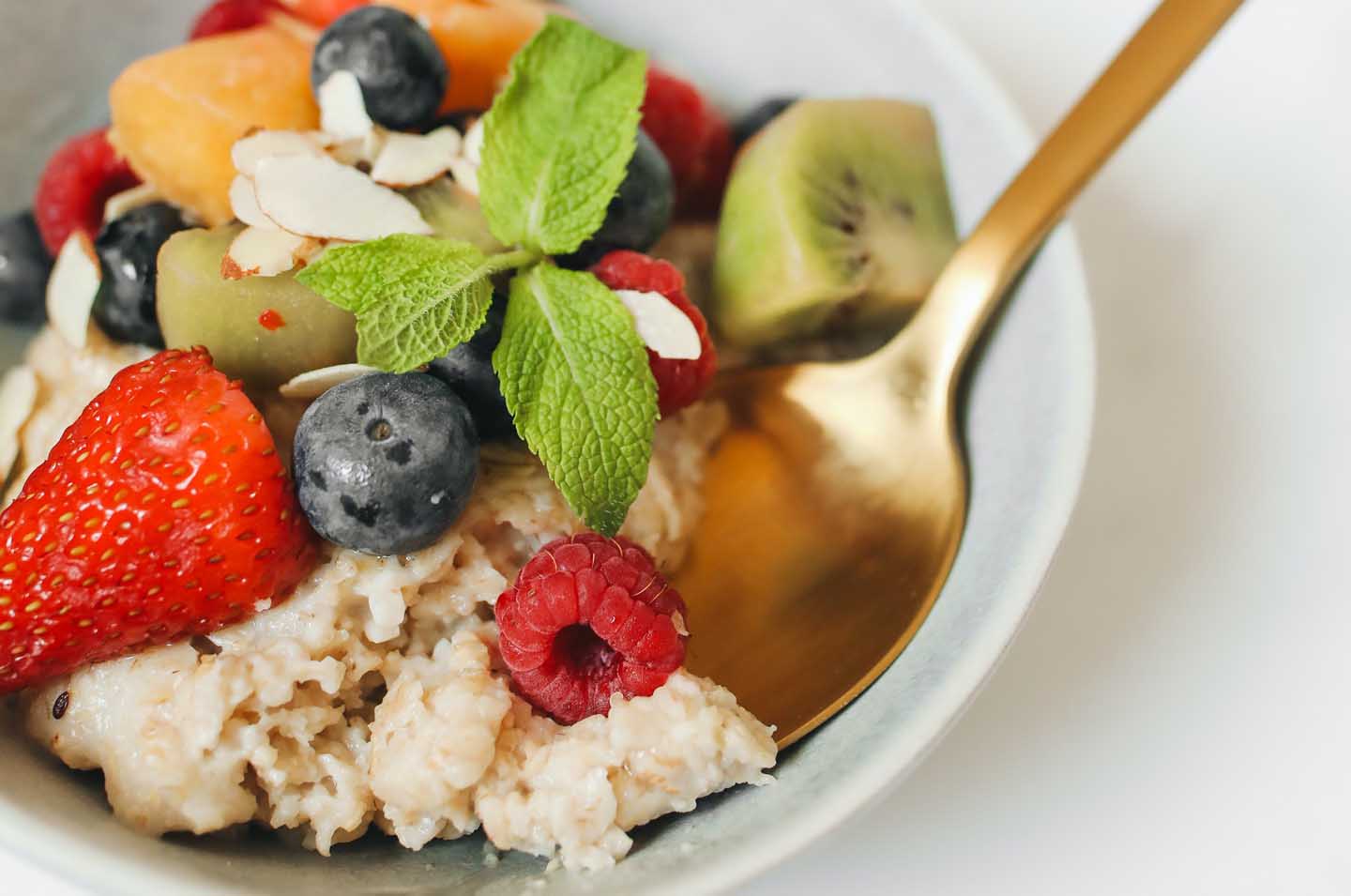
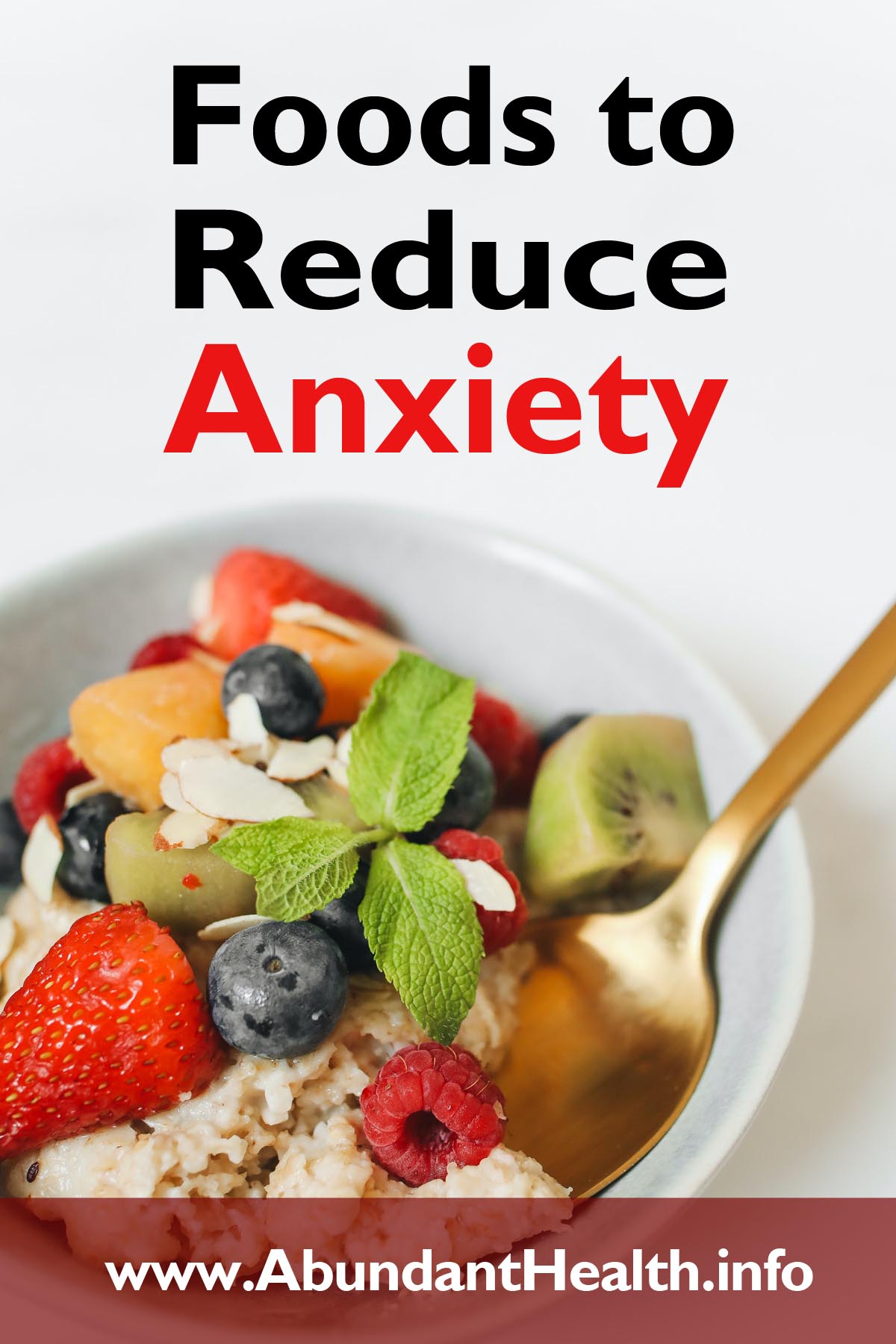
Foods to Reduce Anxiety

November 28, 2021 by Ricardo Vargas

When talking about anxiety, we are not talking about a rare disorder, but something that affects 85% of the world population, according to recent studies by Psychiatrist Augusto Cury.

Foods to Reduce Anxiety

Anxiety is a biological characteristic of human beings, which precedes moments of real or imagined danger. In this context, many unpleasant symptoms appear, such as:

  • Fatigue
  • Insomnia
  • Fainting sensation
  • Chest pain and palpitations
  • Dry mouth
  • Muscle tension and pain
  • Sensation of having a “knot” in the throat
  • Mental confusion
  • Feeling of helplessness

These symptoms are not rare, a large part of the population has suffered from anxiety. And most people have difficulties following simple advice on this matter. However, a large part of this difficulty is linked to the lifestyle we lead, especially when it comes to food.

Cortisol is your stress hormone; the same that triggers anxiety. This hormone needs to be in balance with serotonin, which is responsible for happiness. The ingested food plays a fundamental role in the amount of these hormones circulating in the bloodstream.

Our nutritional patterns has undergone many changes over the last few decades. Many are claiming lack of time as the main reason. Commuting time has increased, which forces many to leave their homes without having the first and most important meal of the day: breakfast. Many meals have been taken outside the home, forcing people to eat what they find and not what they often want.

Fast food purchased on the go

Commitments beyond work have also increased, and often due to the difficulty of planning and managing time, the last meal is eaten late at night. The body is forced to work to complete digestion when it should be involved in regeneration processes. It is during the first sleep period that your body works to reduce cortisol. A late night meal rich in protein and fatty foods interferes with cortisol control. And, the only certainty we have is that the next day our anxiety level will be higher.

Our evening meal should be as close to sunset as possible, remembering that during summer the sunset is later and the last meal should be taken at least two hours before bedtime. At the last meal, we should prioritize the consumption of foods rich in carbohydrates, for example, fruits, oats or granola, toast and soups made from tubers or roots. Also be careful with the quantity.

Serotonin, the hormone that controls cortisol and consequently controls anxiety, is produced in the morning until 9 am. It is essential to eat foods that are rich in tryptophan at breakfast, as this is the raw material used by the body to produce this happiness hormone.

Include some of the following foods in your breakfast:

  • Oats or granola
  • Chickpeas, can be in the form of hummus
  • Soybeans in the form of milk or tofu (can be grilled or as a spread)
  • Peanuts (in natura, as milk or peanut butter)
  • Hazelnut
  • Cashew nut
  • Brazil nuts
  • Almonds (to be eaten fresh, as milk or as ricotta)
  • Brown rice (can be in the form of sweet rice)
  • Banana
  • Honey

Of those foods above, include two to three sources. Never eat more than one source of nuts at a meal so that there is no excess fat.

Tofu and soymilk

The inclusion of these foods will give the body the opportunity to produce serotonin, but it is essential to exclude foods that increase cortisol from the menu, or all the effort will be in vain.

Stop consuming the following foods, that include stimulants:

  • Coffee (even the decaf)
  • Green, black, red, yellow and white teas as well as mate tea (these are obtained from two plants called: Ilex paraguariensis and Camellia sinensis.)
  • Alcoholic beverages
  • Guarana
  • Cola soft drinks
  • Chocolate

These stimulants impair serotonin production and increase anxiety. Some may say that when they make use of these they feel better. Beware, this is a warning sign, as you may already be suffering from an addiction.

Some important considerations about serotonin production:

  • The intestine is the production site of serotonin, so it is important that it is working properly. Consume whole foods, fruits and vegetables. Increase your water intake. Remove refined foods from your table.
  • Sunbathing in the morning increases the stimulus for serotonin production, 20 minutes would be enough to bring this benefit.
  • The practice of physical exercise improves bowel function and even promotes greater production of serotonin when performed in the morning. Put on some sneakers and go out for a walk early in the morning. You will find that your day will be different.
Walk on the beach
  • A good night’s sleep helps control cortisol levels and prevents it from damaging the production of serotonin. Your efficiency will be better if you can sleep before 9:30 pm.

These recommendations are not intended to replace the use of medications or a consultation with a specialist, but they will help you to better deal with anxiety and the doctor will be responsible for reducing your medication or even taking you off, if he sees fit.

Food can have a powerful influence on our minds. Getting at least 15 minutes of exercise in the sun during the morning hours, going to bed early and adapting to the correct diet can help a lot in controlling anxiety. Help your brain and make the needed lifestyle changes today!

Do you need a guide to help you understand how to cope with Stress in an all inclusive approach? Learn how to combat stress, mentally, physically, emotionally and strategically in your life.

Get Me the Guide

Filed Under: Healthy Lifestyle, Nutrition

Next Page »

Primary Sidebar

Copyright © 2026 Stress Management Tools · Log in