Stress Management Tools

Helps You to get Stress under Control

  • Home
  • About
  • Blog
  • The Program
  • Free Offer
  • Contact
You are here: Home / Archives for Healthy Lifestyle

Healthy Lifestyle

How to Deal With Your Inner Stress

October 10, 2021 by Martin Neumann

How to deal with inner stress

Somewhere on the way to the rest of your life, you realize that things aren’t going as planned.  You might suffer from money woes or realize your marriage is in turmoil.  It’s the kind of thing that makes you sit up and take notice – and seek help before it gets the best of you.
How to Deal With Your Inner Stress

Some things you can work on making better.  If you need to stop spending money, you can develop a savings plan.  But some stress is derived form the inside-out.  It’s the kind of anxiety you have about who you are as a person compared to who you always hoped you’d be.

As time passes, you’ll be facing your fair share of obstacles.  You may have to repair relationships, tweak your career, or learn some new coping skills to help you deal with being a parent.

But if you take this step first – the step to becoming the kind of person you want to be – it’ll make facing those stress factors a whole lot easier.  In fact, when you devote time to making your own self better, many of the things you’re stressed about now will dissipate. 

You don’t need an expensive therapist or rock climbing with an encounter group. You aren’t in denial about what’s bothering you. You just need a little help analyzing yourself and taking action to become a new you. 

Becoming Your Best Self

The Army is right with their slogan, “be all you can be.” Of course, you don’t have to go to boot camp to make that happen. You can create a self-care boot camp at home, which is gentler than the soldier’s version.

One aspect of boot camp that you want to copy is the intense personal training regimen, which focuses on building a better you.

Daydream on Paper

Take a page of lined notebook paper and fold it in half. Using the right side only, write a description of your ideal self. Don’t stop to be critical or analyze anything you write.

Be specific. Instead of saying, “I would weigh less,” say, “I would weigh 30 pounds less.”  Rather than, “I would have a better job,” say, “I would like to manage the sales department.”

Making a self description in a notebook

When you’ve listed everything possible on the Ideal Self side, turn to the left side and title it, Real Self. Again, without being critical, describe who you are today. What is your career?  Where do you live?  What motivates you to keep going every day? Describe yourself physically and emotionally.

Then open both sides and compare. With a bold pen or highlighter, draw lines between the items that are similar as if you were playing a matching game. Then look seriously at how far your Real Self is from your Ideal Self.

In some instances, the distance between Real and Ideal isn’t very far. In others, it’s a big stretch.  Choose two Real/Ideal comparisons as your self-help priorities. Save the list for later.

After completing one transformation, you can choose another goal. These priorities become self-improvement goals. You may be able to learn a new computer skill in a few weeks by attending a class because that skill will be important to earn a promotion to get a career that will provide less stress for you in life.

Losing weight takes more time. What’s important is that you have a goal and can plot a direction. Before you know it, your Real Self comes closer to your Ideal Self.  As you become the person you always wanted to be, you won’t have the stress of being dissatisfied with how your life’s unfolding.

Make a Future Timeline

Timelines are a great way to look back over your life and your career. Start by making a timeline of your personal life or career life, whichever is most pressing for you now and whichever causes more stress in your life.

One way to really see where you came from is to make the timeline on a poster board and add photos or other graphic images that reflect the events. You might be surprised as you recall strengths and abilities that you forgot you had from past experiences.

A picture timeline with major life accomplishments

Get another poster board and create a future timeline. Here’s where you plan the life you want – the life that provides deep satisfaction instead of extreme stress. Mark increments on the line for one to five years, then in five-year increments. 

Go ahead and dream. If money wasn’t an obstacle, what kind of career would you have in five years?  If the funds were magically available for you to return to college or graduate school, what would you study? What degree would you earn? What job would you have after earning that degree?

Once finished, set up the past timeline on the left and the future timeline on the right. Prop them up against a wall in your home where you can just look at them for a week.

As you mull over these ideas, you’ll find yourself focusing on a few areas over and over. Maybe one day you realize, “Hey, this is really what you want, so go for it!”

Save your future timeline and mark off the changes you choose to make in your life. In five years, you may be where you projected or even beyond that point. As long as you focus on being your best self and reaching your goals, you’ll make some progress in your future timeline. And if you are better aligned with the purpose for your life, then inner conflicts and stress because of your dissatisfaction with life will fade away.

Improving Your Body

When you’re trying to lessen the stress you feel, it’s important for your body to be able to help your mind relax.  Our modern lifestyles are so busy and crowded that fitness often takes a back seat to everything else on the daily to-do list. 

If nothing else will bolster your goal to exercise, think of it as the best all-natural stress reliever, which it is!  You may be used to working forty hours plus overtime – then rushing home to cook dinner and, if you have children, driving them to sports and activities.

A ten-minute uninterrupted shower may be the only relaxation time you get in a day before falling exhausted into the bed at night.

1. Take an honest look at your fitness

Most gyms are glad to give you a free week or month to try it out. During that trial period, ask for a fitness evaluation. Are you winded after ten minutes on the treadmill?

A man exercising on a treadmill - Photo by William Choquette from Pexels

Did the calipers measure more body fat than you realized was there?  Are you stretched to the limit with work but unable to do muscle relaxing stretches?  Another fast-track approach to fitness is to hire a personal trainer for a series of personal workouts.  Once you learn which exercises are right for your fitness goals and practice the right way to do those exercises, you can work out on your own.

2. Curb harmful habits

If you think that going outside to smoke or chugging cans of highly caffeinated drinks are ways to deal with stress, you’re fooling yourself. These are likely to create more health problems and more stress.

Take an honest look at the ways you cope with stress. Smoking, drinking, drugs, caffeine and food binges are reckless choices with long-term health consequences. You’re setting out to reach new goals and dreams and you need to be in prime health to enjoy those positive life changes.

Start with learning all you can about your harmful coping method. Knowledge is power. While researching, look for local support groups. If you can’t find one, join an online support group. Your closest Seventh-day Adventist Church may be able to help you with materials or supportive courses for smoking cessation.

For some complex issues, self-help begins when you admit that you need help and seek others who can support your changes.  An important way to avoid negative coping methods is to nourish and train your body for optimal health. 

Improving Your Mental Outlook

The most physically fit body goes nowhere if your mental outlook is bleak. You have to believe in yourself to turn your goals into new realities. Even positive people are hit with difficulties that are hard to manage. That’s when you need stress busting approaches to bolster your mood.

Face your fears

Do your hands get clammy, your throat dry and your mind take you back to your worst day in sixth grade each time you have to speak in front of a group?  You might suffer from stress surrounding certain events.

People at work or in the civic group want to hear what you have to say. Sign up for a local Toastmasters group and take the first step to conquer your fear of public speaking.

A public speaking appointment - Photo by mentatdgt from Pexels

Did you turn down a great job because the office was on the 25th floor and you’re scared to ride elevators in tall buildings?  Climbing the stairs daily might be good for your legs, but it takes time and just isn’t practical.

You can work with a therapist to face this fear and get over irrational stress. Or you can do your own version of “systematic desensitization.”  That’s a therapy technique in which you gradually face a fear a little bit at time until you finally overcome it. 

Ask a trusted friend to go with you as you work on this.  Think about what the real fear is – that you’ll get stuck or that it will plummet to the ground floor when the cable suddenly snaps?

You’re feeling what you expected to feel based on past experience.  Once you have your “fear-feeling pattern” worked out, you know what to expect. Ask your friend to ride with you in an elevator to the second floor then back down again.

Repeat that trip. Then go up to the fourth floor. If you’re seriously in a stress-filled panic, take the stairs back down. Or if riding down is easier than riding up, start by walking to the fourth floor and riding down.

Little by little, increase your ability to handle the stress by pushing yourself a little farther each time.  You can conquer your fears when you name them, examine them, research them and set a plan to meet them.  Over time, you’ll notice your stress level doesn’t rise as high when you’re faced with this particular obstacle.

Learn to forgive

Sometimes we carry our baggage that makes us all emotionally wrapped up with something that has happened in the past. We cannot change what has happened, but we can choose to change our attitude towards the people who were involved in it. If you keep anger and bitterness in your heart, it is like drinking a poison, and expecting that the other person will die from it. You will do yourself a favor if you learn how to forgive, to let things go.

Forgiveness - Photo by Ketut Subiyanto from Pexels

Forgiveness does not always mean that things will be just as before, it does not always mean that you need to reconcile a broken relationship. But what you need is to let go of the feelings of resentment, the angry emotions that eat you up from within, just let it go! Do not allow yourself to continue to suffer about the things that happened to you in the past.

You may say that you are unable to forgive somebody, since they did something terrible to you. If you have no force to do it on your own, pray to God that he is giving you strength. Look to Jesus at the moment they were nailing him at the cross. He was able to say to his prosecutors: “Father, forgive them, for they don’t know what they are doing.” He can give you the force to do the same. Do whatever is needed to get over the feelings of anger and resentment, in order to experience the liberating power that forgiveness can give to you.

Conclusion

Improvements in our lives involve change. We may dread these changes first, but after we see the improvements, we are glad that we did it. Sometimes we need to step back and analyze the changes necessary in order to get us on the right track. When we are wrapped up in our stress, we often get short-sighted and do not see the obvious changes we need to make to resolve the obstacles that are in our way.

Take courage, see what you need to change in your goals, your health habits and your mental outlook of your life. Never settle for a life filled with stress when there’s something better waiting for you.

When you working on improving yourself, you will probably come closer to the purpose that was given to you in this world by your Creator. And when you know you are fulfilling not only your goals, but also your purpose, you will feel a satisfaction that will help a lot to melt your stress away.

Do you need a guide to help you understand how to cope with Stress in an all inclusive approach? Learn how to combat stress, mentally, physically, emotionally and strategically in your life.


Get Me the Guide

Filed Under: Goal Setting, Healthy Lifestyle, Planning, Self Help, Stress Management

Seven Foods to Reduce Stress

September 10, 2021 by Martin Neumann

7 Foods to Reduce Stress

Just thinking about all the chores that are building up, the errands you have to run, the looming work deadlines and the social demands on your overbooked calendar can run you ragged. Talk about stress!

Seven Foods to Reduce Stress

If left unchecked, stress can lead to many health problems, including heart disease, diabetes, obesity, and high blood pressure. Not to mention stress can also take a toll on your thoughts and behavior.

When life gets hectic and we’re feeling stressed, we tend to put healthy eating on the back burner. But heading to the vending machine or grabbing a meal at the drive-thru won’t alleviate the stress in your day.

To combat stress levels, take a look at what you eat. It may actually help relieve your tension. In fact, certain foods can help stabilize your blood sugar levels, can lower your cortisol and change your emotional response to stress.

Here are seven foods you can eat to reduce stress.

1. Oatmeal

This slow burning breakfast food is the perfect comfort food. It stimulates your brain to produce the feel-good chemical serotonin, which is antagonic to the stress hormone cortisol. Increasing serotonin will help you keep your cortisol level low.

A bowl of oatmeal wit fruits - Photo by Thiea Alhoz from Pexels

The soluble fiber in oatmeal keeps you fuller for longer as it provides a slow burn, maintaining your glucose level more stable throughout the morning. It’s sure to help you stave off stress and stay focused throughout your morning.

When we’re stressed our blood pressure can become elevated. A study published in the American Journal of Clinical Nutrition found that a diet which includes whole grains such as oats can lower blood pressure. Actually, all forms of whole grains like whole wheat bread, brown rice or whole wheat pasta will give you the same kind of benefits.

2. Brazil Nuts

This nut from the Amazon Rainforest is one of the best food sources of selenium. This mineral is an essential element to calm your nerves, alleviate fears, improve your mood and increase your energy levels. Besides that, selenium can help to improve your immune system. It is also important for proper thyroid function, cancer prevention and protects the body in many other ways. A consumption of 3 or 4 nuts will give you an adequate amount of selenium for the day.

Brazil Nuts - Source: Wikipedia

3. Flax Seeds

This superfood is an excellent source of magnesium which may help regulate emotions, alleviate depression, combat fatigue and minimize irritability. Magnesium can also help fight PMS!

Flax seeds contain Omega 3, which is helpful for inhibiting inflammation and is great for cortisol reduction. Furthermore, it may improve mood by helping neurons to communicate with one another. Studies also showed a reduction of anxiety with the consumption of Omega 3.

Flaxseed is absorbed best, if you grind the seeds shortly before consumption. It is good to grind only what you consume in 2-3 days. Use a tablespoon daily in your food, over your salad, and in bakeries like bread and cakes. Mix 8 parts of toasted and ground flaxseed with one part of salt, and you have an excellent spicing for your salad plate.

A bowl of flaxseed - Photo by Vie Studio from Pexels

You can also include other omega-3 rich foods in your daily diet such as chia seeds, walnuts, wheat germs, tofu and cauliflower.

4. Citrus Fruits

Instead of reaching for sugary treats during stressful times, why not choose oranges, kiwis, some berries or any citrus fruit? Vitamin C can help slow down your body’s production of cortisol while also quickly clearing it from your bloodstream.

Vitamin C is also beneficial for the prevention of blood pressure spikes that usually occur as part of your body’s response to stress.

Get a good amount of citrus fruits in your diet. Citrus reduces levels of the stress hormone norepinephrine, thus making us feel much better.

5. Garlic

A Japanese study discovered that garlic is effective in reducing cortisol levels. Garlic is also a good source of antioxidants, strengthens the immune system and helps to lower blood pressure.

Garlic has lots of protective phytochemicals. Photo by Nick Collins from Pexels.

6. Microgreens

Microgreens are salad greens picked very young, usually soon after the first leaves have formed. The great thing about microgreens is that they contain higher concentrations of stress-busting vitamin C. Young cilantro and baby red cabbages contain up to six times more vitamin C than their mature versions.

If you have the time and space, growing your own microgreens is a good way of bringing nature into your home and of making nutrition just a hand-pick away. If not, they are usually readily available in the produce section of the supermarket, as they are highly sought for their nutritive, taste and garnishing qualities.

Microgreens in a bowl - Photo by Mikhail Nilov from Pexels

7. Cashews

These kidney-shaped nuts are a good source of zinc which is a critical mineral that can help reduce anxiety symptoms such as irritability and lack of focus. Other good sources of zinc are sesame, flax seeds, Brazil nuts, chickpeas and lentils. Cashews are also a source of magnesium which is good for your emotions. You can easily add a few nuts for breakfast, or use them to decorate your salad at lunch.

Conclusion

In recent years science has discovered more and more links between the foods we eat and the way we feel. We have given you seven examples of foods you can add to your diet, that can help you relieve stress and improve your health and wellbeing. Actually, using plenty of plant-based food sources, the way that God has created them, will give you a lot of benefits for your health and mental well-being. Try it out for yourself!

Do you need a guide to help you understand how to cope with Stress in an all inclusive approach? Learn how to combat stress, mentally, physically, emotionally and strategically in your life.
Get Me the Guide

What food do you turn to in times of stress? Share it with us in the comments.

Filed Under: Healthy Lifestyle, Nutrition

9 Rules for Improving Sleep to Reduce Stress

July 17, 2021 by Martin Neumann

9 Rules for Improving Sleep to Reduce Stress

There’s a strong correlation between how much sleep you get and how stressed you are. It’s a vicious cycle that can cause mental distress and even wreak havoc on your physical well-being.

9 Rules for Improving Sleep to Reduce Stress

It’s a well-known fact that people who don’t get enough sleep are lethargic and constantly experiencing an energy slump. This causes irritability, which also makes it hard to fall asleep. The reverse is also true. When you experience an exorbitant amount of stress during the day, it causes you to lie there awake – and that piles on more stress for the upcoming day. In many cases, this is leading to a vicious cycle that is complicating your stress more and more.

The Huffington Post conducted a poll where they asked people what their #1 stressor was. Lack of sleep was one thing that dominated the results. Stress and a lack of sleep combined can cause you to lose mental clarity and they can put more pressure on your body to perform at less than optimal standards.

For this reason it’s vital that you learn how to implement stress relief measures that also work to lull you to sleep at night. When you wake up fully refreshed, you’ll be able to tackle the world and anything it throws at you!

Rule #1 – Implement a Bedtime Technology Ban

If you want to toss and turn and have trouble to wake up in the morning, just keep your cell phone right by your bed. For some of you, that won’t be a problem – but for many people, it’s become an addiction that disrupts their sleep routine and causes a lack of sleep.

Some people have their computer right beside the bed and the glow of it lights up the room at night. The same is true for notifications that come in on cell phones – sometimes with lights and sometimes with the inclusion of sounds.

Not only is it a physical factor, but it causes a certain amount of mental unrest when you’re constantly checking emails or looking to see who posted what on Facebook.

Man using cellphone in bed - Photo by Ketut Subiyanto from Pexels

The physical distraction of the computer glow tricks your body into thinking it’s time for you to be awake. Your body won’t produce the melatonin it needs and help you get (and stay) asleep, so you toss and turn all night.

Technology doesn’t just have to be left out of the bedroom – it needs to be shut down quite awhile before you go to bed. Your mind needs time to disconnect and wind down itself, and it can’t do that if you’re constantly feeding it information. If you go to bed at 10 PM, try disconnecting around 8:30 PM. Let your stress melt away and your mind relax. By the time you go to bed, all technology should be switched off or transferred to a different room. This isn’t an easy habit to break, but by having a plan you’ll be able to implement it.

Rule #2 – Create an Environment Conducive for Sleep

Your bedroom can do a lot to improve your sleep quality. First of all, it should be completely dark at night. Our sleep cycles are influenced by the dark light cycle, and a good night’s rest requires a completely dark bedroom. No lights on, and no electronic gadgets that are emitting light. If you have street lights out of your window, invest in a good curtain to block them off. Your sleep quality will appreciate it.

Next, your bedroom should be quiet. Some people got used to sleeping with radio or TV at night, and it seems to give them a certain sense of security. Just the sleep quality suffers from that, and in the long run, it might be better to find ways to overcome this habit. If you are impacted by street noise right outside your bedroom window, you may want to invest in double or triple glass sound blocking windows for your home. Your mind needs to be able to fully relax overnight and refresh your energies for the next day.

Be sure to also avoid any distractions inside your bedroom. This room should be designed for sleep, and not for continuing the frenzy you are suffering already all day long. The TV can stay in the living room where it belongs. And the less clutter you have in the room, the more your mind will feel at rest.

A quiet bedroom

What can help a lot in the quality of your sleep is a good mattress. At the end of the day, you are spending one-third of your time in bed, and you should make sure that this time will be comfortable. A good mattress will be comfortable, but still firm, in order to give proper support to your spine. A pillow that is right for you can complement the comfort of your bed.

If you have trouble falling asleep, you can use a branch of lavender and put it below your pillow. As an alternative, you can purchase a lavender extract and sprinkle a few drops on your bed, just enough that you can smell it, but does not annoy you. For more severe sleep deficiencies you can try out to take some capsules of Valerian or Passion Flower, which are good options to induce you to sleep, giving you better conditions to resolve the underlying stress that may have caused your sleep deficiency.

Rule #3 – Wind Down Your Day With Exercise

It sounds almost backwards – putting forth extra exertion when you really need to be relaxing and calming down. But that’s just what exercise does for you! Exercise is a great stress reliever because it helps you release endorphins.

That’s why you sometimes hear of athlete’s bragging about their “runner’s high” – because although they may start out fatigued, they hit a point in their regimen where the endorphins are released and they feel good.

Feeling good is one of the first steps to you being able to sleep well tonight! Your body has probably been tensed and knotted up all day while you were at work. Allowing it to exercise gives you some relief – somewhere to pour all of that tension into. If you were sitting down all day long, this is exactly what your body needs.

Exercise also helps you sleep better at night. We joke as parents about letting our kids wear themselves out so they’re ready for a good, long nap – but the same goes for us as adults!

When the Huffington Post conducted a poll for people who exercise in terms of how they sleep, they discovered that people who exercise don’t just get more sleep – they get better sleep.

As you might suspect, the better your work out, the better you snooze each night! If you’re not used to exercising, start out slow and work your way up. You can start off with a simple 10-minute-a-day plan and increase it a bit each week.

Another good side effect of exercising is that you might shed some extra pounds! Poor sleep makes people gain weight according to recent studies – and stress definitely leads you to consume extra calories.

Try to exercise after work – but still plenty of time before going to bed. Making a strenuous workout just before bedtime will hype up your hormones. But if you do half an hour walk around 2 hours before going to bed, it will have a relaxing effect. If you exercise too close to bedtime and you discover that you still feel restless, just move your exercise up to an earlier time.

Rule #4 – Get a Soothing Bath

A soothing bath

For some people, bath time is their only time of the day when they unwind and kick stress to the curb. There are no clocks ticking, no technology vying for your attention, and nobody talking to you.

It’s just you, your warm, soothing water, and whatever environment you’ve created to help you relax. The environment for your bath is just as important as the sleeping environment you create.

If it’s off, then you can’t relax. A cold, sterile bathroom won’t lend itself to a calming environment. Some people like to invest in a bubble bath or a lavender smell, while others put up candles to create a relaxing ambiance. Soft and relaxing music might be another option to get you into a tranquil mode.

Just as you’ve made the commitment to turn off technology at bedtime, do the same for your bath time, too. You can’t really relax if your smartphone is ringing off the hook. Just enjoy the moment, and forget about everything that was stressing you out during the day.

Rule #5 – Take a Light Supper

Eating a heavy meal late at night is a surefire recipe for troubled sleep. There is an old saying that we all know: “Eat breakfast like a king, lunch like a prince and supper like a pauper. There is much truth in that.

Think for supper on something that is lightweight. This applies not only for quantity, but also the quality of our foods. What you should cut out as much as possible are fats, since they are very difficult to digest. So keep your fries for lunch and your nuts for breakfast. You should also go easy on proteins and focus more on carbohydrates for supper. So fruits together with a toast bread is a really good option, that will digest in a snap.

A light toast bread for supper

If you work all day long with your mind, you may even find that skipping supper altogether will improve your sleep. At night your body does not need this energy, and skipping supper helps you to wake up the next morning with appetite to face a substantial breakfast. Besides improving your sleep, this habit will help you a lot in your weight control, and controls your excessive sugar levels if you are diabetic. It may take you a few weeks to get used to it, but after that, you will feel the full benefit in your sleep quality.

For those who do not want to skip supper altogether, it should be lightweight and early enough to be completely digested before going to bed. A light supper should still be placed 2-3 hours before bedtime, to guarantee that digestion is done before you hit the bed. You do not want your stomach to work extra hours while you are at sleep. This will impact not only your health, but also sleep quality and your mood the next day you get up.

Rule #6 – Sleep at Regular Times

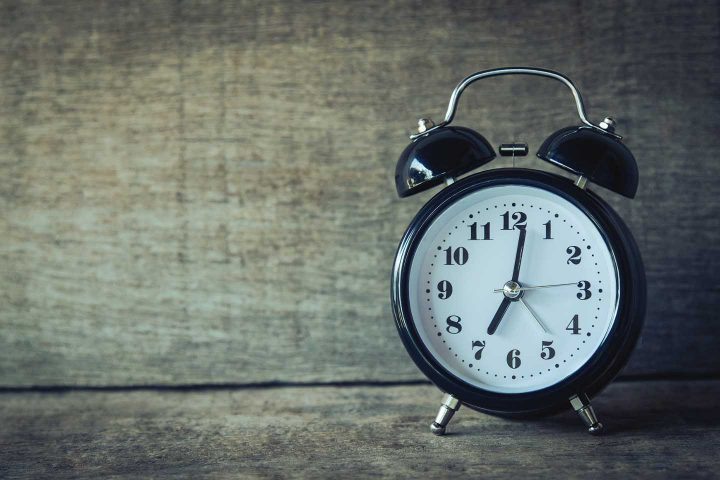
An alarm clock - Photo by Aphiwat from Pexels

Have a regular time for going to bed and a regular time to rise that allows you 8-9 hours of good sleep. Cutting corners on sleep does not help your productivity. You will be running around like crazy, thinking you cannot afford to go to bed on time and let your work be undone. The truth is, that the next morning you will be irritated and with a foggy mind, not being able to think straight on what your next step should be to get you to the goal you are looking for. More than often you will realize that you will work more hours and accomplish less.

If you are really on a tight deadline, you may be better off to go to bed an hour earlier than normal, but wake up two hours earlier and get some undistracted work time early morning, while everyone else is still asleep.

Our body is adjusting its daily hormonal cycle according to the light and dark cycle of the sun. For this reason, one hour of sleep before midnight is just as refreshing as two hours of sleep after midnight.

Getting into the habit of going to bed before 9:30 PM will help you a lot to wake up refreshed and full of energy the next day. If you have created the habit of burning the midnight candle, it may take you some time to adjust to the new schedule, but after a few weeks you surely will start to feel the benefits.

Many people created the habit to get by on a minimal sleep time during the week, but at the weekends they sleep in as much as they can. This is detrimental in two ways. First, there is no way that you can make up for sleep that you have lost during the week. You cannot recuperate the lost productivity you had during the week, nor can you make up the toll that sleep deficiency had on your health.

Second, the body gets used to a regular rhythm of activities you do during the day. If you totally change your sleeping routine on the weekend, your body gets out of sync and you cannot enjoy completely the free time you have. So if you have the habit of getting up at 6 o clock during the week, and on the weekends you can’t get out of bed before 10, this is a sure sign that you were sleep deficient on your weekday schedule. If you aim for a regular time to go to bed and a regular time to wake up, ideally even on the weekends, you help your body a lot to optimize the circadian rhythm for peak productivity.

Rule #7 – Become a Master at Time Management

During the Huffington Post surveys about sleep and stress, they noticed that most people started with phrases like, “Not enough time to…” Time is one thing we need more of and have less of in this day and age.

We have no time to relax. We push ourselves from the time our feet hit the floor in the morning right up until we go to bed – and we never get to bed on time. Instead, we give ourselves a minimal amount of sleep hours – and much of that is spent tossing and turning due to the stress of what all we couldn’t accomplish this day.

If you’ll get firm with yourself and look at how much time you waste during the day, or how much time you’re not as productive as you should be, then you’ll free up more time for sleep.

Notice that didn’t say, “free up more time to get tasks done.” Many of you will learn new time management skills and forget to learn your lesson about sleep. Instead, you’ll pack in more on your to-do list.

Make the exercise to journal for a week your daily routine. Notice all the times when you’re surfing the web or standing around chatting with co-workers. That’s time that you could be spending really accomplishing things so that once your day is done, you are rewarded with free time – “me time” – to pamper and nurture your body and mind.

A blank journal - Photo by Jessica Lewis from Pexels

You might also find that when you implement the other rules here to accomplish proper sleep hygiene, you’ll be able to get more done throughout the day. That’s because your mental clarity improves and you tend to have more energy to tackle whatever the day may bring for you.

Rule #8 – Allow Deep Breathing to Replace Naps

There are some people who get in the habit of taking a daily nap – primarily because they’ve heard that power napping can help them achieve their goals for the day.

This might be true for many people. But if sleep eludes you, then naps could be causing the problem. A 10-minute power nap where you’re basically just shutting your eyes and deep breathing is beneficial. Going to bed for 2-4 hours in the middle of the day is a recipe for disaster. You’ll never be able to go to bed at a regular bedtime and you’ll lie there frustrated and annoyed that you can’t go to sleep. It’s a hard habit to break.

Try using deep breathing to energize yourself whenever you’re in an afternoon slump. Breathe from your diaphragm and try to watch how often you’re using shallow breaths throughout the day.

Rule #9 – Resolve Your Worries Before Going to Bed

If you find yourself troubled or upset make an effort to solve the problem as best you can before bedtime. If you had an argument with your spouse, or whether you were getting wrapped up with your coworker, if you are able to resolve it before bedtime, sleep will be so much sweeter. The Apostle Paul was saying already many years ago: “Do not let the sun go down on your wrath.”((The Bible, Ephesians 4:26 NKJV))

Sometimes you find that worries are wanting to creep up on you and be your companion at bed in order to rob your sleep. Some worries are good in order to get us into action. But more often we are worried about things that we can do nothing to resolve. At this moment, we need to turn our worries over to your Heavenly Father, trusting that He is well able to take care of your needs. This experience of peace can do much more for a sweet night of rest than anything else. This is exactly what Solomon was speaking about:

When you lie down, you will not be afraid; yes, you will lie down and your sleep will be sweet.

Proverbs 3:24

I wish you can make this experience for yourself. Because if you are able to turn over your troubles into the Hand of God, then your sleep with a peace of mind that you maybe did not now for a long time. You want to try this out in your life?

Do you need a guide to help you understand how to cope with Stress in an all inclusive approach? Learn how to combat stress, mentally, physically, emotionally and strategically in your life.

Get Me the Guide

Filed Under: Healthy Lifestyle, Sleep

Stress-Induced Insomnia – A Vicious Cycle

November 8, 2020 by Martin Neumann

Stress Induced Insomnia

Lack of sleep caused by stress is a combination that can literally kill you. Relaxation and sleep are two things that can truly make a difference in how your body and mind react to stress. Without those two elements, you run the risk of losing efficiency or entering into a collapse.

Stress-Induced Insomnia - A Vicious Cycle

It does not matter what you are fixing first – the stress or the insomnia, but unless at least one is fixed, they will both get worse. The effects of stress on your body and mind can slow your productivity and make your life much less enjoyable.

Stress can be fixed if you have a commitment to seeing it through. After the stress factors are reduced, sleep should come more easily.

Causes of Stress-Induced Insomnia

Too much stress in your life may cause insomnia and vice-versa. When you try to get through the day without getting enough sleep the night before, your efficiency will suffer and you will drag through the day, just increasing your stress again.

Sleep times vary from one person to another, but most adults should get 7 to 8 hours per night to keep up energy levels, keep up mental acuity to be able to get through the work day and maintain a good quality of life.

You may experience a short-term bout of acute insomnia that lasts for only a few days. A stressful event in your life might trigger this type of insomnia, but if you experience it for more than a month, you need to take immediate action.

Stress-induced insomnia may result in worrying or serious concerns about your health, finances, work or loved ones. You may also experience stress-induced insomnia if you’ve just gone through a divorce or lost a loved one.

Insomnia can be caused by various other motives as well, like medications, certain diseases, an irregular sleep schedule, a disruptive sleep environment, or a number of other lifestyle habits. It is always good to deal with the real cause in order to tackle the problem head on.

Symptoms of Stress-Induced Insomnia

Dealing with the symptoms of stress-induced insomnia can make you feel disconnected from most everyone and everything. You’re not as mentally alert and you might also be irritable and anxious.

Depression may set in and cause other problems such as fatigue and inability to focus on anything. You may never feel well-rested, even when you think you get a good night’s sleep.

Mood swings are also symptoms of stress-induced insomnia. Tension headaches and aches in the shoulders and neck are caused by stress and can keep you from getting a good night’s sleep without help from medications or relaxation techniques. If you’re finding it difficult to be around people, this may be another warning sign of insomnia taking its toll.

Tension headaches can be caused by stress-induced insomnia / Photo by Andrea Piacquadio from Pexels

Stress-induced insomnia will increase your risk of developing chronic diseases. Heart disease, diabetes, premature aging and even an early death are just a few of the issues that could be caused by stress-induced insomnia. This type of insomnia can also cause people to eat more and gain weight, drink or take drugs and exercise less.

Those are all actions that cause negative consequences to our health. One of the most common risks of long-term, stress-induced insomnia is catching a common cold or any other virus coming around.

Weight gain can also be a health issue related to stress-induced insomnia. When stress hormones are released into the body, your preference for unhealthy foods containing sugar, fat and refined carbohydrates is increased.

If you haven’t had enough sleep, you get a double dose of stress hormones which can lead to binge eating. Seniors suffering from stress-induced insomnia may experience a slower healing process from medical procedures or surgeries.

If you don’t sleep well at night, you may be tense and feel back, shoulder and neck pain when you get up in the morning. Stress during the day at work or home may make the pain worse or cause inflammation that makes it more difficult to heal.

Treatments for Stress-Induced Insomnia

If there are worries that keep you awake at night, you need to start working on controlling your thoughts. Cognitive-behavioral therapy may have some interesting tools for you. One of these methods is thought challenging. If a negative thought comes to your mind, you simply challenge it. Is it really true? If not, just discard the thought that was coming to your mind.

Some people are getting all wrapped up about what may happen to them tomorrow. They tend to get worried about things that never may happen at all. Jesus gave some interesting counsel about that:

Therefore I tell you, do not worry about your life, what you will eat or drink, or about your body, what you will wear. Isn’t there more to life than food and more to the body than clothing? Look at the birds in the sky: They do not sow, or reap, or gather into barns, yet your heavenly Father feeds them. Aren’t you more valuable than they are? And which of you by worrying can add even one hour to his life? … So then, do not worry about tomorrow, for tomorrow will worry about itself.  Today has enough trouble of its own.

Matthew 6:25-27 & 34

There are cases you need to make provision for something, and if it is for a good reason, go ahead and do what needs to be done. But to worry about something that probably never happens, or when it really happens you cannot change it, does not make any sense. If you believe in God, the best thing to do is to turn over your problems simply to Him, because He is able to take care of it all. And simply stop worrying, because it is probably not going to help you in any way.

You can find peace of mind by committing yourself to God in prayer. In order to do that, speak to God like a friend. Present him your worries, your struggles and your cares. Be honest. Tell whatever is on your heart. There is nothing too great for Him to carry, and nothing too small for Him to note. The more you are able to honestly express, the more you will be able to let things go.

Be confident! After having done your part, commit yourself into His hands, and accept whatever the outcome may be. We can conquer the stressors around us through the power that God is giving to us.

If you still have trouble falling asleep you can try a relaxing tea at night. Valerian and Passionflower are some herbs that can help you fall asleep easier.

A relaxing tea can help to fall asleep. Photo by Mareefe from Pexels

Sleep studies are done if nothing seems to help your insomnia or control your stress that’s keeping you awake at night. You’ll spend the night at a sleep center and during that time, your breathing, heart and brain waves and eye and body movement will be monitored.

If you’ve tried everything else but just can’t seem to get a good night’s sleep you may need to resort to meds for a short period, because the side effects of lacking a good night’s sleep are various. Just work on resolving quickly the underlying problems that caused your insomnia, so that you do not create a dependency on those medications.

Prevention Techniques for Stress-Induced Insomnia

After you get into the vicious cycle of stress-induced insomnia, you may have a long road to travel before you get back to a normal sleep pattern. The best thing you can do for yourself and your health is to prevent it from happening. But even if you are in the vicious cycle already, taking care of those basic measures will be fundamental to improve your quality of sleep.

One thing you can do if you suspect that the stress-related insomnia is caused by work is to set boundaries such as letting you spend time with family or relaxing in the evening without answering calls or emails.

Don’t get roped into so many requests that you can’t handle them all without acute stress. Just say no to the ones that aren’t that critical. Don’t check your email every few minutes. Designate a time during the day and let it go in the evening so your distractions are lessened.

Schedule the things you like to do in the evening hours. Other requests from friends or organizations should be secondary to what means the most to you and how you can unwind in the evening.

When you are at home and relaxing before bedtime, put your cellphone away. Take time to relax or converse without distractions – including the television. After you watch a program, turn off the television and avoid watching it just before bedtime or especially in the bedroom after you go to bed.

News is stressful to watch any time during the day, so limit what you watch that makes you stressful to 30 minutes or less per day. The same with your computer – don’t have it on and blinking at you when you’re trying to relax. Allow for no screen time for an hour before going to bed, be it computer, cell phone or TV.

During the daytime hours it’s important to stay active. Exercise helps to reduce stress so it doesn’t bother you at bedtime and promotes a great night’s sleep. You’ll also want to plan the bedtime hours to be consistent from one day to the next – even on weekends when possible.

Limit caffeine or alcohol and kick the smoking habit, if necessary. These substances can make your nerves jittery at bedtime and keep you from getting the required amount of sleep.

A bedtime ritual can help over time to relax your body and mind and ready it for a good night’s sleep. A warm bath, soft music or a few minutes of reading can go a long way to calm nerves and make you sleepy. Deep breathing exercises and progressive muscle relaxation may help you to relax. Make it a habit to commit yourself to God in prayer.

A relaxing bath can help wind down after a busy day. Photo by Craig Adderley from Pexels

When insomnia makes it difficult for you to function during the daytime hours, it’s best to see your doctor. A sleep disorder of any time may need special treatment other than the type you purchase over the counter.

You should be as committed to getting the full amount of restful sleep you need as much as you are to a healthy diet and exercise to keep your body in shape. You could suffer a poor quality of life for an extended period of time unless you get the stress – and the sleep problems under control. It is true especially with stress control: A healthy sleep is the best preparation to face the problems of tomorrow.

Do you want to understand how to cope with Stress in an all inclusive approach? Learn how to combat stress, mentally, physically, emotionally and strategically in your life. Download the Ten Minute Guide to Stress Control and start today to develop proper coping skills for your stress.

Do you need a guide to help you understand how to cope with Stress in an all inclusive approach? Learn how to combat stress, mentally, physically, emotionally and strategically in your life.

Get Me the Guide

Filed Under: Healthy Lifestyle, Sleep

« Previous Page

Primary Sidebar

Copyright © 2026 Stress Management Tools · Log in