Stress Management Tools

Helps You to get Stress under Control

  • Home
  • About
  • Blog
  • The Program
  • Free Offer
  • Contact
You are here: Home / Blog

Blog

Anxiety and Panic Attacks

April 24, 2021 by Dr. Cesar Vasconcellos de Souza

Anxiety and Panic Attack

One day, I was riding in a subway train. The train was packed and I was sitting in the chair next to the window, when the train suddenly stopped in a way that when I looked at the window I saw a wall, nothing more. It came to my mind what could happen to people with panic disorder and phobias. I thought, if such a person would be here now and looking out the window, and saw this wall with a full train, so that on one side there are a lot of people wanting to get out, and on the other side a window of the train that doesn’t open, a wall, the person starts to think about it and let his fearful thoughts take over her mind, thinking that there would be no way out, that there could be shortness of breath for everyone, because the train was full, and it would be impossible to get out of there, in addition to other tragic thoughts, the panic attack would probably be triggered in this person. What we think about most, we become, even if what the thoughts are suggesting is not true. The quality of our thoughts influence what we feel.
Anxiety and Panic Attacks

What is a Panic Disorder?

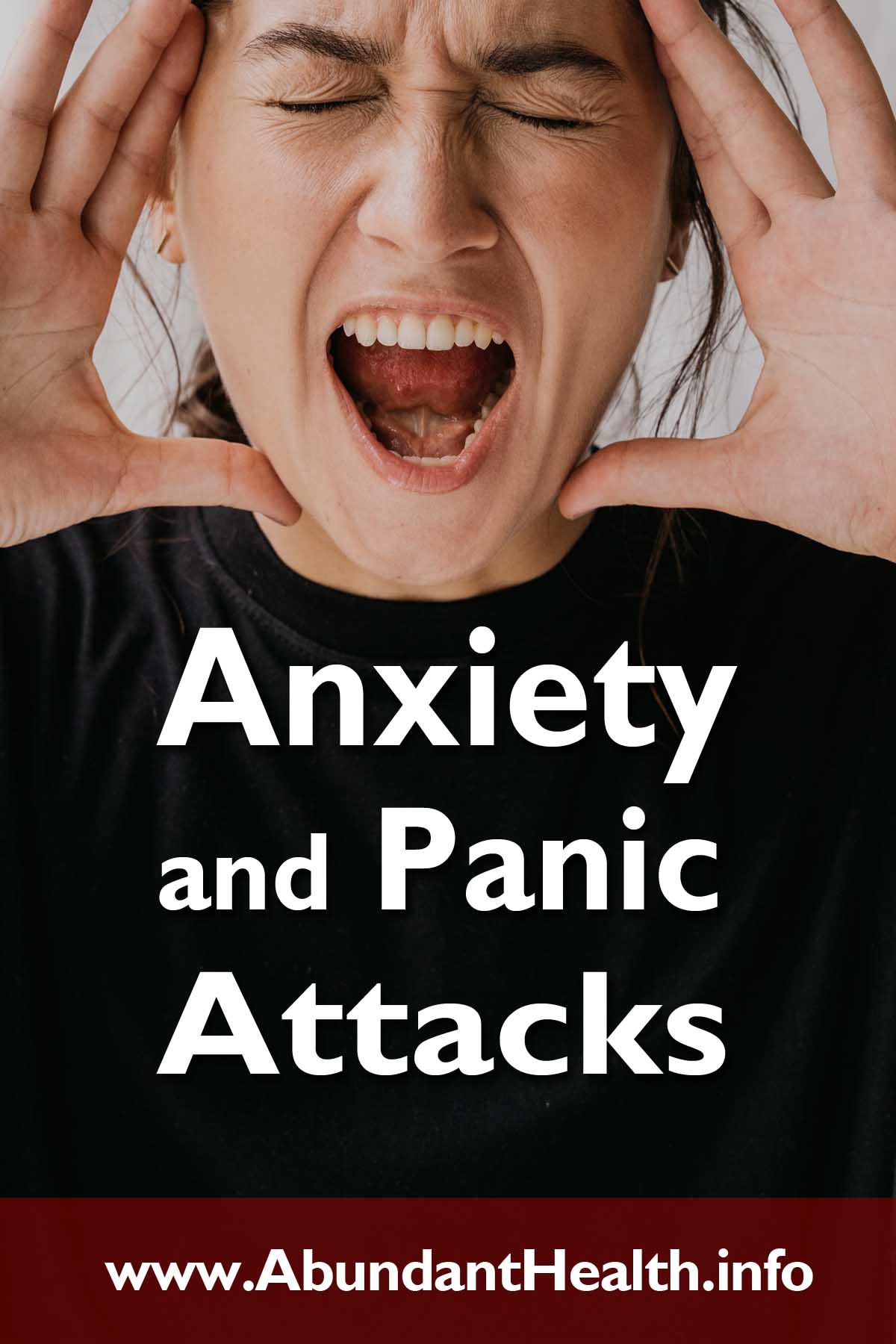
A panic attack is a sudden, very strong reaction of anxiety and fear. It is unexpected and produces symptoms of physical and emotional discomfort, causing the person in the time of the crisis to escape from that place and seek a medical emergency room, or an environment in which they will feel protected, or to be with someone with whom they will feel more secure. If you are experiencing a tragic situation such as a shootout between bandits and police, it is normal to be in a panic at that moment. But the person with panic disorder is terrified of dying or losing self-control, a feeling of depersonalization, even when there is nothing in the environment that favors this. For the diagnosis of the panic disorder, there must be repeated crises in the last weeks or months, an exaggerated concern about having new crises and at least four of the following symptoms:

  • Tachycardia, which is an acceleration of the heart
  • Tremors in the limbs or in the whole body
  • Sweating all over the body, or just the hands and feet
  • A feeling that you are going to faint
  • A feeling of suffocation or difficulty in breathing
  • Chest tightness or chest pain, which is usually interpreted by the person as a heart attack
  • Dizziness or feeling of light-headedness
  • Fear to die
  • Fear of going crazy and other symptoms

About 2% of the population suffers from this disorder. It is twice as common in women as men, and usually occurs around the age of 30. However, it can happen in any age. The cause of panic disorder is not well understood by science, and there are different theories. Among them is that in the brain physiological reactions occur, starting at the place called locus cerulean. This brain center is connected to the vagus nerve, which extends to the chest and abdomen, hence the feelings of suffocation, chest tightness, gastric discomfort. If something activates this neurophysiological system in an exaggerated manner, it is generating symptoms of the panic attack. It seems that when the person is moved by phobias or by very high exaggerated anxiety, this nerve called vagus or pneumogastric nerve is activated and produces these sensations.

The person can concentrate on these bodily reactions such as the acceleration of the heart, cold in the belly, and feeding tragic thoughts: I am going to die, I am having a heart attack, and the cycle closes, so the person thinks tragically, increasing the reactions. So she enters the cycle of fear of dying, and symptoms get stronger and stronger.

It is also believed that in panic disorder, crises can be developed from mental conditioning, which the person has been doing over the time, interpreting symptoms or events in a tragic, catastrophic, imaginary way, in a way that triggers all this reaction of the panic in the future. For example, one day the person who tends to be very anxious when going up in the elevator, felt a strong pain in his chest. From then on, he associates chest pain with going up or down the elevator, and then he develops this fear of an elevator, and he can expand that fear to other closed places.

Another theory has to do with psychodynamics, the history of your emotional life. In this psychodynamic theory, the emotional conflicts of childhood and adolescence, which for some people were very difficult, can favor the emergence of very high anxiety in more vulnerable individuals. Childhood traumas, such as verbal abuse, emotional abuse, parents’ divorce when the child is young, in a very sensitive child facilitates increased anxiety, which can manifest itself by the panic attack years later. A panic attack is like an overflow of anxiety. This overflow can occur, because the person is stressed, represses feelings that need to be verbalized, or because he has conditioned himself to make a tragic interpretation of the events, and this can be modified. You can learn to think, feel and act in a healthier way.

Panic Syndrome Treatment

Excess anxiety that triggers a panic attack may decrease or not, but the person may develop healthy attitudes in self-defense. This means, that he can learn to rest, to relax, instead of always being busy, he can learn to relax even to set limits, also to say no to people. Many people mistreat themselves, they devalue themselves, they do not protect themselves from abuse, they suffer from very high anxiety, which can manifest itself in a panic attack. High anxiety and exaggerated anxiety can be the warning light, saying to the person: “Hey, you need to stop treating yourself badly, and start respecting yourself.” The treatment of panic disorder involves a few things:

  • Temporary medication, for those who are experiencing excessive anxiety, which is disrupting their work and social life
  • Psychotherapy
  • Lifestyle care
  • Orientation for family members, so that relatives understand this suffering

The medication, if necessary, must be prescribed by a psychiatrist, who will also do psychotherapy, if he is trained to do so, or he will refer the person to a psychologist. Psychotherapy is the use of psychological techniques aimed at increasing self-knowledge, and learning how to deal with your emotions. It involves also an analysis of thoughts, trying to localize negative and distorted thought patterns, often full of prejudice, and replace them with positive thoughts, of hope, of acceptance, of self-protection, of forgiveness for oneself and for other people. Psychotherapy or psychological therapy also helps the person to speak and experience repressed feelings that cause mental tension. It helps to make connections between the current suffering that the person presents, and problems in the past due to the family history.

When the person gradually understands the history of his life, in the family relationships that favored exaggerated high anxiety, he is more likely to learn to deal better with his fears, anxieties and griefs, and step by step he can learn to modify his way of dealing with suffering. Psychological therapy, counseling with experienced people, reading suitable books, participating in support groups, having moments to reflect in order to gain self-awareness, are ways of better understanding who you are, and thus facilitating emotional control.

Among the physical care that contributes to the improvement of panic disorder I can mention: first of all rest, then a balanced healthy nutrition, the practice of outdoor exercise, such as walking for example, growing a vegetable garden is extremely therapeutic for the human mind, and proper breathing. Breathing calmly and deeply, inhaling and exhaling slowly, concentrating on the breathing helps. Doing this helps to prevent the crisis from appearing or aggravating.

An anxious person sleeping -  Photo by Ketut Subiyanto from Pexels

Types of Anxiety

Panic crises or panic disorder is a suffering linked to excessive anxiety in the person’s mind. It is like a water tank that has a problem in the float, thus not closing the water inlet, and the drain, who throws out the excess of water is clogged, so water spills over the sides of the tank. Everyone has anxiety, but not high anxiety. A panic attack is when excessive anxiety overflows in the person’s mind, causing unpleasant symptoms.

There is trait anxiety and state anxiety. State anxiety is when the person temporarily experiences high anxiety. It may be in the period of school exams, for example, in preparation for a wedding, in the days before an interview to apply for a job, and other situations. With state anxiety the person has a normal anxiety, temporarily it gets higher in the face of these events, and then it returns to its normal level. Now trait anxiety is as the name says a trait, the person already has anxiety higher than the average, higher perhaps than the siblings of the same family, even though they are children of the same father and mother. So a child with trait anxiety may be more sensitive, more vulnerable to these mental sufferings.

An Example

A young adult woman has been experiencing panic attacks and sought treatment, and the points worked with her in psychotherapeutic treatment are as follows: First she has learned to think, what kind of things accumulate tension and stress in her life that ends up in exaggerated anxiety. She was too concerned about everything, she lived with her worries, which were exaggerated, and she started to realize that. Too worried was a long-time trend in her life. It was the chronic way of living tense. Excessive worry increases anxiety, and increased anxiety can cause panic attacks. She was learning to reflect if she really needed to be so worried about too many things, she started to question herself in order to understand if worry changes something for the better, if her worry would change her reality. She started to think about these things, started to question her own too anxious mind, that is, she managed to start separating herself from the anxiety she experiences. She started to reflect on what she was thinking, this is an exercise that the person has to do, which is called self-analysis or self-observation. So she is learning to live one day at a time, one hour at a time, also learning to accept the inability to fix everything around her.

Another thing that is helping this woman a lot is talking to a family member or understanding friend about her fears, to vent her feelings. Someone who understands the problem, who is friendly, who is not the critical person and who is also able to keep a secret, because venting alleviates anxiety. This woman understood that the panic attack does not go much beyond ten minutes. She is learning to remind herself that the physical symptoms, besides the pain of the crisis, are not serious manifestations of health problems, such as that she will have a heart attack, or that she will have a stroke, or that she will be fainting, so she is learning that she has no physical disease, because she has already undergone clinical and lab tests with the results ruling out the existence of a physical disease. So if you have panic attacks and you haven’t had any exams yet, you haven’t been to the doctor, you haven’t had an appointment with a cardiologist and a general practitioner, it will be important to do that. Having verified that there is no medical alteration will help you next time so that you will not be afraid that you will die of a heart attack, because you will remember: I have already had an exam and the doctor said that I do not have any cardiac problems.

An anxious woman talking to a friend - Photo by Cliff Booth from Pexels

So she has learned that anxiety in a panic crisis is disproportionate to reality. Fear says that in a crisis she will die of a heart attack, or that she will lose her mind, or something that is not real, so she has been training to step back in her mind and look at the tachycardia, look at her breathlessness, observe this and think that the strong anxiety is producing this, and not a real physical failure of the heart or lungs or brain. So the moment the crisis seems to come, she can now remember this for herself, and she is making an effort to change her focus, taking that attention away from her body signals and observing objects around her, or making a rational effort to think of something else, or going to tidy up the closet, going to call a friend, she shifts the focus of her thoughts. She also tries to recall what the cardiologist said recently, that there is no physical illness, that the electrocardiogram was normal, that the exercise ergometry or electrocardiogram was normal, as well as the other tests she did.

She now understands that even when the family member with whom she lives and who does not have panic attacks thinks that what she suffers is nonsense, she does not need to feel inferior for having these crises. She now accepts that she is not less valuable because of the crises she has.

She has learned to let go of attempts to control her life, to want to exercise control over other people’s lives and behavior, which is a very stressful thing. She is discovering that she wanted to control the uncontrollable, and that it increased anxiety, stressed her out and contributed to the panic attack. Now she is able to talk about the things that bother her, without feeling repressed, as if it was forbidden to comment on them. Often the difficulty to speak, to vent is in the person who has the panic disorder, and not because of the unwillingness of others to listen.

She is already able to set limits and protect herself from over-assuming responsibilities or tasks. She is better able to protect herself from abusive people, she recognizes better that there are people without boundaries, who abuse the goodwill of others, and that when she does not protect herself by saying I can’t, I don’t want to, it won’t happen this time, when that is the right thing to do, it accumulates stress that can trigger the crisis. She now asks for things, she asks for help, she delegates tasks, she does not keep assuming everything in her life, she does not commit herself to deadlines that are too short to meet, because she says this will not work, I cannot assume that here, so she respects herself better, she is reducing the posture of omnipotence that she had, that she can do everything, will do everything, resolves everything.

She is learning that already having had panic attacks, she was very afraid of having it again, but now she can remind herself that she is not her anxiety, she is not her fear, she is greater than this, she learned that fear is something in her, but it is not her second nature. Now, she can begin to view excessive anxiety no longer as something that will dominate her mind.

Thought Control

The person with panic disorder needs to train in their mind to self-control exaggerated concerns. What does that mean? When a concern comes, that if not overcome will create a lot of anxiety, and could trigger a new panic attack, he should say to himself: “Wow, look, I am very anxious now.” He starts to observe his own anxiety, then he says to himself: “It comes to disturb me again, but now I know that I don’t have a heart problem, that thought that says I’m going to die of a heart attack, I was already at the cardiologist, I did exams, everything is normal, so I don’t need to let the ideas of dying from heart attack take over my mind. Now I understand that I won’t get out of reality, I won’t freak out, I won’t go crazy.”

So when the person who has had panic attacks develops this type of reasoning, when a threat of a new crisis arises, it means that he is starting to control his tragic thoughts, and therefore the crisis can be avoided. Because disturbing thoughts need to be controlled, and this is done using reasoning. Using logic, using the information you already have, that you do not have heart disease, that the panic crisis is temporary, it is going away and does not lead to craziness. The truth can free and heal. So to improve any mental suffering that involves a wrong way of thinking it is important to understand what this author wrote:

The thoughts must be trained… The thoughts must be controlled… Right thoughts… do not come to us naturally. We shall have to strive for them.

Ellen G. White. Mind, Character and Personality, Volume 2 p. 656

Then you train to replace tragic thoughts with healthy ones. It may not be easy initially, but with training will become less difficult. It may not be possible to prevent the fearful or tragic thought from arising in your mind, because when you see it, it is already there in your head, but it is possible to prevent it from continuing in your mind to disturb you. So the practice of deciding to stop thinking about the negative or the tragic, will strengthen the mind of the person with panic disorder, so that these unpleasant thoughts become less disturbing and less frequent, because in doing so, he is learning to cultivate healthy thoughts that do not generate excessive anxiety. I want to leave a text for you who suffers from panic attacks:

Finally, brethren, whatever things are true, whatever things are noble, whatever things are just, whatever things are pure, whatever things are lovely, whatever things are of good report, if there is any virtue and if there is anything praiseworthy—meditate on these things.

Philippians 4:8

It is interesting that this passage has translations that say: think about such things. So which thoughts are controlling your consciousness? You can train to stop the tragic and cultivate the positive. Wishing you serenity and a clear mind.

Do you need a guide to help you understand how to cope with Stress in an all inclusive approach? Learn how to combat stress, mentally, physically, emotionally and strategically in your life.

Get Me the Guide

Filed Under: Anxiety, Psychology, Results of Stress

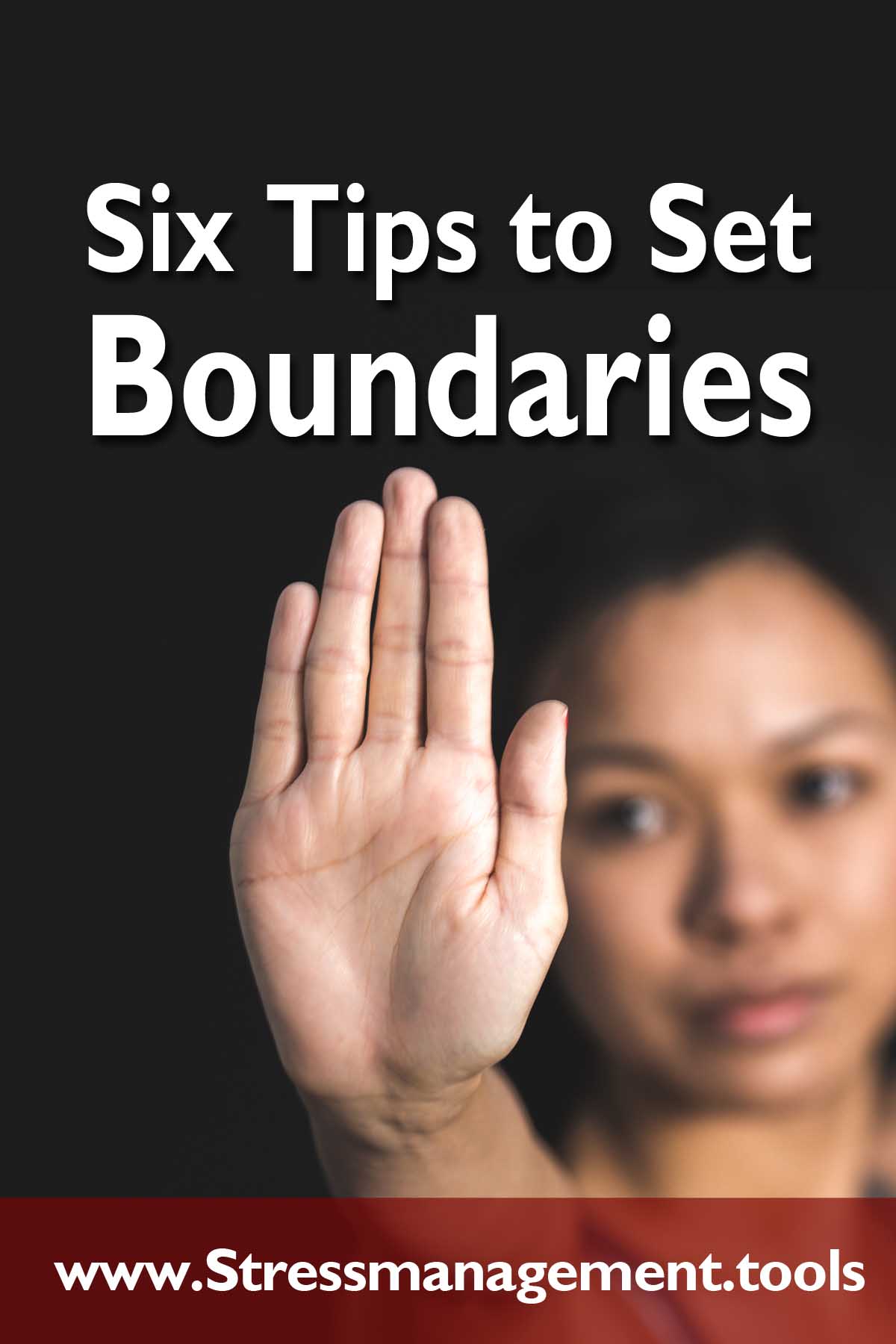
Six Tips to Set Boundaries

March 28, 2021 by Dr. Cesar Vasconcellos de Souza

Six Tips to Set Boundaries

Do you have a hard time setting boundaries? Do you usually say yes when you wanted to say no? You tackle things that you were not supposed to deal with? If so, then today’s topic is for you. Let’s get some tips that can help you set some boundaries.

Six Tips to Set Boundaries

Importance of Boundaries

You may ask: Why is it important to set Boundaries?

First, because you may be a person who didn’t know how to do this since you were a child. You may have been a victim of other abusive, dominating children, or you suffered from adults who were not sensitive to your needs as a child, needs that you did not know how to claim. Father and mother need to teach children from an early age to know how to defend themselves from abuse. You may have become an adult who still struggles with the issue of setting limits. Hence you suffer unnecessarily, assuming tasks, responsibilities that you shouldn’t have, but since you take them on, your life gets stressful, heavy and unhappy.

Boundaries are attitudes you should have and need to practice, in order to protect what is good in your life, and not allow bad things to overcome you, whether in your home, your body, at work, in your religious community, in the neighborhood and in your own mind. Limits are important. Think of the boundary between your house or apartment and the neighbor’s house or apartment. The limit can be the door, the corridor, the sidewalk, the wall, the fence, right? And what about the limits between a town and another town, between a state and another state, between one country and another country. Look how important limits are, the border is important, isn’t it? I remember a saying I read a while ago: having a neighbor is good, but put up your fence.

The fence defining the property boundary of the house

An emotionally sensitive person, if he suffered a lot in childhood relationships, he may have built up tight boundaries on his personality, in order to avoid suffering pain again. Sometimes we hide ourselves to protect from the pains we have experienced in the childhood past, to make sure they are not repeated in adulthood. But we can exaggerate our boundaries that keep us away from more intimate contact with others, and even with ourselves.

Some children may not have learned to put limits during childhood against family abuse. They may have been criticized for wanting to be alone for a few moments when it was normal for their temperament. They may have been hampered in the process of delineating their self, in the construction of an identity that separates them from others. They may have had difficulty making decisions independently. Some children and teens may have suffered in their families for being aggressively repressed when they tried to complain about something unjust and cruel. Children who grow up without having learned to set just and necessary limits for the preservation of their own identity, become adults who are generally victims of abuse in marriage, with an authoritarian husband, with an authoritarian wife, or with a co-worker, boss, or abusive business partner.

Practical Tips

Now let’s look at some tips on how to establish healthy boundaries.

First make sure you express yourself clearly. Many sensitive people, more prone to not knowing how to set boundaries, often express themselves, but not in a clear and firm way. They may say something like this: yes maybe, I’ll try, if I can, when they really wanted to say no. You can be clear, firm, and at the same time polite and tactful.

A woman shrugging her shoulders, not saying what she thinks - Photo by Polina Zimmerman from Pexels

A second tip: you have no obligation of always needing to give a reason for your decision. Think about it: you can say no thanks, I don’t want that, and that’s it. Speak politely, without shouting, and if the person insists on wanting to know the reason for your decision, you can repeat your answer and say that you do not want to explain. You have the right not to explain yourself to an abusive person, who just wants to bog you down.

The third tip on setting boundaries. Only you know whether or not you are overwhelmed. If people know that you are overwhelmed, they may not ask you for another difficult task. So say you have a lot to do or too many responsibilities around your ears.

A fourth tip: You have the right to tell a person that you will need more time to think about the decision he wants you to take right away. If you feel not safe to take the final decision right now, say that you need to think and that you will get back to them as soon as you can.

The fifth tip for you to set boundaries and protect yourself. If you think it will be easier to say no by email, by phone, by the message on your cell phone or other means, without being face to face, then use one of these means of contacting the person.

The sixth tip has to do with respecting yourself and thinking that you are on same ground with another person, or you may even be better prepared, for example to perform a certain task. Someone who is bossy, with a dominant temperament, usually chooses the best seat, the quietest place, the largest office, dictates the rules, determines tasks, doesn’t he? So do not feel or place yourself as inferior to that person, but with the same rights if you are actually in the same hierarchy. If the person doesn’t see you as someone who has the same rights as he does, when in fact you have a right, see what you can do to change that.

Make an effort to say no when it is the right thing to do. When you arrive at the final judgment, God will not ask you why you were not the same as someone else. If you don’t take better care of yourself, putting boundaries on what God expects you to be, he will ask you why you have not been the best of yourself. So think about it. You have a right to set boundaries, and if you have not learned it in childhood, you can learn it now. Protect yourself and set boundaries!

Do you need a guide to help you understand how to cope with Stress in an all inclusive approach? Learn how to combat stress, mentally, physically, emotionally and strategically in your life.
Get Me the Guide

Filed Under: Boundaries, Psychology

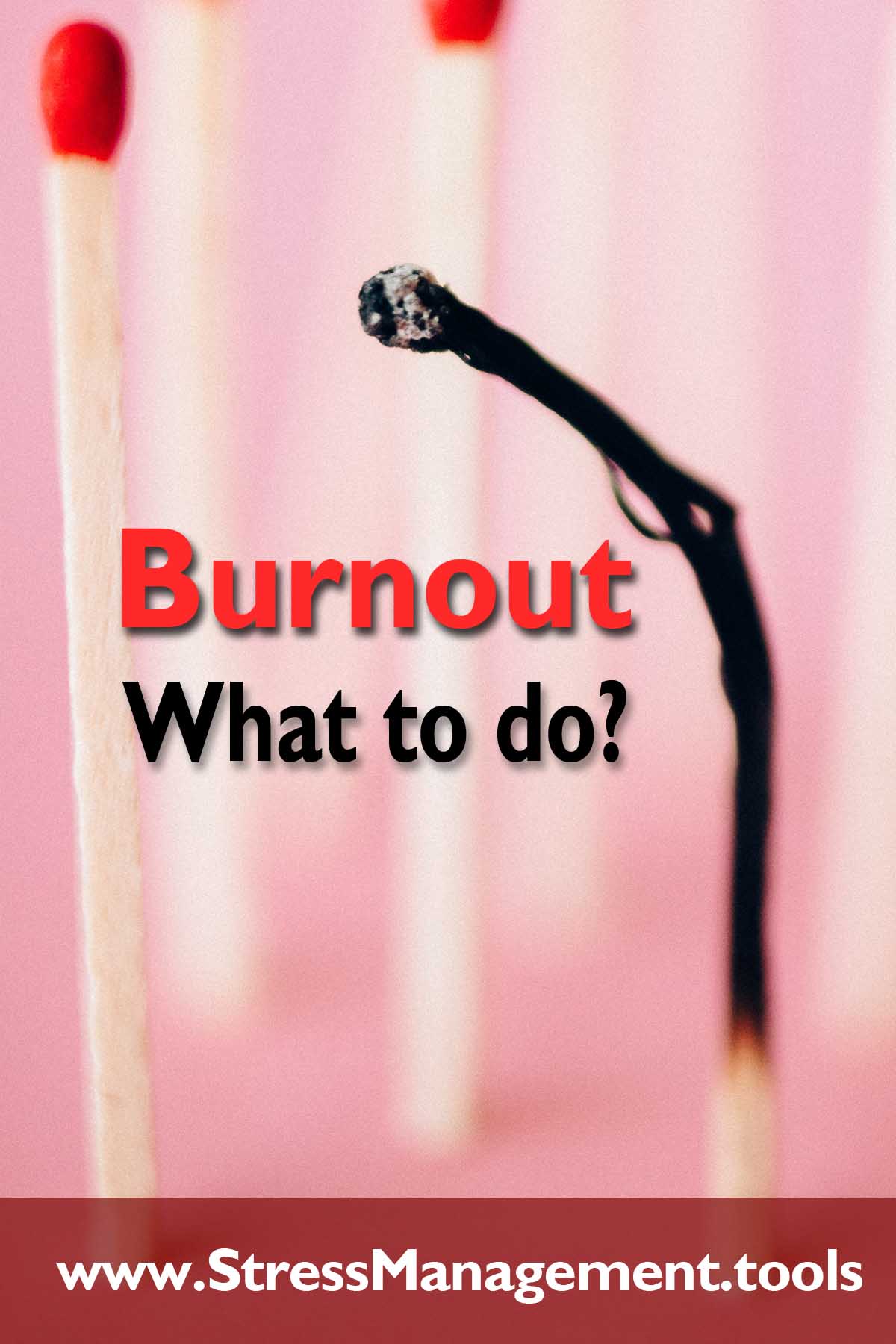
Burnout – What to do?

February 26, 2021 by Dr. Cesar Vasconcellos de Souza

Burnout

Have you ever heard of burnout? It is a physical and mental exhaustion, normally resulting from chronic workplace stress that has not been successfully managed. What are the symptoms and what can we do to solve it?

Burnout - What to do?

Burnout is the result of stress which lasts for a long time, leading to emotional and physical exhaustion, when there are a very stressful work style and difficult relationships with people, which could include the family.

The people who suffer most from this type of exhaustion are those who practice a profession where they are required to involve with people on a frequent and very close basis. They are service providers, especially caregivers and teachers, because their work involves many emotionally stressful situations. Burnout syndrome is manifested by emotional exhaustion, decreased personal fulfillment at work and lack of a human atmosphere. Let’s see how that works.

Symptoms of Burnout

Burnout is a response to various stressors. Its symptoms are telling the person: stop. Re-evaluate your lifestyle. Review and change the way you deal with people. Take it easy on yourself. Put a limit on the abusive people you have to live with, or stay away from them. The person with burnout is not a weak individual. The demands from outside, and often from within themselves, are in general too much for any human being to deal with.

Do you know what symptoms a person with burnout syndrome has? I will mention the physical and mental symptoms. Among the main ones are physical symptoms: constant progressive tiredness, muscle pain, headache, gastrointestinal disorders, insomnia, repeated infections due to low immunity, cardiovascular disorders such as palpitation, high blood pressure, sexual impairments such as premature ejaculation, disinterest or frigidity, bone pain, menstrual disorders, migraine, asthma attack and others.

Mental symptoms of burnout syndrome include difficulty of thinking quickly, feelings of loneliness, helplessness, impaired short term memory, decreased attention and concentration, irritability, emotional lability, like crying easily, loss of self-respect and self-worth, depression, difficulty to relax, impatience, sudden change of mood, abuse of substances such as alcohol or prescription drugs, loss of interest in work, absences from work and others.

A woman with burnout crying

Many people who develop burnout feel compelled to succeed and perform well and experience demands that are too strong to compete with. They may have an ambition that may be linked to dysfunctional, that is, unhealthy psychological needs. It is easy to disguise the unhealthy obsessive ambition for professional and economic success in life through hard work that everyone applauds, that is, people do not criticize those who work too much, the employee is always praised, but it can be a compulsive worker and end up developing exhaustion, and behind a compulsion, there is always a history of emotional pain and spiritual conflict.

Exhaustion can arise from exaggerated profound ambition, or desperate need to be approved, thinking that our work is not adequate, a need to feel that we are in control all the time, or any behavior, desire or motivation that dominates us in an uncontrollable way.

Consequences of Burnout

What are the main consequences of this exhaustion called burnout in a person’s life? Loss of physical strength to work, stress in the family, which can cause discontent in the children, who may start to see the work of the father or mother in a negative way and revolt, difficulties in marriage because the husband or wife meets the demands of their work and leaves the affections of married life aside. In this case the person must learn to put limits on abusive work requirements and their own exaggerated desire to get involved with things outside the home.

A family relaxing at the beach

There are many who develop depression in response to exhaustion. Depression is a sign that there are losses. There is helplessness that is not being respected, perhaps by the person himself, in which case there is a need to regret, to cry, to ask for support from someone who can hear or understand, or accept him in his pain, in his struggle and in his emotional fatigue.

The other consequence of burnout is the loss of motivation due to pressure at work, pressure from the boss who sucks too much, generating stress, exhaustion, and everyone is harmed. The person is asking for sick leave, the production falls, but the costs are the same. Do you exploit your employees? Do you pay overtime and allow for an hour bank? Do you give vacations according to the law? Do you pay fair wages? Are you honest as an employee, and with a co-worker? Do you involve yourself in the company? Do you do your best, are you proactive? Good qualities in bosses and employees prevent burnout at work.

Burnout Prevention

Several scientists studying this syndrome cite that to prevent burnout it is important to take some actions, such as:

  • prevent the employee from feeling coerced, pressured by strict rules and policies.
  • to prevent workers with young children in school age from being frequently transferred from the city, so as not to cut the affective bonds, the friend, school, neighbors, creating stress in the family, the father, the mother, and the children.
  • to encourage individuals by showing them that their work is very important, whatever it is, and that it cannot, it does not need to be quantified by numbers, and that the goals are secondary.
  • promote human values in the workplace, remembering that people are more important than things, than goals, than reports.
A company working as a team - Photo by fauxels from Pexels

Each employee must think that his value as a person is given by God, that there may not be a positive return of kind words from colleagues and bosses, not because my work done is not good, but because that company or that institution may have a predominance of demanding, legalistic, cruel and jealous people. And another thing, you need to have friends, at least one with whom you confide your personal problems. To prevent burnout, you need to become responsible for your health, avoid developing burnout by placing limits on the exaggerated and unfair demands of others, without fear of being criticized. Because your conscience will be calm, remembering that there will be unpleasant critics.

The leader of an employee who is experiencing burnout can assist his team member with empathy, understanding, offering personal and institutional help, without paternalism, but with compassion. I want to leave a biblical thought for your reflection:

Do not be overly righteous,
Nor be overly wise:
Why should you destroy yourself?

Ecclesiastes 7:16

Peace and light, don’t be cruel to your employee, and don’t be cruel to yourself.

Do you need a guide to help you understand how to cope with Stress in an all inclusive approach? Learn how to combat stress, mentally, physically, emotionally and strategically in your life.

Get Me the Guide

Filed Under: Burnout, Results of Stress

As You Think, So You Are

January 31, 2021 by Magna Porterfield

As You Think So Your Are

Do you ever think about your thoughts? Most of us don’t. But evidence indicates that how we think can impact our feelings, our behavior, and even our bodies. If you were to one day record all of your thoughts, what would you discover? You might be surprised at what you found. What we think reveals much about who we are. This is why the wise man Solomon stated thousands of years ago that “as a man thinketh in his heart, so is he.”(( The Bible, Proverbs 23:7, KJV.)) Professionals and laypeople alike are learning more about thoughts and their effect on how we live and who we are. Let’s look at some specific areas in our lives that are directly linked to our thinking patterns.

Thoughts and Emotions

Our emotions are directly related to how we think. When I was in private practice, my clients would frequently say that they “felt” a certain way because of what someone said or did to them or because of a certain situation or event that had occurred in their lives. Many of us have uttered statements such as “He made me feel mad” or “I felt sad because she wouldn’t do such and such.” It is true that as human beings we do have an impact on one another’s feelings. However, the idea that other people or situations “make us” feel a certain way is not completely accurate. Simply put, it is not what happens to us that controls how we feel, but our thoughts about what happens that affects our emotions. For example: an acquaintance who typically speaks to you passes by you without acknowledgement. How you feel about this situation is not determined so much by that person’s behavior, as by what you tell yourself about his or her behavior. If you say to yourself, “I can’t believe that she didn’t speak to me!” or “Why is he ignoring me?” you are more likely to feel hurt, angry, or rejected. However, if you give the person the benefit of the doubt and choose to consider that maybe he did not see you, or perhaps she was preoccupied with something, you will be less likely to experience negative emotions. Psychologists and other mental health professionals apply this principle with a treatment known as cognitive behavior therapy, a method that teaches individuals how to identify and replace their distorted thinking patterns with healthful ones. When we experience anger, sadness, happiness or excitement, we can ask ourselves, “What was I thinking that might have contributed to this emotion?”

Thoughts and Behavior

“Sow a thought, reap an action …..” This simple proverb accurately describes the connection between our thoughts and actions. What we tend to plant in our minds, will germinate, grow, bud, flower, and bear fruit—in word and deed! To illustrate, let’s refer back to the example just given. If we believe that the person who didn’t speak to us is ignoring us, we may choose to ignore her the next time that we see her. Or, if we decide to put the kindest construction on her actions, and consider that she may have been preoccupied or experiencing some difficulty, we may instead say a prayer for her or give her a call to see if we can be of help in any way.

A phone call to a friend - Photo by Andrea Piacquadio from Pexels

The understanding that our thoughts affect our actions is also applied by those in the mental health field. For example, during the time that I worked with sexual offenders, an important part of their treatment program involved teaching them how their thoughts contributed to their acts of sexual molestation. With the use of cognitive-behavioral therapy, we would help them to identify the thoughts that had led them to commit acts of abuse, and then teach them how to replace these thoughts with more healthful ones. This principle is also used to address other psychological concerns such as depression, anxiety, and even relational issues of the marriage, family, workplace, classroom, or otherwise.

Thoughts and the Body

Consider the following: “Every time you think an angry thought, an unkind thought, a sad thought, your brain releases chemicals that make your body feel bad and activate your deep limbic system in the brain …. Think about the last time you were mad. How did your body feel? When most people are angry, their muscles become tense … the heart beats faster … hands sweat …. Your body reacts to every negative thought you have.”(( Amen, D., Change Your Brain, Change Your Life, Three Rivers Press, NY, 1998.
It should be noted that the current author does not agree with all the concepts promoted by Dr. Amen.)) 

This quote describes how thoughts can affect our bodies. And if they impact our bodies, then it stands to reason that they will also affect our physical health. We are becoming increasingly aware of the fact that many of the illnesses from which people suffer are related to the activity of their minds, and especially, how they think. One inspired writer tells us that “few realize the power that the mind has over the body. A great deal of the sickness which afflicts humanity has its origin in the mind ….”(( White, E., Counsels on Health, p. 349.)) This connection is clearly seen in the area of stress. One person expressed it well when he stated that “What we think is killing us.”(( Howard, M., Seminar on “Burnout, Stress, and Fatigue.”)) In most situations, we experience stress not because of the situation or stressor itself, but because of how we react to the situation. Often times, uncontrolled stress can contribute to physical disease. A case in point is the example of a woman I knew who spent years thinking about and mulling over the death of another family member. This woman, even though she had a relatively healthful lifestyle, eventually died, perhaps prematurely, of cancer. One might wonder if her ongoing negative focus might have weakened her health. I may dare say that if she had recognized the power of her thoughts and chose to avoid negative ruminations, she might have been able to live a longer and more productive life.

The Truth of the Matter Regarding Thoughts

We are told that we “need to place a high value upon the control of our thoughts.”(( White, E., In Heavenly Places, p. 164.)) How can we do this? Psychology and other branches of mental health have made contributions in the area of thought control. But, as a psychologist myself, I must admit that the field of secular psychology offers only limited help. Any attempt that we make as mere humans to know and understand what is going on in our thought processes can only take us so far. This is because “the heart (hence, the mind) is deceitful above all things, and desperately wicked: who can know it?”(( The Bible, Jeremiah 17:9, KJV.)) In order to truly understand our thinking patterns, we must ask God to reveal this to us. And, beyond that, in order to change how we think, we need to address the root of the problem—the heart. Jesus tells us that out of the heart proceed evil thoughts, murders, adulteries, fornications, thefts, false witness, blasphemies.”(( The Bible, Matthew 15:19, KJV.)) True, we can put forth human effort that may help us to be somewhat successful in changing our thoughts. But real, lasting change can only occur when our hearts are transformed and renewed by the Spirit of God. As did the psalmist David, we must ask God to “create in (us) a clean heart and renew a right spirit within (us).”(( The Bible, Psalm 51:10, KJV.)) If we do this, we can be assured that our thinking patterns will change for the better—from the inside out!

Meditation and prayer

We are told that “many thoughts make up the unwritten history of a single day; and these thoughts have much to do with the formation of character.”(( White, E., Messages to Young People, p. 144.)) This quote reminds us that the motivation for achieving good thinking habits is not only to gain optimal mental and physical health, but to help us develop right characters for this life and the life to come. And, lest we get overwhelmed with this reality, we must remember that with God’s power, all things are possible. He will provide the strength needed to think rightly. With this in mind, we can confidently ask God to help us follow the apostle Paul’s admonition: “Finally, brethren, whatsoever things are true, whatsoever things are honest, whatsoever things are just, whatsoever things are pure, whatsoever things are lovely, whatsoever things are of good report; if there be any virtue, and if there be any praise think on these things.”(( The Bible, Philippians 4:8, KJV.))

Do you need a guide to help you understand how to cope with Stress in an all inclusive approach? Learn how to combat stress, mentally, physically, emotionally and strategically in your life.

Get Me the Guide

Filed Under: Psychology, Thought Patterns

What are Your Goals for This Year?

January 2, 2021 by Martin Neumann

Reaching Goals

Whenever we enter into a new year, we are reflecting on what we did the last year, and we make some resolutions on what we want to accomplish the coming year. But more often those New Year resolutions are fading away just in a few days as the year is going by. The failure in reaching our goals is just adding to the stress we already have, and it seems like we are going nowhere. How can we avoid that from happening? We need to have a clear plan.

What Are Your Goals For This Year?

Make the exercise for yourself. Take out a sheet of paper and write down what you want to accomplish this coming year. Think about all areas of your life. What do you want to accomplish in your professional life, what in your private life, what in your lifestyle to improve your health, in what way do you want to contribute positively to the society around you, and how do you want to grow in your spiritual life? Write down where you want to be in a year from now.

Now after you have put your thoughts and desires on paper, start to prioritize them. Define one or two top priorities in each area of your life, because you will go nowhere if you focus only on your professional life and leave everything else behind. Also, do not try to do everything on your list at the same time, because you will divide yourself too much and will not accomplish anything in the end.

The Action Plan

Next you need to have a clear plan on how you will accomplish the goals you have in your mind. At this point you need to split up your goals in manageable tasks. What are the steps you need to take to reach your goals?

For example, you may decide that this year you want to write a book. That sounds very much like a daunting task. But if you want to reach it, you need to split it up into different steps. You may come up with a list like this:

  1. Choose the topic
  2. Make some research
  3. Define the chapter structure
  4. Research the material for each chapter
  5. Write each chapter
  6. Revise the content
  7. Proofread
  8. Make the layout
  9. Publish
Writing a manuscript

Having defined the steps, you have already a much clearer plan in your mind on how you can realistically accomplish your goal. Next you need to divide each step into actionable tasks. You can write this out on paper, or you can use a tool like Asana to do that on your computer. Estimate for each task how long it is going to take you. This way you have an objective parameter to track your progress.

Now you put the tasks of the first week onto your calendar. Define how many hours you have every day to dedicate to the task and start out working on it, if possible by tomorrow. You are not going to finish the task in a single day, but every day you are going to make another step that is going to bring you closer to your goal.

Remember that you were putting down a timeframe for each task. There may be moments where you are not finishing the task within the stipulated time. Sometimes you may need some extra time on the following day, because you did not make a good estimate on how long you will take. But wherever you can, try to wrap up your task and get it done. You can always improve your work later on. But often you may find out that you need to resist your temptation to go for perfectionism and just do the best you can within the timeframe you have.

At the end of the week it is time for evaluation. Have a look what you have accomplished this week. Are you within your schedule, or did you take longer than expected? Do you need to adjust your timeframes? Or do you need to improve on your efficiency? Maybe you need to resist your perfectionistic vein and go forward? Make an honest evaluation and adjust what is necessary. Take then some time to plan out the next week.

You also will need to work on your motivation to go forward. This will help you to get new energy when you feel like dragging. Think about the impact the book or any other project you do will have. Think about how it can change the life of so many people around you. This will give you a reason to go forward, because you know it is worthwhile to invest all the effort to get it done.

Making Lifestyle Changes

Not every goal needs to have such a detailed project. But you still need to have a plan for how you will get it done. For example, you may decide that your priority is to manage your stress. You need to know what tools you can use to achieve your goals, and the Ten Minute Guide to Stress Management can give you some hints for that. You need to decide now on which tools you need to focus and make a plan on how you will implement them into your life. And you still need a regular evaluation, maybe weekly, maybe monthly to check on the progress and fine-tune your strategy.

The same principles apply for any other lifestyle change, may it be losing weight, changing your diet or starting an exercise routine. All of those imply significant lifestyle changes and you need to have a clear plan on how to get it done.

When changing your habits, you need to be aware that much of those habits were ingrained in your brain for many years, and it will need a conscious and decided effort to change them. It takes about 30 days to start forming a new habit. During this timeframe, you need to make a conscious decision on every day, until you are forming a new neural pathway in your brain that will turn into a new habit.

Often you will find that you need to build up your motivation to work on your lifestyle changes. Think about the outcome your new habits will bring you. How your health will improve after adopting the new lifestyle? Think about all the things you will be able to do when your health is improving. Without proper motivation, you will often find that your old habits are stronger than your new-year resolutions.

We often underestimate the efforts needed to break loose of an old habit, and you may discover that supernatural power is needed in order to be victorious. But you can ask your Heavenly Father to give you the needed strength. God is telling us:

Behold, I am the Lord, the God of all flesh: is there anything too hard for me?

Jeremiah 32:27

So the next time you are struggling to change your habits, go to your Creator who knows how to resolve the problems on your behalf. The first step you need to take is to recognize that you need help and simply ask for it:

If you then, being evil, know how to give good gifts to your children, how much more will your Father who is in heaven give good things to those who ask Him!

Matthew 7:11

He is just waiting to give us all the help we need to be victorious if we simply go to ask. Imagine a child asking his father for a piece of bread because it is hungry. Which dad is not going to respond to that? And how much more will our Heavenly Father give us help if we ask for it?

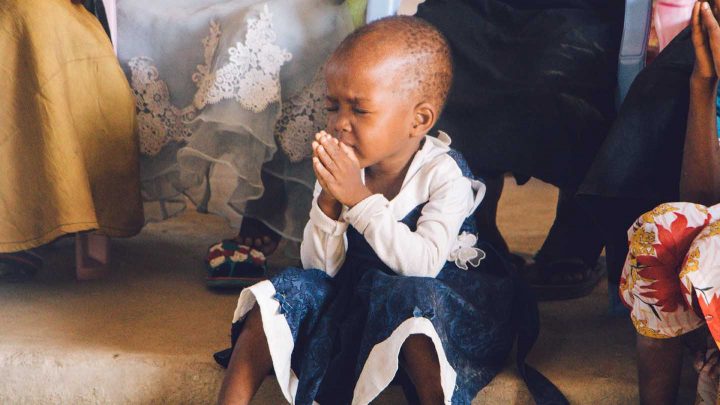
A child praying - Photo by Binti Malu from Pexels

After asking our Heavenly Father for strength, we need to act in faith that He is on our side to help us:

Therefore I say to you, whatever things you ask when you pray, believe that you receive them, and you will have them.

Mark 11:24

One time Jesus was meeting a crippled man who was 40 years lame. Jesus simply asked him: Do you want to be healed? But the poor man could think only on all the difficulties in his way. Jesus simply stretches out His hand and says: Stand up!

The man could have thought: You must be joking, I am crippled for 40 years, how do you ask me to stand up? But instead the man acted in faith and made an effort to stand up. In the same moment he was healed and could walk.

You may feel the same way that you are bound into your old habits. But Jesus has promised you to give you the needed strength. After asking for help, simply believe that God is giving you the power to be victorious, and you will see changes in your life that you thought impossible to achieve.

But even then, it is important to to make no provisions to fail. The apostle Paul is telling us:

Put on the Lord Jesus Christ, and make no provision for the flesh, to gratify its desires.

Romans 13:14

If we know that we have a soft spot for sweets, you do not need to pass in front of a candy store, just to see what they have to offer. And if you want to stop smoking, it will be quite tough to resist if you keep cigarettes at home. Whatever your soft spot is, you do not need to make provisions to gratify its desires. You are safer if you avoid temptations wherever you can.

Other Goals

You may discover that real satisfaction comes from a harmonious development of the personal, professional, social and spiritual areas of our life. You need the social network around you, and you need to give some thoughts on what you can do to contribute to the society around you. Helping others without expecting anything in return can be a very satisfying experience for ourselves. And many times the same blessings will be coming back to us when we are in need. Furthermore we are to a large extent social beings. A healthy social network can do a lot to reduce our stress levels.

Social networks can be important in our lives - Photo by Andrea Piacquadio from Pexels

Give some serious thoughts about what you can do to contribute to your marriage relationship, how you relate to your parents, your friends and everybody else around you. Investments are not limited to your professional area only. And normally you will reap according to which plants you put into the ground and how you take care of them.

Give also some serious thought on what is really important in your life. What are the relationships that are really important to you? Do you really value them what they are worth? What else is giving purpose to your life? How do you contribute to society as a whole? You will find real satisfaction when you start to look beyond your own needs and see how you can benefit others around you. The satisfaction that comes from knowing that you have impacted the life of another person cannot be compensated by any money in the world.

Think also about your spiritual realm. Do you believe that there is somebody higher than you in this Universe? Do you trust your Heavenly Father? You have a personal relationship with your Heavenly Father? Many times are we limiting our religious life to a certain creed. But even though our belief system can be important, real spirituality is much more than that. It is a relationship that consists of giving and receiving. Are you willing to invest in your spiritual life? What are you willing to give? What are the values that make your life meaningful?

It was Viktor Frankl who discovered inside the Nazi concentration camps, that those who were surviving were normally those who had a clear reason to live for. After getting out of the cconcentration camps he became the founder of the logotherapy which consists largely in finding meaning in events happening around us.

Knowing our meaning and purpose of life is an important step in forming a healthy worldview. And it can be an important foundation that gives us emotional stability, helping a lot to get stress under control. A well-rounded development of all the areas of our lives can be very beneficial.

So what are your plans? Are you setting any goals for this year? Where do you want to be in a year from now? Are you willing to invest in your goals? What are you waiting for?

Do you need a guide to help you understand how to cope with Stress in an all inclusive approach? Learn how to combat stress, mentally, physically, emotionally and strategically in your life.

Get Me the Guide

Filed Under: Goal Setting, Planning

How Confidence Can Control Your Stress

December 6, 2020 by Martin Neumann

How Confidence can Control Your Stress

Have you noticed that some people are just thriving under stress while others passing through the same circumstances are at the brink of a collapse? Have you seen some people that are successful in everything they do, while others seem to go nowhere, while having the same opportunities? What makes the difference? It is Confidence!

How Confidence Can Control Your Stress

It’s a widely known fact that confident people are often successful in whatever endeavor they strive to accomplish. When you have confidence, you have the self-assurance that you have the ability to take control of your situation or circumstances.

Without confidence, you won’t fare as well in anything that you attempt to do. This is because a lack of confidence can alter the way that you make decisions. Without confidence, you compare yourself to others and you are scared to make the moves that will help you to advance.

If you have confidence, you will be finishing the race, while others are still too scared to pass the starting line. Many people have found success because they made bold moves driven by nothing more than the confidence they had.

You’ll find those stories all around you – how people risked everything they owned because they believed that they could start a business or risked their lives to take a solo sailing trip around the world.

Some people are natural leader personalities. They can influence the crowd, because they have the confidence that they are in charge of the situation.

While you can develop your confidence levels, there are two things that can impact your efforts negatively – those two things are stress and anxiety.

Anxiety

Anxiety is worrying about something that might happen or fretting about the eventual outcome of an event. This can also be defined as nervousness. You are fearful of something bad that could happen in the future. In extreme cases, anxiety can lead to a panic attack.

Besides depression, anxiety is the most common mental disorder. In most metropolitan areas, one in three persons is suffering from anxiety.((A. J. Baxter et al, “Global prevalence of anxiety disorders: a systematic review and meta-regression”. Psychological Medicine (2013): 43(5),
897-910. DOI: 10.1017/S003329171200147X.))

Anxious women -  Photo by Ana Bregantin from Pexels

While anxiety is considered an excessive concern with the future, stress is an excessive concern with the present, and depression is often an excessive concern with the past. Many times all three of them tend to be interconnected. And low confidence levels will have a large influence in triggering those manifestations.

If two people both have to deal with the exact same kind of stress, you’ll have one person who will react with anxiety, while the other person won’t. And the reaction depends much on the behavioral actions from past circumstances.

Anxiety can be an emotional platform that stress lands on. The heavier the stress, the shakier the platform can become. But if you have enough confidence, the platform is able to handle the turbulence.

Since your emotional platform is how you go through life, you want to make sure that you can cope with whatever you have to deal with. If you have a higher anxiety level, it can cause you to have limited ability to cope.

If you have high anxiety, you’ll find that you often struggle to cope with things that someone with low anxiety can handle with ease. For example, in someone with high anxiety, having a financial upheaval could cause a lot of fear and many sleepless nights. In someone with low anxiety, it doesn’t – because they have the self-assurance that they’re going to be able to take care of whatever needs to be done.

High anxiety will sooner or later lead to negative thoughts, and negative thoughts will lead to negative emotions. When you’re caught up in a cycle of negative thinking and negative emotions that stem from anxiety, it impacts your confidence. It will start to erode your beliefs, the self-assurance that you’re as smart as or as capable as the next person of handling a circumstance, a job project, having a great relationship or anything else in life.

Handling Anxiety

When you feel your anxiety levels to rise, take a short break. Breath in deeply through your nose. Then breath out slowly through your mouth. This exercise will have a calming effect on your heart, and will help even to calm down your thoughts.

Deep breathing to control anxiety -  Photo by VisionPic .net from Pexels

Exercise can be very helpful as well. Whenever you exercise, your body releases endorphins, the feel good hormones that can lift your mood and calm anxiety. Even just five minutes of exercise can restore calmness.

A cheerful attitude or even laughter can go a long way to keep anxiety under control. You may have heard the saying that laughter is the best medicine. There’s a lot of truth behind that statement.

One way that you can lower your anxiety is by journaling. You can write out what you’re feeling and why. Detail how it makes you feel and take note of any similar circumstances that you may have dealt with in the past.

It can help to look back over what you have gone through and see that you were able to deal with it and move on. Avoid things that trigger a higher anxiety level in you. For some people, this means avoiding things that are shocking or upsetting.

This might be the evening news, or people who always seem to have a doom and gloom outlook on life that ends up bringing you down. If you know a situation is going to make you feel anxious, if you can avoid putting yourself in that situation, then do so.

Positive Stress

With all of the articles and books on combating stress, you might get the idea that any kind of stress was bad for you, and that’s simply not true. Stress can actually help you in many areas of your life.

Let´s think for example about a tailor who needs to deliver a dress by Friday. The day before she is working hard to deliver in time. She is focused, works with precision and efficiency and even forgets to eat her supper. Friday she delivers in time and is able to relax. A healthy level of stress has helped her to finish the task.

Or if you are stressed about your meager finances, you may decide to go after a better job. You push yourself forward, you make an effort and in the end, you reach the desired job you were looking for. In this case, stress acted as a motivator for positive change.

Stress will start to be negative when you feel that you are out of control, and you do not know how to handle the situation. Besides the magnitude of your challenges, your confidence levels will greatly determine whether you experience stress as a motivator or a traumatic mind crippling experience.

Getting Confidence

Our confidence levels and your belief system about our own capabilities is to a large degree formed during childhood. If you were brought up in a safe environment and felt you were encouraged to develop yourself, you have an enormous advantage over others, who may be carrying lots of limiting beliefs about themselves.

We are carrying a baggage of beliefs about ourselves, which can be helpful, undesired or even destructive. Many of those ingrained thoughts are based on our interpretation of past experiences, may they be positive or painful. It is possible to change this belief system about ourselves, but it will take some conscientious effort to do so.

In order to help you to change, you need to find a secure fortress that you can trust. If you feel you are in a protected place, you can develop the confidence level that you are in control and stress will be a motivator for you. This safe haven of trust is created by an atmosphere of genuine love.

Psalm 139 is for me one of the most profound descriptions of this needed environment of trust. The first part describes the all-knowledge of God:

O Lord, You have searched me and known me.
You know my sitting down and my rising up;
You understand my thought afar off.
You comprehend my path and my lying down,
And are acquainted with all my ways.
For there is not a word on my tongue,
But behold, O Lord, You know it altogether.
You have hedged me behind and before,
And laid Your hand upon me.
Such knowledge is too wonderful for me;
It is high, I cannot attain it.

Psalm 139:1-6

It is wonderful to know that there is nobody else who knows us on such an intimate level as God. He knows us and He understands us. There is no need to hide us behind masks, no need to fake something, we can be just the way we are. That gives us a basis for a relationship of trust.

Hiding - Photo by Anete Lusina from Pexels

The second part speaks of the all-presence of God:

Where can I go from Your Spirit?
Or where can I flee from Your presence?
If I ascend into heaven, You are there;
If I make my bed in hell, behold, You are there.
If I take the wings of the morning,
And dwell in the uttermost parts of the sea,
Even there Your hand shall lead me,
And Your right hand shall hold me.
If I say, “Surely the darkness shall fall on me,”
Even the night shall be light about me;
Indeed, the darkness shall not hide from You,
But the night shines as the day;
The darkness and the light are both alike to You.

Psalm 139:7-12

This text assures us, that it does not matter what we have done, no matter where we are or where we go, there is no place in the universe where God´s love is not able to reach us. This assurance, that wherever we are, He is able to take care of us, can give us an incredible confidence boost.

The third part is speaking about our all-powerful God that has created us:

For You formed my inward parts;
You covered me in my mother’s womb.
I will praise You, for I am fearfully and wonderfully made;
Marvelous are Your works,
And that my soul knows very well.
My frame was not hidden from You,
When I was made in secret,
And skillfully wrought in the lowest parts of the earth.
Your eyes saw my substance, being yet unformed.
And in Your book they all were written,
The days fashioned for me,
When as yet there were none of them.

Psalms 139:13-16

It is a great thing to know that God had a purpose for your life and He was seeing your future even before you were born.

If you can fully understand the way that God is taking care of you, then you have a foundation to build your confidence that is solid enough to withstand the trials around you. There may be difficulties all around you, but you can go forward with confidence that God is able to carry you through. What better foundation can you have to build up your confidence?

Do you need a guide to help you understand how to cope with Stress in an all inclusive approach? Learn how to combat stress, mentally, physically, emotionally and strategically in your life.
Get Me the Guide

Filed Under: Attitude, Psychology, Spirituality, Stress Management

« Previous Page
Next Page »

Primary Sidebar

Copyright © 2026 Stress Management Tools · Log in