Stress Management Tools

Helps You to get Stress under Control

  • Home
  • About
  • Blog
  • The Program
  • Free Offer
  • Contact
You are here: Home / Archives for Stress Management

Stress Management

Reclaim Control in a Stressful World

January 15, 2023 by Martin Neumann

Ask anyone and they’ll probably tell you that their stress levels are at an all-time high. Brought on by global health issues, economic uncertainty, and dozens of personal issues, men, women and children are suffering from emotional turmoil that’s spiraling out of control.
Reclaim Control in a Stressful World

You don’t have to live like that anymore. It’s easy to get caught up in the barrage of stress coming at you from every angle. But if you want to take back control of your mental health and not be victimized by stress overload any longer, you can implement an action plan designed to get your life under control. Whether you’re worried about your finances, relationships, health concerns or other issues, the strategies you’ll find below will free you from the chains that are contributing to your unhappiness.

You Are Not Alone – How Stress Is Weighing Us All Down

Right now, especially since the pandemic hit, stress has negatively affected people in regards to being worried about health issues, the financial impact the pandemic and inflation has caused, and other issues that hit close to home.

Recent polls are showing that stress is on the rise, and it is negatively influencing peoples’ behavior (such as making them snap in anger), causing tension in their body, and resulting in mood swings they don’t know how to manage.

It’s not only what’s happening in the world right now, the uncertainty is also a big stress factor. Nagging questions about how things will turn out are a burden none of us should be carrying, but we are.

As far as what’s causing all this stress, in the past three years, it was the pandemic, as most people reported. But the “future of the country” has also caused great concern. Job stress is a big one, and it’s no wonder with so many changes in the workplace due to the pandemic – not to mention paychecks not going as far as they once did.

Other top stress issues are responsibilities you face as a spouse and parent as well as health issues you might be facing. And while older adults are suffering on a more regular basis, the younger generations are reporting extreme levels of stress.

Women are saying they’re more stressed than men and married women have more stress than single women. Stress is affecting a large part of the population in a negative way, and detracts from our quality of life.

How to Reduce Stress Over Money Issues

Finances are one of the most common stress factors in many individual’s lives, and it is not limited only to the poor. Even the wealthy can be suffering financial stress from poor decisions, the stock market, inflation, job loss and other situations that can wipe out someone’s financial security in an instant.

Your money stress may stem from simply not earning enough to pay your bills or afford groceries. When you pair this with soaring inflation, it can be a recipe for disaster when it comes to your mental health.

It’s natural for financial stress to emerge from time to time. But if you are feeling on edge 24/7 from money woes, you need to dig yourself out of that hole and take care of the situation so that your emotional needs are met.

One thing that will help you reduce stress over your finances is to know exactly where you stand. If you are no longer opening your bills or have not looked at your credit score, it can be worse than if you had the facts laid out in front of you.

Doing accounting to find out the current financial situation

You can start a spreadsheet that tracks exactly what your income is, and also all of your monthly expenses as well as debt that you have incurred. It may be a little unsettling to initially see the numbers in front of you.

But once you know where you are standing, it will be easier for you to create a plan to become financially resilient once again. The best way to ease stress over finances is to start cutting back on careless spending.

You will feel more guilt when you are looking at the money you need if you know you have spent it on things that shouldn’t even be in your budget, like a daily coffee at Starbucks.

Even though something like this isn’t a lot of money, it can add up. Even if you only bought a small coffee every day, that would be almost $100 you would be spending just on a single beverage each month.

The next thing you want to do when it comes to achieving peace of mind with your finances is to reach out and contact those companies that you owe money to and see what arrangements can be made to lessen your burden.

Some companies will waive penalties or change the due date for you if it will help you keep your head above water. You want to make a plan to pay off your highest interest rate debt first.

Then, find ways to earn extra money. You might sell things that you have lying around the house that you no longer use on sites like Facebook Marketplace, Craigslist, or eBay.

Another thing you can do is get a side hustle such as delivering food from restaurants or grocery stores, or using your car for rideshare purposes working for companies like Uber or Lyft.

If you can’t be out of the house after your normal working hours, you can even start a business online as a freelance service provider or as an online entrepreneur who makes money by sharing good advice on a topic of your expertise.

What to If You’re Still Suffering from Pandemic Stress?

There has been a lot of fear mongering that has occurred over the past two to three years. The pandemic led people to spread misinformation from all sides, to attack one another, and to heighten their fears even if they were unfounded.

This was a health issue, but it was turned political in the process, which added even more stress to peoples’ daily lives. The stress wasn’t just about health, even though initially everyone was concerned about whether or not they would get sick or even die if they caught the coronavirus.

In the beginning stages of the pandemic, you couldn’t even get groceries without whipping out a package of disinfecting wipes and carefully cleaning every item in the bags.

Some people were masked up and some were not. Some had vaccines and others did not. Instead of everyone living their life by their own rules, which Americans have always done, you may have had to deal with people who thought differently from you confronting you about your decisions. In fact, this type of behavior still exists in some places. The fear was based on the uncertainty of what impact the unknown virus would have.

A group of people improvising on masks

However, stress from the pandemic was more than just health related. Many people experienced stress from the isolation that they felt. Whether or not your city or state had a mandatory lockdown, many people stayed home just to be on the safe side.

The isolation and loneliness that many people felt no longer socializing in public took a toll on our society. From school kids who no longer had friends to interact with, to elderly individuals who were left to fend for themselves without family to visit them, there were very few people who were unaffected by these decisions.

Another toll that was due to the pandemic is the job stress that many have to endure. Some companies were able to morph into a telecommuting situation where you were able to work from home and continue earning a paycheck.

Other companies simply had to lay off most of their staff, and you were suddenly without a steady paycheck and had to rely on government assistance. Those that were left on the job, had to work overtime to keep everything afloat. If you were a business owner, you may have lost everything that you have worked for, which is a very stressful and heartbreaking situation.

Most people have either gone back to work or started their own business at this time, but you may still have some lingering social anxiety or health concerns that you would like to manage better.

It may help you to stay informed on ways you can protect yourself. You need to focus only on what you can control for your own life and not stress yourself out about what others are doing or not doing.

It’s one thing to stay informed and another to obsess about the pandemic. You don’t want to let it consume your life on a daily basis. Keep in mind that it’s the media’s job to inflate fear so that you will click through on their links and stay tuned to their channel, so even if the information is accurate that they are reporting, you can’t rely on it to convey the correct level of alarm.

Do World News Keep You on Edge?

News of global catastrophes have never hit us this hard before. Previously, you might hear a segment on the 5 o’clock news or keep up with the world with the Sunday newspaper. But now, global news is being shoved down your throat 24/7 on every channel and website you visit.

It’s no wonder we’re stressed! Never before have you had to hear about every country’s war, famine, crime and political chaos on a daily, if not hourly basis. And the media know that it’s going to get views and clicks if they make it sound as dire as possible.

A man with a startled look examining news on a website

Whether it’s a war brewing in a far off nation or a political climate that’s teetering on the brink of instability, you don’t need to be tuned in to this day in, day out. Unless you are in immediate danger, it isn’t necessary to sabotage your mental health like this.

Drought, political decisions, plants that are shut down – ask yourself if it’s affecting you right now, or if it will be something sabotaging your daily life in the near future. If not, shelve your worry until a later date and see if it gets worked out.

There’s a reason why stress levels tend to decrease as we age. While Gen Z is highly stressed right now, older Americans are less so. Experience tells us that things we used to panic about eventually have a way of working themselves out – and it is of no use to fret about things that likely won’t materialize or can’t be controlled.

Managing the Many Personal Stress Issues in Your Life

Part of your stress might be more personal and less global or newsworthy. Everyone goes through ups and downs in life. You will – at some point – have to weather the storm or become a victim to it.

There may have been relationship woes in your life recently – a breakup with your significant other who you hoped to spend an eternity with. Recently, the pandemic affected these unions in a horrible way – maybe because people were locked down together, experiencing their own stress over money and health, and took it out on each other.

You might want to work on the relationship to see if it can be salvaged now that things are going back to normal. If things can be repaired, it is normally better for everybody involved. 

If your relationship ends, give yourself permission to grieve, but let go of the hatred and stress it brings thinking about what went wrong. You don’t want to keep one foot in the past as you try to move forward and find your own happiness.

Sometimes, you might be dealing with the stress of parenting. Parenting stress never ends. As a new parent, you stress about not knowing what you’re doing. When they’re toddlers, your stress is about everything they get into when you’re not looking for a moment.

A couple taking care of their kids

Later on you’ll have to deal with stress about schoolwork, chores, protecting your child from bullies and heartache – their health and more. Even once they leave the nest, your stress will be about their happiness and if they’re sad, you’ll be sad.

Being a parent is stressful, but in order to give your child the best life possible, you have to teach them how to be resilient in spite of what’s happening around them. The best way to do this is to lead by example.

Another stress you might be experiencing is your job. Maybe you don’t have one and are having trouble finding one. You might have to take the stress away by increasing your skills or taking something temporarily to take the financial pressure off until you find the perfect position.

Or maybe you’re employed, but unhappy at your job. If this is the case, don’t sit around stewing about your situation – make a plan to take action! You might be able to level up within the company to a better position, or find a different company or even career to pursue that will make you happier.

There are times when our personal stress is more heartbreaking. A death in the family can cause grief that’s overwhelming. Only time can ease the pain, but you can choose to focus on appreciation for having had that person in your life.

If you’re a caregiver of a disabled or special needs child or adult, it can put a physical and mental strain on you. Make sure that, in order to stress less, you give yourself some time away from your duties to relax and recharge.

There are home health aids who can step in and provide relief for you so that you can go to the spa or visit the beach and soak up the sun. Don’t feel guilty about this – because what you’re doing will allow you to be your best self for the one you’re taking care of.

Don’t Self-Soothe with Dangerous Vices

When you’re looking for stress relief, you might inadvertently turn to things that can ultimately do more harm than good. Initially, they may take the edge off and make you feel better – but over time, they can have very damaging effects.

For example, regardless of what is at the root of your stress, you might find yourself drinking a little more alcohol than you used to. It might start with one drink after a rare hard day at work, only to evolve into three or more drink on a regular basis.

A drunk man in the couch of his living room

Some people abuse their prescription pills, too. A doctor may have prescribed muscle relaxants or sleeping pills and now the person gets hooked on them just to avoid having to think about all of the stress swirling around in their head.

Non legal drugs might also become an issue. From marijuana to heroin and everything in between, there are some people who get drawn to this lifestyle as a way to escape the pain and stress they are plagued by.

Smoking (or vaping) might be something you start doing on breaks at work or at other times to relax your mind. Then one day you find that nicotine is in control and you no longer have a choice about using it.

Or you might be someone who turns to food to suppress your anxiety. Emotional eating is a big problem for both men and women, and it can turn into something that damages your health over time.

People reported gaining a lot of weight during the lockdown of the pandemic. It was stressful, and instead of going out, they would order food and grocery deliveries and binge eat since they were no longer working or socializing on the go.

Even sitting and binging on videos and shows can harm you if that’s what you choose to use to veg out and forget about your worries. Many people are now suffering from sitting disease, which is a term that describes how many health issues stem from the habit of not moving very much and sitting excessively.

And of course, your vice may not be a habit like food, alcohol or drugs, either. You might get in the habit of taking your pain out on others. You may not mean to at first, but snapping at loved ones or strangers can help you let off steam for a second, but do more harm than good.

There are even people who trauma dump on others – unloading all of their stress on their spouse, friends, family, and even people they don’t know online. Make sure you’re working with a therapist or even using self-taught methods to alleviate your stress without adopting any of these vices that can ruin your reputation and relationships and cause you more mental or physical harm.

Trade in Your Social Media Addiction for Calming Activities

If you poll younger generations, they’ll tell you that they belong to a number of different social networking sites and apps. They’ll also tell you that social media is one of the main sources of their stress.

You might have formed this addiction yourself. It’s tempting to avoid work or other demands to scroll on Facebook or TikTok for a few minutes. But these minutes end up turning into hours each week.

This can be very damaging to your psyche. Now some people will say that there is a lot of positive out social media. This is true. Social media can provide a way for people to socialize without having to get out of the house and there is a lot of positive content to be found on social media.

However, while you are trying to find the nuggets of positivity, you will inevitably encounter negative and harmful content that you are actively exposing yourself to on a daily basis.

Social media can be used to learn new things – like how to cook a certain meal or how to start a garden. But if you just let anything and everything into your feed, you will see all kinds of harmful influences.

You have to make sure you’re weeding out accounts that bring stress into your life. If you train the algorithm of the platforms you are using by engaging in content that lifts you up and hiding the content (or blocking the accounts) that cause you stress, they will provide more of what you want and less of what you don’t.

There are a lot of people trauma dumping on social media, too. And now it’s not just them telling their stories. You might be scrolling on TikTok and see an entire series posted of a woman who secretly recorded her husband being extremely abusive to her.

This is traumatic to witness and can cause your Cortisol to spiral out of control. Instead of gawking at the videos and immersing yourself in other peoples’ problems, take back control and shut that kind of content out so that you’re being lifted up when you use these tools.

You may also want to put some parameters about how often you are using social media. Sometimes, people can get hooked on these sites and platforms and spend hours each day on them.

Teenagers with cell phone addiction - Photo by cottonbro from Pexels

You want to be living life in the real world, and if it takes a digital detox to help you wean off of these sites and apps, you might want to take that approach so that you are able to find joy with those around you and in your home and work life.

Build a Stress-Relieving Routine You Can Rely On

One thing you can do to reclaim your life from stress is develop a routine that ensures you are getting stress relieving properties every single day. From the time you wake up until the time your head hits the pillow each night, you want to be engaging in self-care.

If you are the kind of person who spends all morning rushing around in a panic to get out the door, get yourself on a better sleep schedule so that you have plenty of time to wake up relaxed, eat a nutritious breakfast, and start your day off on a positive note.

There are physical things that you can do to alleviate stress. For example, you can engage in deep breathing techniques anywhere at any time to instantly calm your nerves.

In the evening after work, you may want to put on a soothing face mask and take a nice warm bath with some Epsom salts and a candle lit nearby with your favorite scent emanating from it.

A woman taking a relaxing bath

A routine that includes exercise is always beneficial in helping alleviate stress and empowering you throughout your day. Not only does this contribute to your physical health, but it also gives you a boost of endorphins that can benefit you emotionally, too.

If you have trouble sleeping at night, make sure you are setting yourself up on a proper sleep hygiene routine. This can include dimming the lights a bit and reading before bed rather than being on your phone or iPad.

If you have the opportunity, timewise, you may want to also integrate some of your favorite activities into your routine. These may not be daily, but you may be able to do things like volunteer with animals, play golf or go to the spa once or twice per month.

Another part of your stress relieving routine will be to make sure you are spending time with people who bring joy to your life. That may simply be your spouse and children or it may extend beyond that and include friends and additional family members.

Prevent Future Stress by Preparing Early and Being Aware

Sometimes, there are situations where the stress is unavoidable. You know it’s bound to happen, and instead of preparing for it, you simply brace yourself for the unknown. Instead of walking on eggshells or living your life in a heightened state of anxiety, you can alleviate a lot of that stress simply by being prepared and staying aware.

For example, if the news is something that frequently causes you concern because you are watching stories about a broken supply chain or threats of war being waged against your country, you can begin a sensible survival prepping plan that gives you peace of mind that you will be okay in a worst case scenario.

You can do this with anything that brings you stress. For example, if you know you will be stressed out at the beginning of school trying to get your kids back in a routine, start a couple of weeks early and have everything planned so that they can assist you with making their lunches and choosing their clothes the night before.

You have to walk a fine line between staying informed and becoming obsessed. It’s never a good idea to stick your head in the sand and ignore everything that’s going on in the world.

However, it’s also not smart to take the opposite approach and stay glued to mainstream media 24/7 so that they can feed you a diet of fear and anxiety. You are in control of what you allow yourself to be exposed to and how you react to it.

The key is to sit with yourself each night or at least once a week and ask yourself what it is that is causing you stress and see if it can be mitigated so that it doesn’t have power over you from that point on.

Stress has become a pandemic of its own in this world. Many people will succumb to it and live a life of depression and anxiety. You don’t have to be chained to an overload of stress if you’re willing to take steps to prevent and manage it in your life.

Do you need a guide to help you understand how to cope with Stress in an all inclusive approach? Learn how to combat stress, mentally, physically, emotionally and strategically in your life.


Get Me the Guide

Filed Under: Stress Management

How to Deal With Your Inner Stress

October 10, 2021 by Martin Neumann

How to deal with inner stress

Somewhere on the way to the rest of your life, you realize that things aren’t going as planned.  You might suffer from money woes or realize your marriage is in turmoil.  It’s the kind of thing that makes you sit up and take notice – and seek help before it gets the best of you.

How to Deal With Your Inner Stress

Some things you can work on making better.  If you need to stop spending money, you can develop a savings plan.  But some stress is derived form the inside-out.  It’s the kind of anxiety you have about who you are as a person compared to who you always hoped you’d be.

As time passes, you’ll be facing your fair share of obstacles.  You may have to repair relationships, tweak your career, or learn some new coping skills to help you deal with being a parent.

But if you take this step first – the step to becoming the kind of person you want to be – it’ll make facing those stress factors a whole lot easier.  In fact, when you devote time to making your own self better, many of the things you’re stressed about now will dissipate. 

You don’t need an expensive therapist or rock climbing with an encounter group. You aren’t in denial about what’s bothering you. You just need a little help analyzing yourself and taking action to become a new you. 

Becoming Your Best Self

The Army is right with their slogan, “be all you can be.” Of course, you don’t have to go to boot camp to make that happen. You can create a self-care boot camp at home, which is gentler than the soldier’s version.

One aspect of boot camp that you want to copy is the intense personal training regimen, which focuses on building a better you.

Daydream on Paper

Take a page of lined notebook paper and fold it in half. Using the right side only, write a description of your ideal self. Don’t stop to be critical or analyze anything you write.

Be specific. Instead of saying, “I would weigh less,” say, “I would weigh 30 pounds less.”  Rather than, “I would have a better job,” say, “I would like to manage the sales department.”

Making a self description in a notebook

When you’ve listed everything possible on the Ideal Self side, turn to the left side and title it, Real Self. Again, without being critical, describe who you are today. What is your career?  Where do you live?  What motivates you to keep going every day? Describe yourself physically and emotionally.

Then open both sides and compare. With a bold pen or highlighter, draw lines between the items that are similar as if you were playing a matching game. Then look seriously at how far your Real Self is from your Ideal Self.

In some instances, the distance between Real and Ideal isn’t very far. In others, it’s a big stretch.  Choose two Real/Ideal comparisons as your self-help priorities. Save the list for later.

After completing one transformation, you can choose another goal. These priorities become self-improvement goals. You may be able to learn a new computer skill in a few weeks by attending a class because that skill will be important to earn a promotion to get a career that will provide less stress for you in life.

Losing weight takes more time. What’s important is that you have a goal and can plot a direction. Before you know it, your Real Self comes closer to your Ideal Self.  As you become the person you always wanted to be, you won’t have the stress of being dissatisfied with how your life’s unfolding.

Make a Future Timeline

Timelines are a great way to look back over your life and your career. Start by making a timeline of your personal life or career life, whichever is most pressing for you now and whichever causes more stress in your life.

One way to really see where you came from is to make the timeline on a poster board and add photos or other graphic images that reflect the events. You might be surprised as you recall strengths and abilities that you forgot you had from past experiences.

A picture timeline with major life accomplishments

Get another poster board and create a future timeline. Here’s where you plan the life you want – the life that provides deep satisfaction instead of extreme stress. Mark increments on the line for one to five years, then in five-year increments. 

Go ahead and dream. If money wasn’t an obstacle, what kind of career would you have in five years?  If the funds were magically available for you to return to college or graduate school, what would you study? What degree would you earn? What job would you have after earning that degree?

Once finished, set up the past timeline on the left and the future timeline on the right. Prop them up against a wall in your home where you can just look at them for a week.

As you mull over these ideas, you’ll find yourself focusing on a few areas over and over. Maybe one day you realize, “Hey, this is really what you want, so go for it!”

Save your future timeline and mark off the changes you choose to make in your life. In five years, you may be where you projected or even beyond that point. As long as you focus on being your best self and reaching your goals, you’ll make some progress in your future timeline. And if you are better aligned with the purpose for your life, then inner conflicts and stress because of your dissatisfaction with life will fade away.

Improving Your Body

When you’re trying to lessen the stress you feel, it’s important for your body to be able to help your mind relax.  Our modern lifestyles are so busy and crowded that fitness often takes a back seat to everything else on the daily to-do list. 

If nothing else will bolster your goal to exercise, think of it as the best all-natural stress reliever, which it is!  You may be used to working forty hours plus overtime – then rushing home to cook dinner and, if you have children, driving them to sports and activities.

A ten-minute uninterrupted shower may be the only relaxation time you get in a day before falling exhausted into the bed at night.

1. Take an honest look at your fitness

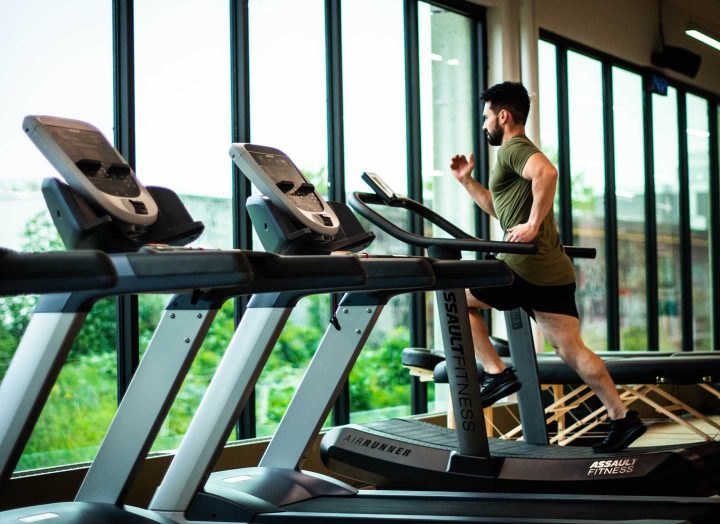
Most gyms are glad to give you a free week or month to try it out. During that trial period, ask for a fitness evaluation. Are you winded after ten minutes on the treadmill?

A man exercising on a treadmill - Photo by William Choquette from Pexels

Did the calipers measure more body fat than you realized was there?  Are you stretched to the limit with work but unable to do muscle relaxing stretches?  Another fast-track approach to fitness is to hire a personal trainer for a series of personal workouts.  Once you learn which exercises are right for your fitness goals and practice the right way to do those exercises, you can work out on your own.

2. Curb harmful habits

If you think that going outside to smoke or chugging cans of highly caffeinated drinks are ways to deal with stress, you’re fooling yourself. These are likely to create more health problems and more stress.

Take an honest look at the ways you cope with stress. Smoking, drinking, drugs, caffeine and food binges are reckless choices with long-term health consequences. You’re setting out to reach new goals and dreams and you need to be in prime health to enjoy those positive life changes.

Start with learning all you can about your harmful coping method. Knowledge is power. While researching, look for local support groups. If you can’t find one, join an online support group. Your closest Seventh-day Adventist Church may be able to help you with materials or supportive courses for smoking cessation.

For some complex issues, self-help begins when you admit that you need help and seek others who can support your changes.  An important way to avoid negative coping methods is to nourish and train your body for optimal health. 

Improving Your Mental Outlook

The most physically fit body goes nowhere if your mental outlook is bleak. You have to believe in yourself to turn your goals into new realities. Even positive people are hit with difficulties that are hard to manage. That’s when you need stress busting approaches to bolster your mood.

Face your fears

Do your hands get clammy, your throat dry and your mind take you back to your worst day in sixth grade each time you have to speak in front of a group?  You might suffer from stress surrounding certain events.

People at work or in the civic group want to hear what you have to say. Sign up for a local Toastmasters group and take the first step to conquer your fear of public speaking.

A public speaking appointment - Photo by mentatdgt from Pexels

Did you turn down a great job because the office was on the 25th floor and you’re scared to ride elevators in tall buildings?  Climbing the stairs daily might be good for your legs, but it takes time and just isn’t practical.

You can work with a therapist to face this fear and get over irrational stress. Or you can do your own version of “systematic desensitization.”  That’s a therapy technique in which you gradually face a fear a little bit at time until you finally overcome it. 

Ask a trusted friend to go with you as you work on this.  Think about what the real fear is – that you’ll get stuck or that it will plummet to the ground floor when the cable suddenly snaps?

You’re feeling what you expected to feel based on past experience.  Once you have your “fear-feeling pattern” worked out, you know what to expect. Ask your friend to ride with you in an elevator to the second floor then back down again.

Repeat that trip. Then go up to the fourth floor. If you’re seriously in a stress-filled panic, take the stairs back down. Or if riding down is easier than riding up, start by walking to the fourth floor and riding down.

Little by little, increase your ability to handle the stress by pushing yourself a little farther each time.  You can conquer your fears when you name them, examine them, research them and set a plan to meet them.  Over time, you’ll notice your stress level doesn’t rise as high when you’re faced with this particular obstacle.

Learn to forgive

Sometimes we carry our baggage that makes us all emotionally wrapped up with something that has happened in the past. We cannot change what has happened, but we can choose to change our attitude towards the people who were involved in it. If you keep anger and bitterness in your heart, it is like drinking a poison, and expecting that the other person will die from it. You will do yourself a favor if you learn how to forgive, to let things go.

Forgiveness - Photo by Ketut Subiyanto from Pexels

Forgiveness does not always mean that things will be just as before, it does not always mean that you need to reconcile a broken relationship. But what you need is to let go of the feelings of resentment, the angry emotions that eat you up from within, just let it go! Do not allow yourself to continue to suffer about the things that happened to you in the past.

You may say that you are unable to forgive somebody, since they did something terrible to you. If you have no force to do it on your own, pray to God that he is giving you strength. Look to Jesus at the moment they were nailing him at the cross. He was able to say to his prosecutors: “Father, forgive them, for they don’t know what they are doing.” He can give you the force to do the same. Do whatever is needed to get over the feelings of anger and resentment, in order to experience the liberating power that forgiveness can give to you.

Conclusion

Improvements in our lives involve change. We may dread these changes first, but after we see the improvements, we are glad that we did it. Sometimes we need to step back and analyze the changes necessary in order to get us on the right track. When we are wrapped up in our stress, we often get short-sighted and do not see the obvious changes we need to make to resolve the obstacles that are in our way.

Take courage, see what you need to change in your goals, your health habits and your mental outlook of your life. Never settle for a life filled with stress when there’s something better waiting for you.

When you working on improving yourself, you will probably come closer to the purpose that was given to you in this world by your Creator. And when you know you are fulfilling not only your goals, but also your purpose, you will feel a satisfaction that will help a lot to melt your stress away.

Do you need a guide to help you understand how to cope with Stress in an all inclusive approach? Learn how to combat stress, mentally, physically, emotionally and strategically in your life.
Get Me the Guide

Filed Under: Goal Setting, Healthy Lifestyle, Planning, Self Help, Stress Management

How Confidence Can Control Your Stress

December 6, 2020 by Martin Neumann

How Confidence can Control Your Stress

Have you noticed that some people are just thriving under stress while others passing through the same circumstances are at the brink of a collapse? Have you seen some people that are successful in everything they do, while others seem to go nowhere, while having the same opportunities? What makes the difference? It is Confidence!

How Confidence Can Control Your Stress

It’s a widely known fact that confident people are often successful in whatever endeavor they strive to accomplish. When you have confidence, you have the self-assurance that you have the ability to take control of your situation or circumstances.

Without confidence, you won’t fare as well in anything that you attempt to do. This is because a lack of confidence can alter the way that you make decisions. Without confidence, you compare yourself to others and you are scared to make the moves that will help you to advance.

If you have confidence, you will be finishing the race, while others are still too scared to pass the starting line. Many people have found success because they made bold moves driven by nothing more than the confidence they had.

You’ll find those stories all around you – how people risked everything they owned because they believed that they could start a business or risked their lives to take a solo sailing trip around the world.

Some people are natural leader personalities. They can influence the crowd, because they have the confidence that they are in charge of the situation.

While you can develop your confidence levels, there are two things that can impact your efforts negatively – those two things are stress and anxiety.

Anxiety

Anxiety is worrying about something that might happen or fretting about the eventual outcome of an event. This can also be defined as nervousness. You are fearful of something bad that could happen in the future. In extreme cases, anxiety can lead to a panic attack.

Besides depression, anxiety is the most common mental disorder. In most metropolitan areas, one in three persons is suffering from anxiety.((A. J. Baxter et al, “Global prevalence of anxiety disorders: a systematic review and meta-regression”. Psychological Medicine (2013): 43(5),
897-910. DOI: 10.1017/S003329171200147X.))

Anxious women -  Photo by Ana Bregantin from Pexels

While anxiety is considered an excessive concern with the future, stress is an excessive concern with the present, and depression is often an excessive concern with the past. Many times all three of them tend to be interconnected. And low confidence levels will have a large influence in triggering those manifestations.

If two people both have to deal with the exact same kind of stress, you’ll have one person who will react with anxiety, while the other person won’t. And the reaction depends much on the behavioral actions from past circumstances.

Anxiety can be an emotional platform that stress lands on. The heavier the stress, the shakier the platform can become. But if you have enough confidence, the platform is able to handle the turbulence.

Since your emotional platform is how you go through life, you want to make sure that you can cope with whatever you have to deal with. If you have a higher anxiety level, it can cause you to have limited ability to cope.

If you have high anxiety, you’ll find that you often struggle to cope with things that someone with low anxiety can handle with ease. For example, in someone with high anxiety, having a financial upheaval could cause a lot of fear and many sleepless nights. In someone with low anxiety, it doesn’t – because they have the self-assurance that they’re going to be able to take care of whatever needs to be done.

High anxiety will sooner or later lead to negative thoughts, and negative thoughts will lead to negative emotions. When you’re caught up in a cycle of negative thinking and negative emotions that stem from anxiety, it impacts your confidence. It will start to erode your beliefs, the self-assurance that you’re as smart as or as capable as the next person of handling a circumstance, a job project, having a great relationship or anything else in life.

Handling Anxiety

When you feel your anxiety levels to rise, take a short break. Breath in deeply through your nose. Then breath out slowly through your mouth. This exercise will have a calming effect on your heart, and will help even to calm down your thoughts.

Deep breathing to control anxiety -  Photo by VisionPic .net from Pexels

Exercise can be very helpful as well. Whenever you exercise, your body releases endorphins, the feel good hormones that can lift your mood and calm anxiety. Even just five minutes of exercise can restore calmness.

A cheerful attitude or even laughter can go a long way to keep anxiety under control. You may have heard the saying that laughter is the best medicine. There’s a lot of truth behind that statement.

One way that you can lower your anxiety is by journaling. You can write out what you’re feeling and why. Detail how it makes you feel and take note of any similar circumstances that you may have dealt with in the past.

It can help to look back over what you have gone through and see that you were able to deal with it and move on. Avoid things that trigger a higher anxiety level in you. For some people, this means avoiding things that are shocking or upsetting.

This might be the evening news, or people who always seem to have a doom and gloom outlook on life that ends up bringing you down. If you know a situation is going to make you feel anxious, if you can avoid putting yourself in that situation, then do so.

Positive Stress

With all of the articles and books on combating stress, you might get the idea that any kind of stress was bad for you, and that’s simply not true. Stress can actually help you in many areas of your life.

Let´s think for example about a tailor who needs to deliver a dress by Friday. The day before she is working hard to deliver in time. She is focused, works with precision and efficiency and even forgets to eat her supper. Friday she delivers in time and is able to relax. A healthy level of stress has helped her to finish the task.

Or if you are stressed about your meager finances, you may decide to go after a better job. You push yourself forward, you make an effort and in the end, you reach the desired job you were looking for. In this case, stress acted as a motivator for positive change.

Stress will start to be negative when you feel that you are out of control, and you do not know how to handle the situation. Besides the magnitude of your challenges, your confidence levels will greatly determine whether you experience stress as a motivator or a traumatic mind crippling experience.

Getting Confidence

Our confidence levels and your belief system about our own capabilities is to a large degree formed during childhood. If you were brought up in a safe environment and felt you were encouraged to develop yourself, you have an enormous advantage over others, who may be carrying lots of limiting beliefs about themselves.

We are carrying a baggage of beliefs about ourselves, which can be helpful, undesired or even destructive. Many of those ingrained thoughts are based on our interpretation of past experiences, may they be positive or painful. It is possible to change this belief system about ourselves, but it will take some conscientious effort to do so.

In order to help you to change, you need to find a secure fortress that you can trust. If you feel you are in a protected place, you can develop the confidence level that you are in control and stress will be a motivator for you. This safe haven of trust is created by an atmosphere of genuine love.

Psalm 139 is for me one of the most profound descriptions of this needed environment of trust. The first part describes the all-knowledge of God:

O Lord, You have searched me and known me.
You know my sitting down and my rising up;
You understand my thought afar off.
You comprehend my path and my lying down,
And are acquainted with all my ways.
For there is not a word on my tongue,
But behold, O Lord, You know it altogether.
You have hedged me behind and before,
And laid Your hand upon me.
Such knowledge is too wonderful for me;
It is high, I cannot attain it.

Psalm 139:1-6

It is wonderful to know that there is nobody else who knows us on such an intimate level as God. He knows us and He understands us. There is no need to hide us behind masks, no need to fake something, we can be just the way we are. That gives us a basis for a relationship of trust.

Hiding - Photo by Anete Lusina from Pexels

The second part speaks of the all-presence of God:

Where can I go from Your Spirit?
Or where can I flee from Your presence?
If I ascend into heaven, You are there;
If I make my bed in hell, behold, You are there.
If I take the wings of the morning,
And dwell in the uttermost parts of the sea,
Even there Your hand shall lead me,
And Your right hand shall hold me.
If I say, “Surely the darkness shall fall on me,”
Even the night shall be light about me;
Indeed, the darkness shall not hide from You,
But the night shines as the day;
The darkness and the light are both alike to You.

Psalm 139:7-12

This text assures us, that it does not matter what we have done, no matter where we are or where we go, there is no place in the universe where God´s love is not able to reach us. This assurance, that wherever we are, He is able to take care of us, can give us an incredible confidence boost.

The third part is speaking about our all-powerful God that has created us:

For You formed my inward parts;
You covered me in my mother’s womb.
I will praise You, for I am fearfully and wonderfully made;
Marvelous are Your works,
And that my soul knows very well.
My frame was not hidden from You,
When I was made in secret,
And skillfully wrought in the lowest parts of the earth.
Your eyes saw my substance, being yet unformed.
And in Your book they all were written,
The days fashioned for me,
When as yet there were none of them.

Psalms 139:13-16

It is a great thing to know that God had a purpose for your life and He was seeing your future even before you were born.

If you can fully understand the way that God is taking care of you, then you have a foundation to build your confidence that is solid enough to withstand the trials around you. There may be difficulties all around you, but you can go forward with confidence that God is able to carry you through. What better foundation can you have to build up your confidence?

Do you need a guide to help you understand how to cope with Stress in an all inclusive approach? Learn how to combat stress, mentally, physically, emotionally and strategically in your life.

Get Me the Guide

Filed Under: Attitude, Psychology, Spirituality, Stress Management

Does the Pandemic Stress You Out?

August 16, 2020 by Martin Neumann

Does the Pandemic Stress You Out?

Almost half of the Americans report that the pandemic is affecting their mental health.((Coronavirus is harming the mental health of tens of millions of people in U.S., new poll finds. Washington Post, April 2, 2020)) A federal disaster distress hotline ha seen a more than 10x spike in incoming text messages during the pandemic.((The Health 202: Texts to federal government mental health hotline up roughly 1,000 percent. Washington Post, May 4, 2020)) In the UK a study ascertained the anxiety level of the population on a scale of 1 to 10. They found out that the average anxiety level jumped from 3 before the pandemic to 5.2 right after the lockdown.((Coronavirus and anxiety, Great Britain: 3 April 2020 to 10 May 2020. Office of National Statistics)) Especially couples and elderly people have seen a drastic rise in anxiety level.

Does the Pandemic Stress You Out?

The reasons for the steep increase of anxiety and stress are manifold. One of the more obvious ones is fear of getting infected when leaving home. News from relatives or friends who succumbed to the disease will just increase the fear of being the next victim. Although some simple protective measures are healthy, the more anxious ones are getting neurotic in their hygiene attempts. When studies were published that the virus can stay airborne for about 3 hours, this heightened the ill effects of coronaphobia in a large number of people. It is important to put the risk into a healthy perspective, and I wrote an article about the naked truth of the coronavirus that can help in that matter.

Quarantine is another source of stress. Especially those who reported being lonely have felt a greater rise in anxiety levels. As about one-third of the world’s population is put under quarantine, a number of mental health issues like low mood, irritability, stress, insomnia, anxiety, depression and others are on the rise.((Lockdown is the world’s biggest psychological experiment – and we will pay the price. World Economic Forum, April 9, 2020)) Social isolation is a big factor in that, together with feeling trapped at home and interruptions of the usual daily routines.

For families with children, the stress of schooling their children and entertaining them at home puts an extra burden on the parents that they are often not used to handle (We have some tips in the article: 15 Creative & Fun Family Activities You Can Do at Home). In some cases, a dysfunctional relationship is aggravated by the fact that the family is forced to stay together in quarantine, and having no place to escape. Domestic violence is increasing drastically during the lockdown.

Others are even more stressed with the thought of getting back to normal. After returning to work, will there be a risk for a second outbreak? What is my risk of getting infected being in touch with people again? Some risks are for real, but after doing some healthy precautions, put your worries away. And it is alright to take your time and return gradually into social life once the lockdowns are lifted.

Another source of stress is news overload. Some are trying to catch up with all the latest news, and chasing the newest studies to try to understand a disease that even experts have a hard time to understand. Coupled with that are a number of conspiracy theories that are gaining much popularity. One example is a video of Judy Micovits who went viral, claiming that the virus was released from a Chinese lab, and that most information published is just a big scam. Fact-checking revealed that her video was the bigger scam, and most of her statements were simply made up.((Fact-checking Judy Mikovits, the controversial virologist attacking Anthony Fauci in a viral conspiracy video. Science Magazine website, May 8, 2020))

Finding a scapegoat for the pandemic seems to be attractive for many, but it may be just a way of avoiding to take their own responsibility of needing to respond to the crisis. Some others have an urgent desire to find out the truth. Yes, it is very likely that China has underreported their COVID-19 death rates since they do not correlate to the Wuhan crematory activities.((Cremation numbers reveal possible suppression of true COVID-19 data in China. News Medical, June 8, 2020)) On the other hand in the western hemisphere the death rates are more likely to be a bit overreported since financial benefits are associated with the treatment of COVID-19 patients. But finding some proof that the virus was man-made in any way would be a pretty hard task, even in the hypothetical case that it would be the truth. And at the end of the day, what difference will it make for your life?

A much more tangible stressor is the economic impact that the pandemic is causing worldwide. With a large number of people losing their job, financial difficulties are a reality in many homes. There are plenty of families out there just struggling to put food on the table, and that can be stressful.

Health profesionals who are on the frontline of the battlefield are especially vulnerable of suffering from stress during the pandemic. Those who are exposed to patients dying around them every day can suffer from post-traumatic stress disorder.

How to Stay Sane During the Pandemic

Have a Plan

Being prepared can do a lot to minimize the stress you face during this crisis. Preparation will include provisions for maintaining your food supply (stocking some food, maybe considering an own garden to help out), implementing safety precautions, things to do during the pandemic, how to protect your financial interests and more.

Manage your finances

Get some savings available

Mishandling your finances is quite easy when you are dealing with economic turmoil all around us. Hence, you need to start managing your finances wisely to avoid having regrets when the problem has passed. When you are on a tight budget, you need to be doing proper financial planning, recording all the expenses and analyzing where you can save. Then you should avoid debt wherever you can. Buy things when you can afford them, paying the full price in cash. Any dept will add extra stress during uncertain times like we are passing now.

Filter Information

Avoid bad news whenever you can. Spending time reading alarming tales of the horrors of COVID-19 will probably increase anxiety, not reduce it. Do not focus on the kind of information that will not help rectify the situation. Pay attention to material that gives advice on how you can overcome or guard against being affected by the worsening of the pandemic. Filtering information can also mean changing the subject when bad news are brought up countless times.

Keep Exercising

As you know, exercising is a great way of staying positive, staying healthy, and improving your overall physical and mental well-being. You may be tempted to cancel your workout routine while the gym is closed or severely restricted. But you can do an exercise routine right at your home, or go out for a walk with all the needed safety precautions. Exercise does a lot to eliminate stress or anxiety from your mind, and keeps your thoughts clear and focused. Therefore, keep exercising and enjoy the process.

Stay Connected with People

Calling friends

While you are not able to meet up with friends and family the way you would like, you need to make an effort to reach out to them. Schedule some regular time to check in with those you care about. It will do a lot to keep your mind sane in a time you are restricted in what you can do. Be especially mindful about the needs of your parents, grandparents or other elderly people around you.

Find some Meaningful Activities

We all have a need to belong and to have a purpose in our life. While you are at home, find some activities that can be meaningful to you and to others. Sometimes caring for someone else is all it takes to take off the focus from yourself and see the needs of somebody else. You may be doing some remote work, so even you are not going to the office you are keeping up with your regular activities. If your job does not allow for remote work, use your chance to educate yourself and be better prepared once the pandemic is over.

Dwell on the Positive

When things are falling apart all around us, it is easy to get caught in a worry round of fears and negative thinking. Are you afraid of getting infected? Remind yourself of all the protective measures you have implemented, and dwell on all the cases that recovered already. You are weary about the restrictions? Think about what you want to do when the lockdown is over. You are worried about the future? What does it help you to get all wrapped up with your worries?

Jesus expressed it right in the Sermon of the Mount: “Therefore I tell you, do not worry about your life, what you will eat or drink, or about your body, what you will wear. Isn’t there more to life than food and more to the body than clothing? Look at the birds in the sky: They do not sow, or reap, or gather into barns, yet your heavenly Father feeds them. Aren’t you more valuable than they are? And which of you by worrying can add even one hour to his life?… So then, do not worry about tomorrow, for tomorrow will worry about itself.” Matthew 6:25-34

It is correct to properly protect yourself. You should do the part that you are able to do. But after having done your part, what does it help you to keep worrying?

Find a Save Haven of Rest

When troubles abound all around you, there seems to be plenty of reason to get worried. But stress will take hold of you if you are feeling that there is a threat to your life that you are not able to control. What you need in this moment is a fortress for your mind to find safety.

A Christian will find this save haven in a meaningful relationship with his Creator. If God was creating you, i He not able to take care of your health? And if he feeds the birds in the sky, is he not going to take care of you? Knowing that we have a Heavenly Father that takes care of us, will provide a fortress to our mind that will resist any storm that may go on around us.

The Bible is giving us lots of examples how our Heavenly Father was taking care of His children in the past. But you need to rest assured that He will do the same thing in your life, if you commit yourself into His care. In order to have this assurance, you need to have a living relationship with Him. You need to take a step of faith and experience for yourself that you can trust your Heavenly Father to take care of you.

Would you like to have this experience? Would you like to discover the promises that your Heavenly Father has given you that He will take care of you? Do you want to discover the purpose that He has for your life? Do you want to know what more your Heavenly Father has prepared just for you? If that is your desire, you should take a guided study of the Bible to discover what your Heavenly Father has to tell you today. Use the chance and get your study guide for free.

I Want the Free Bible Study Guide

Filed Under: Results of Stress, Stress Management

« Previous Page

Primary Sidebar

Copyright © 2026 Stress Management Tools · Log in