Stress Management Tools

Helps You to get Stress under Control

  • Home
  • About
  • Blog
  • The Program
  • Free Offer
  • Contact
  • nl_NL_formal Nederlands
  • pt_BR pt_BR
You are here: Home / Archives for Martin Neumann

Martin Neumann

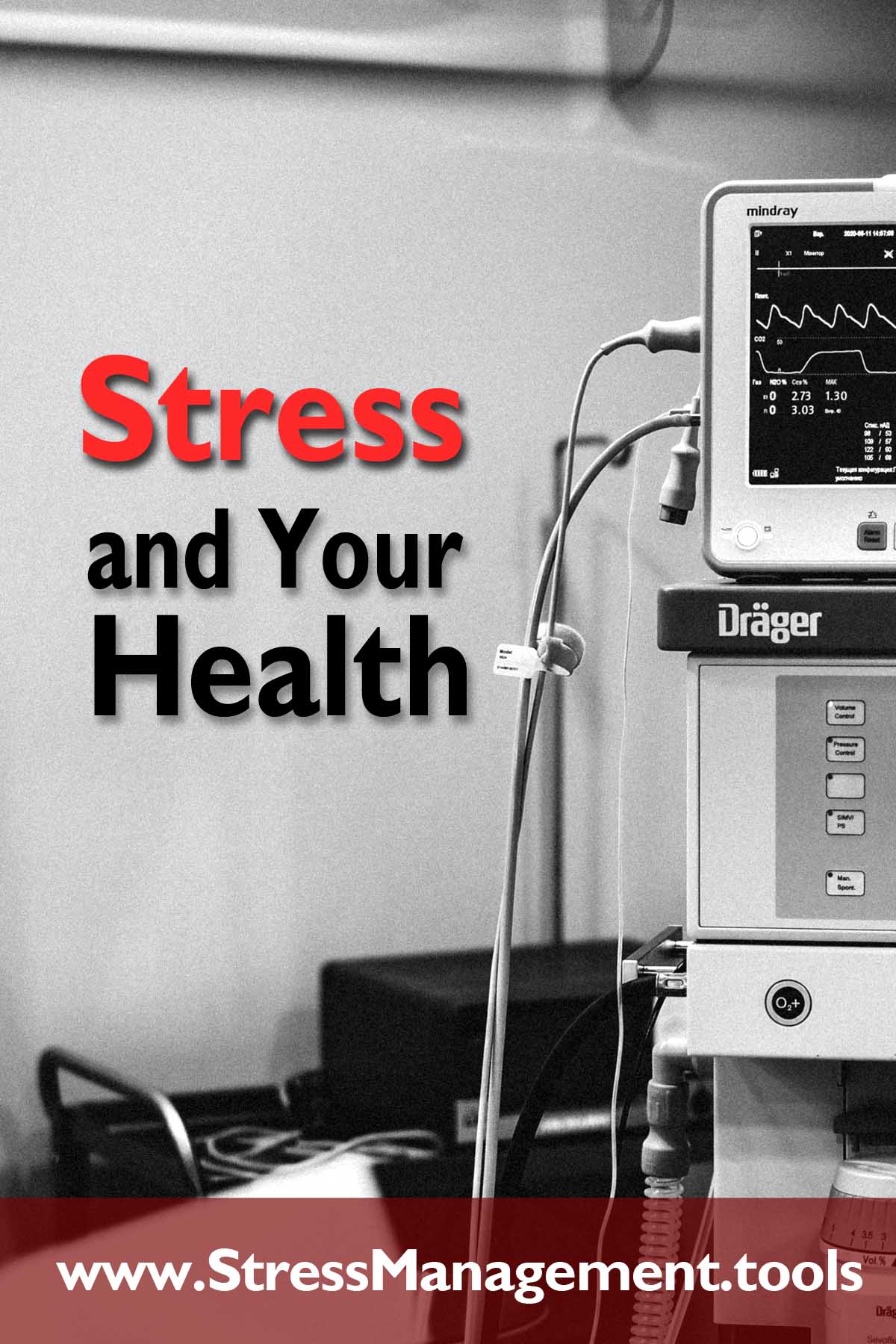
Stress and Your Health

May 20, 2021 by Martin Neumann

Stress and Your Health

You ever felt jittery after a bout of stress? Do you have stomach cramps, a sudden outburst of pimples on your skin, or your blood pressure suddenly goes through the roof? You should be familiar with the symptoms of stress in your body and recognize when stress is taking its toll on your health.
Stress and Your Health

The body is wonderfully adapted to deal with many challenges, including stress. When we are in a dangerous spot, the body releases a number of hormones that help us to be alert, more energetic, run fast, make some quick decisions and do whatever is needed to face the crisis. When stress is chronic, like the deadlines at work or the debt that is not going away, then stress hormones like cortisol are chronically elevated as well.

Too much cortisol can suppress the immune system, increase blood pressure and sugar, decrease libido, produce acne, cause learning difficulties, lapse of memory, loss of muscle mass, aggravate obesity and much more. If cortisol is chronically elevated, the body is entering into a fatigue state, where the hormone stops to produce the desired effect. This is called glucocorticoid resistance, and will result in chronically elevated cortisol levels, and a body out of control.

The results of chronic stress on your health can be various. Have a close look at the following symptoms, and evaluate how stress is affecting your health.

Heart

As we’ve seen, cortisol constricts blood vessels and increases blood pressure. In addition to that, the stress response increases the clotting factor, preparing the body for faster wound healing in case of injury, but also facilitating the formation of arteriosclerotic plaques.

These plaques adhere to the inside of blood vessel walls, especially at locations where micro vascular damage has occurred, and attempt to “patch” it, resulting in large deposits of this mass along various areas of the blood vessel, which is reducing the blood flow and may eventually block the artery completely. When this happens in the coronary arteries of the heart itself, portions of muscle can die from oxygen starvation, which we call a heart attack. When this blockage happens in the brain, it results in a stroke. A study found that stress increases risks for development of cardiovascular diseases, which include deep venous thrombosis.((Dong, et al. Chronic Stress Facilitates the Development of Deep Venous Thrombosis, DOI:10.1155/2015/384535))
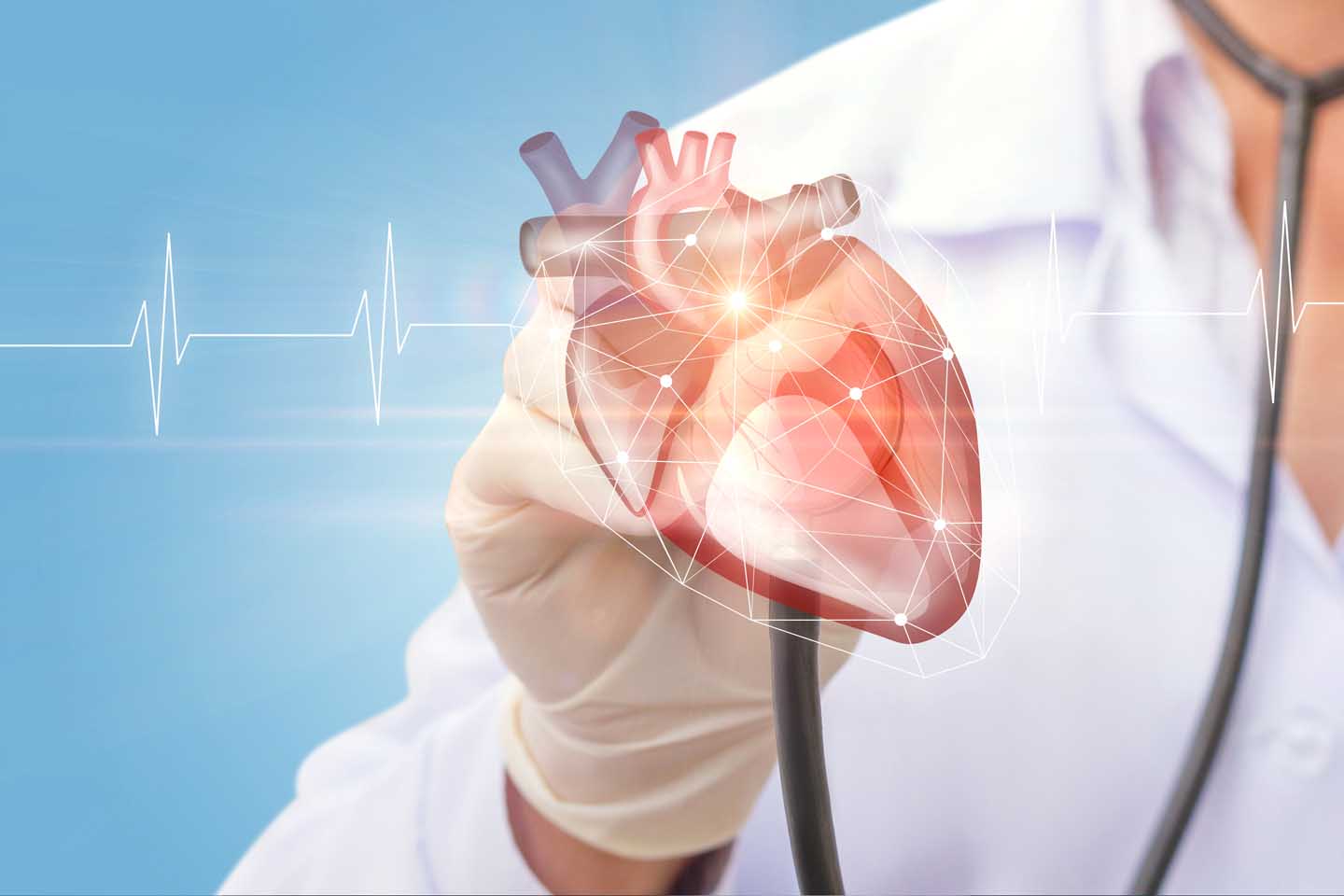
Examining the heart

Research shows that employees who are frequently exposed to high levels of work-related stress are at a higher risk of being diagnosed with cardiovascular disease.((Jaskanwal S et.al. Association Between Work‐Related Stress and Coronary Heart Disease: A Review of Prospective Studies Through the Job Strain, Effort‐Reward Balance, and Organizational Justice Models. DOI:https://doi.org/10.1161/JAHA.117.008073)) Stress causes massive depletion of the mineral magnesium, which is essential for muscle relaxation.((Tarasov E A et.al. Magnesium deficiency and stress: Issues of their relationship, diagnostic tests, and approaches to therapy. DOI: 10.17116/terarkh2015879114-122)) Tests have shown that a very large percentage of the adult population are magnesium-deficient, which very likely has a strong correlation to those affected by chronic stress.

As the heart is a muscle it is dependent on adequate magnesium for proper and healthy function. Current research is exploring the possible link between low magnesium levels and heart attacks.

Acute stress, such as may occur to people who are experiencing the sudden death of a loved one, a natural disaster or extreme accident may also lead to stress-induced cardiomyopathy. Thankfully, increased awareness means that professional emotional support is offered far more often than before, with better outcomes for those affected.

Digestive Disorders

Do you feel sometimes like your stomach has been invaded by butterflies? This is a normal reaction to many stressful or fearful circumstances. A regular stomach ache is one of the many symptoms that can be experienced by an individual who is suffering from stress. The digestive system is controlled by the parasympathetic nervous system, which is suppressed during the stress response.

As a result, digestion is compromised, indigestion develops, and the mucosal lining becomes irritated and inflamed. The diminished absorption of nutrients can cause various deficiencies, even while eating well. A study has shown that stress can dramatically change the gut microbiome, increasing the amount of inflammation-promoting bacteria.((Gao X et.al. Chronic stress promotes colitis by disturbing the gut microbiota and triggering immune system response. DOI: 10.1073/pnas.1720696115))
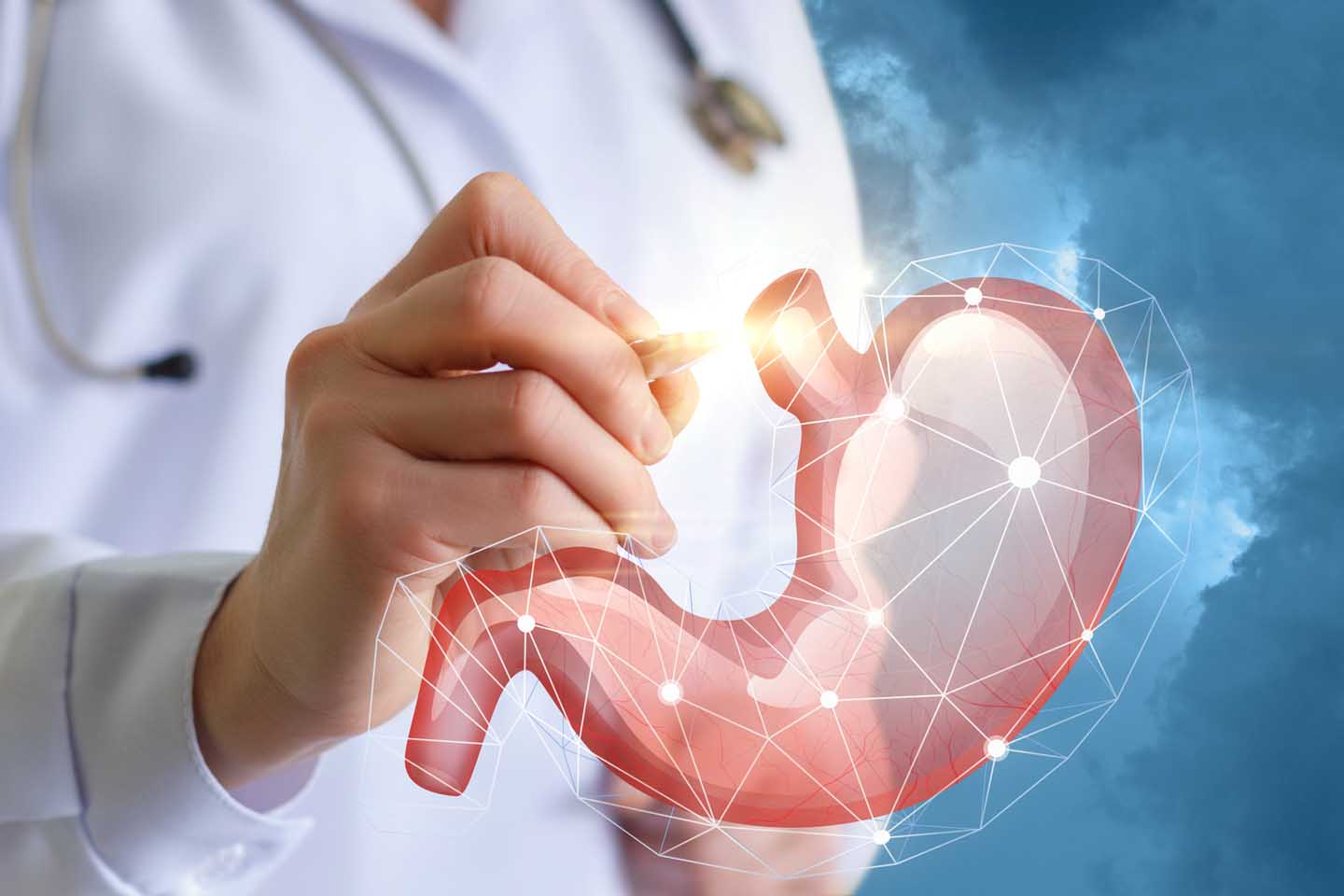
Treating the stomach

Cortisol stimulates also gastric acid formation. Gastritis and Ulcers are more common during stressful times, and continually feeling pressured can cause poor bowel elimination. If the cause is left unchecked, this could escalate into other gastric problems.

Many cases of gastrointestinal disorders such as diarrhea, constipation, colitis and irritable bowel syndrome have been linked to stress. This shows how our brain and our gut are so interconnected to each other. When you are able to resolve your problems and find that peace of mind, your whole body is going to thank you.

Immune System

It is known that chronic stress with elevated cortisol will reduce various functions of the immune system.((Dragos D et.al. The effect of stress on the defense systems. PMCID: PMC3019042)) As a result you are more susceptible to flus and colds or any other kind of infection. You will also increase your risk for cancer, since your immune system is not at peak performance to control and eliminate abnormal cancer cells.

Stress will have a cumulative effect on the immune system the longer we experience it. Think of the immune system as a firewall; the longer it is down, the greater the chances that some sort of infection can take hold of us and complicate our recovery.

Skin

Psoriasis, eczema, and other skin inflammations are often linked to prolonged exposure to stress. In most cases of skin diseases that have been brought on by stress, reducing stress levels have also been found to rapidly improve a person’s skin condition.

Chronic exposure to stress can lead to the overproduction of the sex hormone androgen, resulting in acne and other skin problems.
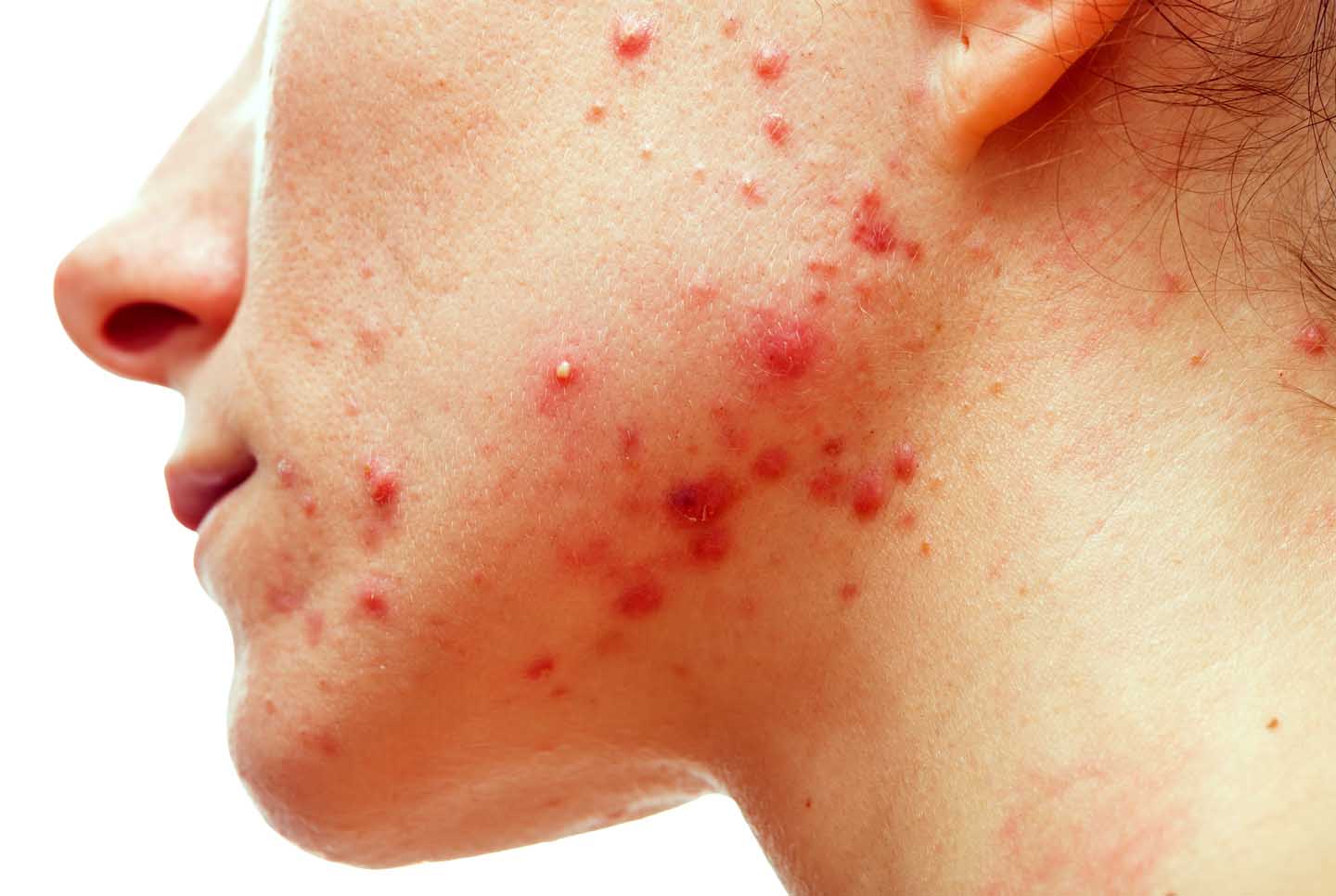
Akne

Stress causes excessive hormone production combined with a reduced healing ability, meaning you may experience the same types of skin problems you did as a teenager.

Hair

While hair loss can be a sign of other conditions, it can also be one of the most common symptoms of stress. Hair loss will be most likely to happen three to six months after a traumatic experience such as losing a loved one or losing a job. 

When a person is exposed to highly-stressful events their androgen hormone production will be imbalanced, possibly resulting in temporary hair loss. Sticking to a balanced diet is important at times of high stress, to give the body every possible assistance for healing and repair.

You may often hear people say that stress is turning their hair gray.  Stress can speed up this process especially if you are already genetically predisposed to having gray hair. During periods of prolonged stress, an individual’s white blood cells may attack their hair follicles thereby putting a halt to hair growth which is also called a “resting phase”. This gets visible when much hair is lost when being washed or combed.

Menstrual Cycle Problems

Missed and delayed periods can be a sign of stress in women. In severe cases, some women may suffer a complete stop of the menstrual cycle.

Other women still experience regular menstrual periods but many complain of dysmenorrhea that is twice as painful when they’re feeling excessive stress, and Pre Menstrual Symptoms may get worse or become more difficult to deal with.

Women with overly hectic and busy lives, filled with demands that promote chronic stress may feel a loss of sexual drive. And those who pass through menopause may feel an increase in intensity and frequency of hot flashes.

Decreased Libido

Elevated cortisol relating to prolonged stress, can lend itself to impotence and erectile dysfunction. Furthermore, the androgenic sex hormones are produced in the same glands as cortisol and epinephrine, so excess cortisol production may hamper the optimal production of these sex hormones.

It is common for people who are under a great deal of stress or feeling exhausted to have no desire in the bedroom. This can be frustrating for your partner as well. If you are suffering from a general lack of libido possibly caused by stress, it is essential to talk openly with your partner so that they can lend you a sympathetic ear and not take it personally.

Muscle Tightness

Tensed muscles are common indications of stress. This can further lead to muscle spasms which can cause great pain. Stress causes magnesium depletion in the body and without magnesium the muscles cannot relax, putting them in a state of near-constant contraction. Tense muscles can lead to migraines and tension headaches that are linked to muscle tension of the neck, head and shoulders.

Increased Cortisol levels will tend to activate an inflammatory response, causing sore muscles, aches and pains in the body. Prolonged muscle tension and possible subsequent muscle atrophy from a lack of physical activity, promote chronic, stress-related musculoskeletal conditions. Relief comes through exercise, massage, muscle relaxation exercises and adequate vitamin and mineral intake.

Pancreas, Diabetes and Obesity

People who are chronically stressed have a high tendency to indulge in sugary, feel-good foods. Also, increased cortisol levels will raise the blood glucose levels, causing difficulties especially for diabetics.

Cortisol will activate the transformation of fat into glucose. This is why stress makes it hard for diabetics to control blood glucose levels. Once the excessive glucose is not used for exercise, it will be transformed back into fat and stored in the visceral fat cells. This resuts in the dreaded belly fat that is not only unsightly but is another major health risk that can shorten your life span. On top of that, excessive cortisol levels can cause cravings for sweet, high-fat, and salty foods. Obesity in turn will increase the risk of developing diabetes.
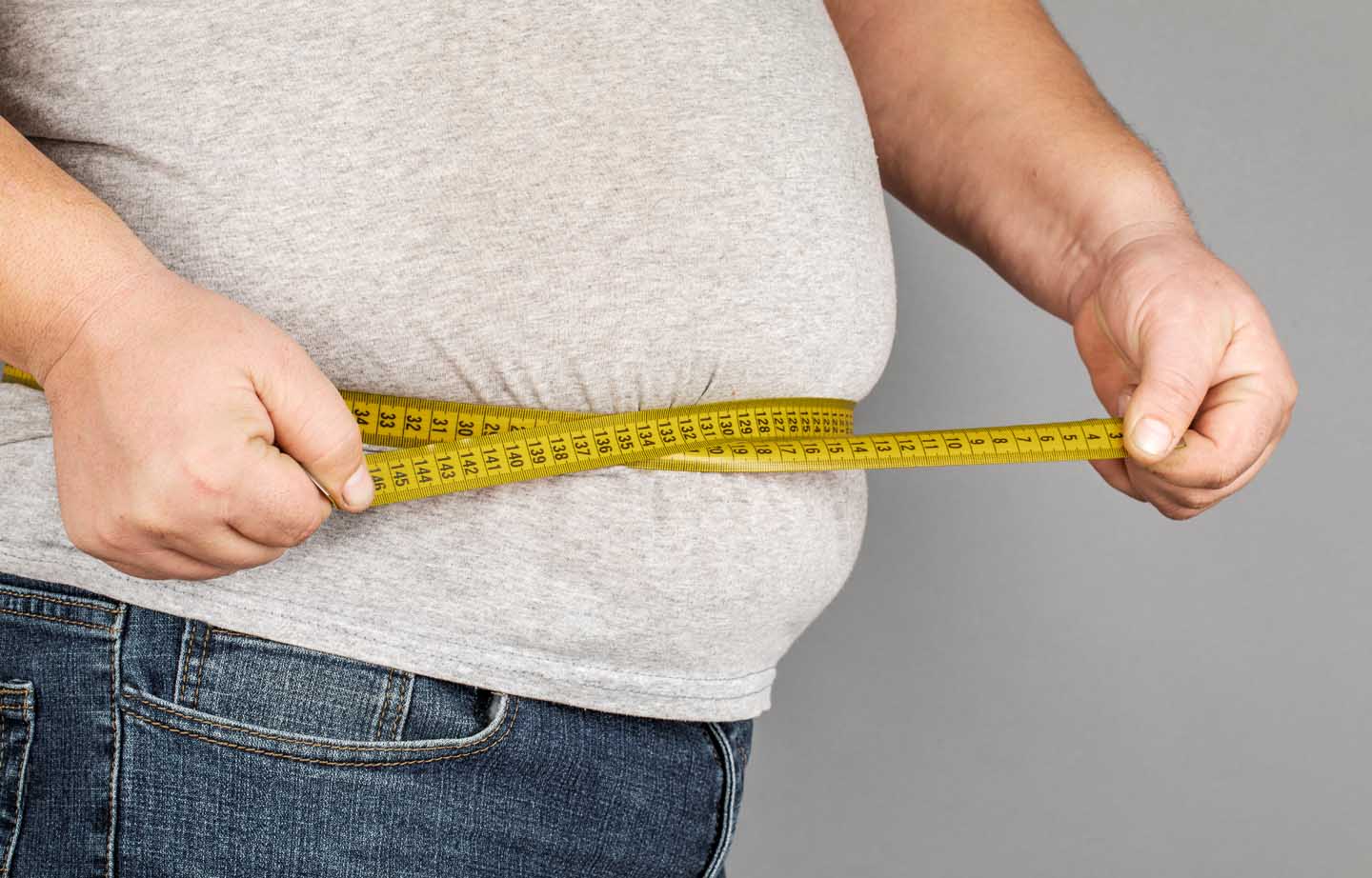
An obese man

Metabolic Syndrome

Chronic stress can increase blood pressure, glucose levels, cholesterol, triglycerides and weight gain, all of the factors involved in the metabolic syndrome.

One study found that “there is a dose-response relationship between exposure to work stressors over 14 years and risk of the metabolic syndrome, independent of other relevant risk factors.” The final results found that “employees with chronic work stress were more than twice as likely to have metabolic syndrome as compared with those subjects with without work stress.”((Chandola, et al. Chronic stress at work and the metabolic syndrome: prospective study, BMJ 2006; 332 doi: https://doi.org/10.1136/bmj.38693.435301.80))

Conclusion

We have seen that stress can compromise our health in various ways. If you experience one or several of those warning signs, you should take action to get your stress under control. In chronic stress we need to take action to decrease our cortisol levels, which can be achieved in two ways:

  • Firstly – by reducing the stress that is the root cause of the problem, either by eliminating the stressors, or by improving the ability to cope with them. A reduced emotional response to any stressor will mean less cortisol release.
  • Secondly – there are known lifestyle and dietary ‘hacks’ that assist the mind and body to reduce the release of cortisol into the system. Some bad habits can though increase cortisol production.

If you need some tips on how to achieve both of this approaches, download our Ten Minute Guide to Stress Management and start beating your stress with efficient strategies that put you into control of your life. Download your copy now!

Do you need a guide to help you understand how to cope with Stress in an all inclusive approach? Learn how to combat stress, mentally, physically, emotionally and strategically in your life.


Get Me the Guide

Filed Under: Health Concerns, Physiology, Results of Stress

What are Your Goals for This Year?

January 2, 2021 by Martin Neumann

Reaching Goals

Whenever we enter into a new year, we are reflecting on what we did the last year, and we make some resolutions on what we want to accomplish the coming year. But more often those New Year resolutions are fading away just in a few days as the year is going by. The failure in reaching our goals is just adding to the stress we already have, and it seems like we are going nowhere. How can we avoid that from happening? We need to have a clear plan.

What Are Your Goals For This Year?

Make the exercise for yourself. Take out a sheet of paper and write down what you want to accomplish this coming year. Think about all areas of your life. What do you want to accomplish in your professional life, what in your private life, what in your lifestyle to improve your health, in what way do you want to contribute positively to the society around you, and how do you want to grow in your spiritual life? Write down where you want to be in a year from now.

Now after you have put your thoughts and desires on paper, start to prioritize them. Define one or two top priorities in each area of your life, because you will go nowhere if you focus only on your professional life and leave everything else behind. Also, do not try to do everything on your list at the same time, because you will divide yourself too much and will not accomplish anything in the end.

The Action Plan

Next you need to have a clear plan on how you will accomplish the goals you have in your mind. At this point you need to split up your goals in manageable tasks. What are the steps you need to take to reach your goals?

For example, you may decide that this year you want to write a book. That sounds very much like a daunting task. But if you want to reach it, you need to split it up into different steps. You may come up with a list like this:

  1. Choose the topic
  2. Make some research
  3. Define the chapter structure
  4. Research the material for each chapter
  5. Write each chapter
  6. Revise the content
  7. Proofread
  8. Make the layout
  9. Publish
Writing a manuscript

Having defined the steps, you have already a much clearer plan in your mind on how you can realistically accomplish your goal. Next you need to divide each step into actionable tasks. You can write this out on paper, or you can use a tool like Asana to do that on your computer. Estimate for each task how long it is going to take you. This way you have an objective parameter to track your progress.

Now you put the tasks of the first week onto your calendar. Define how many hours you have every day to dedicate to the task and start out working on it, if possible by tomorrow. You are not going to finish the task in a single day, but every day you are going to make another step that is going to bring you closer to your goal.

Remember that you were putting down a timeframe for each task. There may be moments where you are not finishing the task within the stipulated time. Sometimes you may need some extra time on the following day, because you did not make a good estimate on how long you will take. But wherever you can, try to wrap up your task and get it done. You can always improve your work later on. But often you may find out that you need to resist your temptation to go for perfectionism and just do the best you can within the timeframe you have.

At the end of the week it is time for evaluation. Have a look what you have accomplished this week. Are you within your schedule, or did you take longer than expected? Do you need to adjust your timeframes? Or do you need to improve on your efficiency? Maybe you need to resist your perfectionistic vein and go forward? Make an honest evaluation and adjust what is necessary. Take then some time to plan out the next week.

You also will need to work on your motivation to go forward. This will help you to get new energy when you feel like dragging. Think about the impact the book or any other project you do will have. Think about how it can change the life of so many people around you. This will give you a reason to go forward, because you know it is worthwhile to invest all the effort to get it done.

Making Lifestyle Changes

Not every goal needs to have such a detailed project. But you still need to have a plan for how you will get it done. For example, you may decide that your priority is to manage your stress. You need to know what tools you can use to achieve your goals, and the Ten Minute Guide to Stress Management can give you some hints for that. You need to decide now on which tools you need to focus and make a plan on how you will implement them into your life. And you still need a regular evaluation, maybe weekly, maybe monthly to check on the progress and fine-tune your strategy.

The same principles apply for any other lifestyle change, may it be losing weight, changing your diet or starting an exercise routine. All of those imply significant lifestyle changes and you need to have a clear plan on how to get it done.

When changing your habits, you need to be aware that much of those habits were ingrained in your brain for many years, and it will need a conscious and decided effort to change them. It takes about 30 days to start forming a new habit. During this timeframe, you need to make a conscious decision on every day, until you are forming a new neural pathway in your brain that will turn into a new habit.

Often you will find that you need to build up your motivation to work on your lifestyle changes. Think about the outcome your new habits will bring you. How your health will improve after adopting the new lifestyle? Think about all the things you will be able to do when your health is improving. Without proper motivation, you will often find that your old habits are stronger than your new-year resolutions.

We often underestimate the efforts needed to break loose of an old habit, and you may discover that supernatural power is needed in order to be victorious. But you can ask your Heavenly Father to give you the needed strength. God is telling us:

Behold, I am the Lord, the God of all flesh: is there anything too hard for me?

Jeremiah 32:27

So the next time you are struggling to change your habits, go to your Creator who knows how to resolve the problems on your behalf. The first step you need to take is to recognize that you need help and simply ask for it:

If you then, being evil, know how to give good gifts to your children, how much more will your Father who is in heaven give good things to those who ask Him!

Matthew 7:11

He is just waiting to give us all the help we need to be victorious if we simply go to ask. Imagine a child asking his father for a piece of bread because it is hungry. Which dad is not going to respond to that? And how much more will our Heavenly Father give us help if we ask for it?

A child praying - Photo by Binti Malu from Pexels

After asking our Heavenly Father for strength, we need to act in faith that He is on our side to help us:

Therefore I say to you, whatever things you ask when you pray, believe that you receive them, and you will have them.

Mark 11:24

One time Jesus was meeting a crippled man who was 40 years lame. Jesus simply asked him: Do you want to be healed? But the poor man could think only on all the difficulties in his way. Jesus simply stretches out His hand and says: Stand up!

The man could have thought: You must be joking, I am crippled for 40 years, how do you ask me to stand up? But instead the man acted in faith and made an effort to stand up. In the same moment he was healed and could walk.

You may feel the same way that you are bound into your old habits. But Jesus has promised you to give you the needed strength. After asking for help, simply believe that God is giving you the power to be victorious, and you will see changes in your life that you thought impossible to achieve.

But even then, it is important to to make no provisions to fail. The apostle Paul is telling us:

Put on the Lord Jesus Christ, and make no provision for the flesh, to gratify its desires.

Romans 13:14

If we know that we have a soft spot for sweets, you do not need to pass in front of a candy store, just to see what they have to offer. And if you want to stop smoking, it will be quite tough to resist if you keep cigarettes at home. Whatever your soft spot is, you do not need to make provisions to gratify its desires. You are safer if you avoid temptations wherever you can.

Other Goals

You may discover that real satisfaction comes from a harmonious development of the personal, professional, social and spiritual areas of our life. You need the social network around you, and you need to give some thoughts on what you can do to contribute to the society around you. Helping others without expecting anything in return can be a very satisfying experience for ourselves. And many times the same blessings will be coming back to us when we are in need. Furthermore we are to a large extent social beings. A healthy social network can do a lot to reduce our stress levels.

Social networks can be important in our lives - Photo by Andrea Piacquadio from Pexels

Give some serious thoughts about what you can do to contribute to your marriage relationship, how you relate to your parents, your friends and everybody else around you. Investments are not limited to your professional area only. And normally you will reap according to which plants you put into the ground and how you take care of them.

Give also some serious thought on what is really important in your life. What are the relationships that are really important to you? Do you really value them what they are worth? What else is giving purpose to your life? How do you contribute to society as a whole? You will find real satisfaction when you start to look beyond your own needs and see how you can benefit others around you. The satisfaction that comes from knowing that you have impacted the life of another person cannot be compensated by any money in the world.

Think also about your spiritual realm. Do you believe that there is somebody higher than you in this Universe? Do you trust your Heavenly Father? You have a personal relationship with your Heavenly Father? Many times are we limiting our religious life to a certain creed. But even though our belief system can be important, real spirituality is much more than that. It is a relationship that consists of giving and receiving. Are you willing to invest in your spiritual life? What are you willing to give? What are the values that make your life meaningful?

It was Viktor Frankl who discovered inside the Nazi concentration camps, that those who were surviving were normally those who had a clear reason to live for. After getting out of the cconcentration camps he became the founder of the logotherapy which consists largely in finding meaning in events happening around us.

Knowing our meaning and purpose of life is an important step in forming a healthy worldview. And it can be an important foundation that gives us emotional stability, helping a lot to get stress under control. A well-rounded development of all the areas of our lives can be very beneficial.

So what are your plans? Are you setting any goals for this year? Where do you want to be in a year from now? Are you willing to invest in your goals? What are you waiting for?

Do you need a guide to help you understand how to cope with Stress in an all inclusive approach? Learn how to combat stress, mentally, physically, emotionally and strategically in your life.
Get Me the Guide

Filed Under: Goal Setting, Planning

How Confidence Can Control Your Stress

December 6, 2020 by Martin Neumann

How Confidence can Control Your Stress

Have you noticed that some people are just thriving under stress while others passing through the same circumstances are at the brink of a collapse? Have you seen some people that are successful in everything they do, while others seem to go nowhere, while having the same opportunities? What makes the difference? It is Confidence!

How Confidence Can Control Your Stress

It’s a widely known fact that confident people are often successful in whatever endeavor they strive to accomplish. When you have confidence, you have the self-assurance that you have the ability to take control of your situation or circumstances.

Without confidence, you won’t fare as well in anything that you attempt to do. This is because a lack of confidence can alter the way that you make decisions. Without confidence, you compare yourself to others and you are scared to make the moves that will help you to advance.

If you have confidence, you will be finishing the race, while others are still too scared to pass the starting line. Many people have found success because they made bold moves driven by nothing more than the confidence they had.

You’ll find those stories all around you – how people risked everything they owned because they believed that they could start a business or risked their lives to take a solo sailing trip around the world.

Some people are natural leader personalities. They can influence the crowd, because they have the confidence that they are in charge of the situation.

While you can develop your confidence levels, there are two things that can impact your efforts negatively – those two things are stress and anxiety.

Anxiety

Anxiety is worrying about something that might happen or fretting about the eventual outcome of an event. This can also be defined as nervousness. You are fearful of something bad that could happen in the future. In extreme cases, anxiety can lead to a panic attack.

Besides depression, anxiety is the most common mental disorder. In most metropolitan areas, one in three persons is suffering from anxiety.((A. J. Baxter et al, “Global prevalence of anxiety disorders: a systematic review and meta-regression”. Psychological Medicine (2013): 43(5),
897-910. DOI: 10.1017/S003329171200147X.))

Anxious women -  Photo by Ana Bregantin from Pexels

While anxiety is considered an excessive concern with the future, stress is an excessive concern with the present, and depression is often an excessive concern with the past. Many times all three of them tend to be interconnected. And low confidence levels will have a large influence in triggering those manifestations.

If two people both have to deal with the exact same kind of stress, you’ll have one person who will react with anxiety, while the other person won’t. And the reaction depends much on the behavioral actions from past circumstances.

Anxiety can be an emotional platform that stress lands on. The heavier the stress, the shakier the platform can become. But if you have enough confidence, the platform is able to handle the turbulence.

Since your emotional platform is how you go through life, you want to make sure that you can cope with whatever you have to deal with. If you have a higher anxiety level, it can cause you to have limited ability to cope.

If you have high anxiety, you’ll find that you often struggle to cope with things that someone with low anxiety can handle with ease. For example, in someone with high anxiety, having a financial upheaval could cause a lot of fear and many sleepless nights. In someone with low anxiety, it doesn’t – because they have the self-assurance that they’re going to be able to take care of whatever needs to be done.

High anxiety will sooner or later lead to negative thoughts, and negative thoughts will lead to negative emotions. When you’re caught up in a cycle of negative thinking and negative emotions that stem from anxiety, it impacts your confidence. It will start to erode your beliefs, the self-assurance that you’re as smart as or as capable as the next person of handling a circumstance, a job project, having a great relationship or anything else in life.

Handling Anxiety

When you feel your anxiety levels to rise, take a short break. Breath in deeply through your nose. Then breath out slowly through your mouth. This exercise will have a calming effect on your heart, and will help even to calm down your thoughts.

Deep breathing to control anxiety -  Photo by VisionPic .net from Pexels

Exercise can be very helpful as well. Whenever you exercise, your body releases endorphins, the feel good hormones that can lift your mood and calm anxiety. Even just five minutes of exercise can restore calmness.

A cheerful attitude or even laughter can go a long way to keep anxiety under control. You may have heard the saying that laughter is the best medicine. There’s a lot of truth behind that statement.

One way that you can lower your anxiety is by journaling. You can write out what you’re feeling and why. Detail how it makes you feel and take note of any similar circumstances that you may have dealt with in the past.

It can help to look back over what you have gone through and see that you were able to deal with it and move on. Avoid things that trigger a higher anxiety level in you. For some people, this means avoiding things that are shocking or upsetting.

This might be the evening news, or people who always seem to have a doom and gloom outlook on life that ends up bringing you down. If you know a situation is going to make you feel anxious, if you can avoid putting yourself in that situation, then do so.

Positive Stress

With all of the articles and books on combating stress, you might get the idea that any kind of stress was bad for you, and that’s simply not true. Stress can actually help you in many areas of your life.

Let´s think for example about a tailor who needs to deliver a dress by Friday. The day before she is working hard to deliver in time. She is focused, works with precision and efficiency and even forgets to eat her supper. Friday she delivers in time and is able to relax. A healthy level of stress has helped her to finish the task.

Or if you are stressed about your meager finances, you may decide to go after a better job. You push yourself forward, you make an effort and in the end, you reach the desired job you were looking for. In this case, stress acted as a motivator for positive change.

Stress will start to be negative when you feel that you are out of control, and you do not know how to handle the situation. Besides the magnitude of your challenges, your confidence levels will greatly determine whether you experience stress as a motivator or a traumatic mind crippling experience.

Getting Confidence

Our confidence levels and your belief system about our own capabilities is to a large degree formed during childhood. If you were brought up in a safe environment and felt you were encouraged to develop yourself, you have an enormous advantage over others, who may be carrying lots of limiting beliefs about themselves.

We are carrying a baggage of beliefs about ourselves, which can be helpful, undesired or even destructive. Many of those ingrained thoughts are based on our interpretation of past experiences, may they be positive or painful. It is possible to change this belief system about ourselves, but it will take some conscientious effort to do so.

In order to help you to change, you need to find a secure fortress that you can trust. If you feel you are in a protected place, you can develop the confidence level that you are in control and stress will be a motivator for you. This safe haven of trust is created by an atmosphere of genuine love.

Psalm 139 is for me one of the most profound descriptions of this needed environment of trust. The first part describes the all-knowledge of God:

O Lord, You have searched me and known me.
You know my sitting down and my rising up;
You understand my thought afar off.
You comprehend my path and my lying down,
And are acquainted with all my ways.
For there is not a word on my tongue,
But behold, O Lord, You know it altogether.
You have hedged me behind and before,
And laid Your hand upon me.
Such knowledge is too wonderful for me;
It is high, I cannot attain it.

Psalm 139:1-6

It is wonderful to know that there is nobody else who knows us on such an intimate level as God. He knows us and He understands us. There is no need to hide us behind masks, no need to fake something, we can be just the way we are. That gives us a basis for a relationship of trust.

Hiding - Photo by Anete Lusina from Pexels

The second part speaks of the all-presence of God:

Where can I go from Your Spirit?
Or where can I flee from Your presence?
If I ascend into heaven, You are there;
If I make my bed in hell, behold, You are there.
If I take the wings of the morning,
And dwell in the uttermost parts of the sea,
Even there Your hand shall lead me,
And Your right hand shall hold me.
If I say, “Surely the darkness shall fall on me,”
Even the night shall be light about me;
Indeed, the darkness shall not hide from You,
But the night shines as the day;
The darkness and the light are both alike to You.

Psalm 139:7-12

This text assures us, that it does not matter what we have done, no matter where we are or where we go, there is no place in the universe where God´s love is not able to reach us. This assurance, that wherever we are, He is able to take care of us, can give us an incredible confidence boost.

The third part is speaking about our all-powerful God that has created us:

For You formed my inward parts;
You covered me in my mother’s womb.
I will praise You, for I am fearfully and wonderfully made;
Marvelous are Your works,
And that my soul knows very well.
My frame was not hidden from You,
When I was made in secret,
And skillfully wrought in the lowest parts of the earth.
Your eyes saw my substance, being yet unformed.
And in Your book they all were written,
The days fashioned for me,
When as yet there were none of them.

Psalms 139:13-16

It is a great thing to know that God had a purpose for your life and He was seeing your future even before you were born.

If you can fully understand the way that God is taking care of you, then you have a foundation to build your confidence that is solid enough to withstand the trials around you. There may be difficulties all around you, but you can go forward with confidence that God is able to carry you through. What better foundation can you have to build up your confidence?

Do you need a guide to help you understand how to cope with Stress in an all inclusive approach? Learn how to combat stress, mentally, physically, emotionally and strategically in your life.

Get Me the Guide

Filed Under: Attitude, Psychology, Spirituality, Stress Management

Stress-Induced Insomnia – A Vicious Cycle

November 8, 2020 by Martin Neumann

Stress Induced Insomnia

Lack of sleep caused by stress is a combination that can literally kill you. Relaxation and sleep are two things that can truly make a difference in how your body and mind react to stress. Without those two elements, you run the risk of losing efficiency or entering into a collapse.

Stress-Induced Insomnia - A Vicious Cycle

It does not matter what you are fixing first – the stress or the insomnia, but unless at least one is fixed, they will both get worse. The effects of stress on your body and mind can slow your productivity and make your life much less enjoyable.

Stress can be fixed if you have a commitment to seeing it through. After the stress factors are reduced, sleep should come more easily.

Causes of Stress-Induced Insomnia

Too much stress in your life may cause insomnia and vice-versa. When you try to get through the day without getting enough sleep the night before, your efficiency will suffer and you will drag through the day, just increasing your stress again.

Sleep times vary from one person to another, but most adults should get 7 to 8 hours per night to keep up energy levels, keep up mental acuity to be able to get through the work day and maintain a good quality of life.

You may experience a short-term bout of acute insomnia that lasts for only a few days. A stressful event in your life might trigger this type of insomnia, but if you experience it for more than a month, you need to take immediate action.

Stress-induced insomnia may result in worrying or serious concerns about your health, finances, work or loved ones. You may also experience stress-induced insomnia if you’ve just gone through a divorce or lost a loved one.

Insomnia can be caused by various other motives as well, like medications, certain diseases, an irregular sleep schedule, a disruptive sleep environment, or a number of other lifestyle habits. It is always good to deal with the real cause in order to tackle the problem head on.

Symptoms of Stress-Induced Insomnia

Dealing with the symptoms of stress-induced insomnia can make you feel disconnected from most everyone and everything. You’re not as mentally alert and you might also be irritable and anxious.

Depression may set in and cause other problems such as fatigue and inability to focus on anything. You may never feel well-rested, even when you think you get a good night’s sleep.

Mood swings are also symptoms of stress-induced insomnia. Tension headaches and aches in the shoulders and neck are caused by stress and can keep you from getting a good night’s sleep without help from medications or relaxation techniques. If you’re finding it difficult to be around people, this may be another warning sign of insomnia taking its toll.

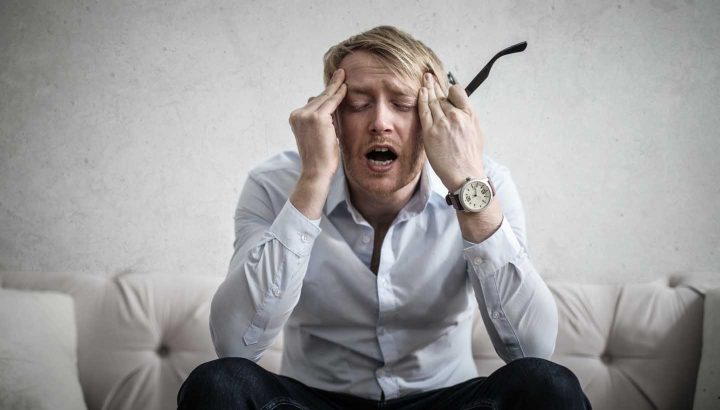
Tension headaches can be caused by stress-induced insomnia / Photo by Andrea Piacquadio from Pexels

Stress-induced insomnia will increase your risk of developing chronic diseases. Heart disease, diabetes, premature aging and even an early death are just a few of the issues that could be caused by stress-induced insomnia. This type of insomnia can also cause people to eat more and gain weight, drink or take drugs and exercise less.

Those are all actions that cause negative consequences to our health. One of the most common risks of long-term, stress-induced insomnia is catching a common cold or any other virus coming around.

Weight gain can also be a health issue related to stress-induced insomnia. When stress hormones are released into the body, your preference for unhealthy foods containing sugar, fat and refined carbohydrates is increased.

If you haven’t had enough sleep, you get a double dose of stress hormones which can lead to binge eating. Seniors suffering from stress-induced insomnia may experience a slower healing process from medical procedures or surgeries.

If you don’t sleep well at night, you may be tense and feel back, shoulder and neck pain when you get up in the morning. Stress during the day at work or home may make the pain worse or cause inflammation that makes it more difficult to heal.

Treatments for Stress-Induced Insomnia

If there are worries that keep you awake at night, you need to start working on controlling your thoughts. Cognitive-behavioral therapy may have some interesting tools for you. One of these methods is thought challenging. If a negative thought comes to your mind, you simply challenge it. Is it really true? If not, just discard the thought that was coming to your mind.

Some people are getting all wrapped up about what may happen to them tomorrow. They tend to get worried about things that never may happen at all. Jesus gave some interesting counsel about that:

Therefore I tell you, do not worry about your life, what you will eat or drink, or about your body, what you will wear. Isn’t there more to life than food and more to the body than clothing? Look at the birds in the sky: They do not sow, or reap, or gather into barns, yet your heavenly Father feeds them. Aren’t you more valuable than they are? And which of you by worrying can add even one hour to his life? … So then, do not worry about tomorrow, for tomorrow will worry about itself.  Today has enough trouble of its own.

Matthew 6:25-27 & 34

There are cases you need to make provision for something, and if it is for a good reason, go ahead and do what needs to be done. But to worry about something that probably never happens, or when it really happens you cannot change it, does not make any sense. If you believe in God, the best thing to do is to turn over your problems simply to Him, because He is able to take care of it all. And simply stop worrying, because it is probably not going to help you in any way.

You can find peace of mind by committing yourself to God in prayer. In order to do that, speak to God like a friend. Present him your worries, your struggles and your cares. Be honest. Tell whatever is on your heart. There is nothing too great for Him to carry, and nothing too small for Him to note. The more you are able to honestly express, the more you will be able to let things go.

Be confident! After having done your part, commit yourself into His hands, and accept whatever the outcome may be. We can conquer the stressors around us through the power that God is giving to us.

If you still have trouble falling asleep you can try a relaxing tea at night. Valerian and Passionflower are some herbs that can help you fall asleep easier.

A relaxing tea can help to fall asleep. Photo by Mareefe from Pexels

Sleep studies are done if nothing seems to help your insomnia or control your stress that’s keeping you awake at night. You’ll spend the night at a sleep center and during that time, your breathing, heart and brain waves and eye and body movement will be monitored.

If you’ve tried everything else but just can’t seem to get a good night’s sleep you may need to resort to meds for a short period, because the side effects of lacking a good night’s sleep are various. Just work on resolving quickly the underlying problems that caused your insomnia, so that you do not create a dependency on those medications.

Prevention Techniques for Stress-Induced Insomnia

After you get into the vicious cycle of stress-induced insomnia, you may have a long road to travel before you get back to a normal sleep pattern. The best thing you can do for yourself and your health is to prevent it from happening. But even if you are in the vicious cycle already, taking care of those basic measures will be fundamental to improve your quality of sleep.

One thing you can do if you suspect that the stress-related insomnia is caused by work is to set boundaries such as letting you spend time with family or relaxing in the evening without answering calls or emails.

Don’t get roped into so many requests that you can’t handle them all without acute stress. Just say no to the ones that aren’t that critical. Don’t check your email every few minutes. Designate a time during the day and let it go in the evening so your distractions are lessened.

Schedule the things you like to do in the evening hours. Other requests from friends or organizations should be secondary to what means the most to you and how you can unwind in the evening.

When you are at home and relaxing before bedtime, put your cellphone away. Take time to relax or converse without distractions – including the television. After you watch a program, turn off the television and avoid watching it just before bedtime or especially in the bedroom after you go to bed.

News is stressful to watch any time during the day, so limit what you watch that makes you stressful to 30 minutes or less per day. The same with your computer – don’t have it on and blinking at you when you’re trying to relax. Allow for no screen time for an hour before going to bed, be it computer, cell phone or TV.

During the daytime hours it’s important to stay active. Exercise helps to reduce stress so it doesn’t bother you at bedtime and promotes a great night’s sleep. You’ll also want to plan the bedtime hours to be consistent from one day to the next – even on weekends when possible.

Limit caffeine or alcohol and kick the smoking habit, if necessary. These substances can make your nerves jittery at bedtime and keep you from getting the required amount of sleep.

A bedtime ritual can help over time to relax your body and mind and ready it for a good night’s sleep. A warm bath, soft music or a few minutes of reading can go a long way to calm nerves and make you sleepy. Deep breathing exercises and progressive muscle relaxation may help you to relax. Make it a habit to commit yourself to God in prayer.

A relaxing bath can help wind down after a busy day. Photo by Craig Adderley from Pexels

When insomnia makes it difficult for you to function during the daytime hours, it’s best to see your doctor. A sleep disorder of any time may need special treatment other than the type you purchase over the counter.

You should be as committed to getting the full amount of restful sleep you need as much as you are to a healthy diet and exercise to keep your body in shape. You could suffer a poor quality of life for an extended period of time unless you get the stress – and the sleep problems under control. It is true especially with stress control: A healthy sleep is the best preparation to face the problems of tomorrow.

Do you want to understand how to cope with Stress in an all inclusive approach? Learn how to combat stress, mentally, physically, emotionally and strategically in your life. Download the Ten Minute Guide to Stress Control and start today to develop proper coping skills for your stress.

Do you need a guide to help you understand how to cope with Stress in an all inclusive approach? Learn how to combat stress, mentally, physically, emotionally and strategically in your life.

Get Me the Guide

Filed Under: Healthy Lifestyle, Sleep

Understanding Your Stress Hormones

October 11, 2020 by Martin Neumann

Understanding Your Stress Hormones

Did you ever face a doberman and you were not sure whether he is going to eat you? You felt your heart pounding? Or were you ever trapped in a traffic jam on the way to the airport, and no way to get there in time? I guess you felt the effects of stress hormones in your life. What are these hormones, and what are they doing in your life?

Understanding Your Stress Hormones

Biologically, stress is a healthy and normal response to any ‘stressor’. The purpose of stress is to prime our body for action in the face of a physical threat. This is called the “fight or flight” response. If you sit in your living room and a tiger walks in the door, how do you react? Well, your brain and your body needs to work overtime, to figure out an escape route for flight, or get prepared for a fight, and either way you definitely will need some extra energy for that. At this moment, the body releases a number of hormones such as adrenaline, norepinephrine, dopamine and cortisol. These chemicals in turn trigger our bodies to reduce our routine functions (such as our immunity and digestive system) and direct the blood to our brains and muscles. Meanwhile, the neurotransmitters will increase focus, awareness and bring on feelings of anxiety and perception of danger. Our heart rates also increase and ultimately, we end up far more on-edge and ‘wired’. Even our feeling of pain is reduced and our blood thickens to encourage clotting in case of injury. All this is involved in what we know as the ‘fight or flight’ response.

Adrenaline, along with norepinephrine are the hormones which are largely responsible for the immediate reactions we feel when stressed. Imagine you’re trying to change lanes in your car. Suddenly, from your blind spot, comes a car racing at high speed. You return to your original lane and your heart is pounding. Your muscles are tense, you’re breathing faster, you may start sweating. That’s adrenaline.

Cortisol and Chronic Stress

Cortisol on the other hand takes a few minutes to kick in, and helps to maintain a healthy balance while you are resolving your stress mission. One major function is providing energy by stimulating several catabolic reactions, that are transforming protein and fat into energy. It controls the release or action of a number of other hormones, and this way helps to maintain fluid balance and blood pressure, while regulating some body functions that aren’t crucial in the moment, like reproductive drive, immunity, digestion and growth. Some effects of cortisol can last even a couple of days.

Today’s stressors are normally not the tiger walking in the door, but an argument with a friend or bills that need to be paid will still trigger that same stress response. And anything that our mind perceives as a threat will be a stressor, like angry bosses, empty bank accounts, upset partners, deadlines at work, and public speaking appointments.

And this is where the problem comes in. The body´s stress response is very adequate for an acute physical stressor, because it allows us to run faster, to spot danger, and to fight when needed. Once the danger goes away, our parasympathetic nervous system would kick in putting us back into the ‘rest and digest’ state, and our body would recover.

But when your stressor is something chronic and abstract, like the conflicts in your team, or the debt that doesn’t just go away, it means you’re constantly in an alert state, with a constantly elevated level of cortisol. Too much cortisol can suppress the immune system, increase blood pressure and sugar, decrease libido, produce acne, cause learning difficulties, lapse of memory, loss of muscle mass, increased obesity and much more.

When we reach a point of continuous chronic stress, the glands producing all those secondary hormones are now going on strike, leading to a condition called glucocorticoid resistance. That means cortisol remains to be elevated, but our cortisol receptors and hormone glands become overwhelmed and resistant to its effects. As a result, the stress recuperation is not taking place anymore.

Cortisol and Immunity

One major problem of cortisol resistance is the depression of the immune system.A particular research study published in the Proceedings of the National Academy of Sciences((Sheldon Cohen et.al. Chronic stress, glucocorticoid receptor resistance, inflammation, and disease risk. Proc Natl Acad Sci U S A. 2012 Apr 17;109(16):5995-9.)) had two objectives.

The first one was to determine whether stress can cause cortisol resistance while the second objective was to determine whether cortisol resistance increases a person’s risk of acquiring an infection such as a common cold. 

The study had 276 healthy volunteers whose levels of stress, BMI, race, age, sex and glucocorticoid resistance were thoroughly assessed at the start of the research.

The volunteers were exposed to rhinovirus (i.e. the kind of virus that causes common colds), quarantined and observed for five days.

At the end of the study, researchers found that those volunteers who had recent exposure to an event that contributes to long-term stress developed glucocorticoid resistance which also put them at higher risk of developing a common cold.

Another study was conducted which was aimed at determining whether cortisol resistance could cause increased levels of inflammation. This time 79 volunteers had virus exposure and were monitored for five days. The results showed that those volunteers who were found to have glucocorticoid resistance had more proinflammatory cytokines, which promote systemic inflammation. Chronic stress definitely puts your immune system at risk.

Controlling Cortisol Levels

We see that reducing cortisol level will be an important goal in stress control. Now we can take a two-pronged approach to reducing cortisol levels:

  • Firstly – by reducing the stress that is the root cause of the problem, either by eliminating the stressors, or by improving the ability to cope with them. A reduced emotional response to any stressor will mean a reduced chemical reaction and less cortisol release.
  • Secondly – there are known lifestyle and dietary ‘hacks’ that assist the mind and body to reduce the release of cortisol into the system. Exercise, sleep, a light nutrition with lots of vitamin C and Omega 3 are some of the factors that can help reduce cortisol. Some bad habits can though increase cortisol production, like the consumption of caffeine, alcohol or an excessive amount of sugar.

Key is to learn how to deal effectively with chronic stress, which is responsible for high cortisol levels. If you want some more practical tips on how to effectively deal with stressors, and which lifestyle factors can help you reduce cortisol, get The 10 Minute Guide to Stress Management.

Filed Under: Physiology

Is Stress Wrecking Your Life?

September 11, 2020 by Martin Neumann

Is Stress Wrecking Your Life?

Stress ruins your quality of life. It can steal your physical health, rob you of mental well-being, ruin your relationships and cause problems at work. But it doesn’t have to be in control of your world every day.

You have to first be willing to have awareness as to the level of impairment stress is causing you. Once you’re honest about that, you can pinpoint strategies that give you back the reins of your personal satisfaction.

Is Stress Wrecking Your Life?

Do You Constantly Feel Like You Just Want to Get Away?

Stress can make you feel an assortment of emotions. It can hammer at you until you feel like you just can’t take it anymore. At first, the desire to get away might ebb and flow, but eventually, it feels like there’s always this craving to escape.

This can happen when you have situations at work that are draining your energy. You’re tired of the whiny colleagues and the demanding boss. You can’t take another second of trying to balance a never-ending workload in a place where you’re overworked and underpaid.

To add insult to injury, you know what you do isn’t appreciated. You feel like you’re just a cog in the machinery. Even worse, things at home aren’t much better. There’s always a bill to pay – always something going on so you can’t relax.

Your to-do list seems like it grows by the second and you just can’t catch a break. No one is listening to you, so you’ve been keeping everything inside and now you want to isolate yourself from everyone and everything causing chaos in your life.

Sometimes, you feel like you can’t even stand to be alone. You’re not happy with yourself and you want to run away from your job, your home life and from who you are as a person.

Stress can cause people to experience an intense feeling of being at their breaking point. It can come on slowly or it can build over time. That’s because you’re only built to handle so much stress.

Just like a pot that’s cooking on the stove burner, too much heat is going to cause you to eventually boil over. When you reach that point, it’s because the stress hormones have been cooking within you and causing mental and physical reactions.

This is your body’s normal response and it’s not designed to harm you. Feeling like you just want to get away is your body’s way of saying, “Pay attention. Something is going on here and it’s wrong. Get away from the danger.”

You get that signal and it can be confusing if you don’t realize that this signal is a stress-based way of trying to help save your mental and physical well-being. The more stress that you’re under or have been under for awhile, the greater the desire will be to just run away as far and fast as you can.

When you feel like this, consider it to be a wake up call. Your body wants you to know that if you don’t take action, you’re going to eventually break. The stress load that you’ve been carrying is too heavy for you to bear and your body wants you to figure out a way to give it relief.

Are You Taking It Out on Others?

Stress can wreck your life when it spills out on those around you. When you feel that internal pressure building up and your coworker comes to you with the same problem you’ve already tried to help them with and they didn’t listen, you might find that your response is to snap at them.

If they reach out to you by email, you might end up answering them tersely, clearly letting them know that you’re irate. Instead of going out with your coworkers like you used to, you avoid them after hours.

You’re angry or sad and instead of understanding that what you feel has nothing to do with the other person, you lash out at them. This stress spillover can cause you to snap at your spouse.

You’ll find that their actions bother you and stress can cause you to take it personally. Stress can also blind you to what’s actually going on. You might find dozens of ways that your spouse is suddenly at fault and blame what you’re feeling and going through on the one that you love.

You might yell, argue or give your spouse the cold shoulder. You shut yourself off from them and keep your distance. The tension in the relationship just makes the stress you feel get worse.

If you have kids, you might take your stress out on them. Instead of playing a game with the kids or being present in their lives when you get home, you just want them to go play on their own and be quiet so you can unwind.

Where before, you thought their antics were cute and funny, now you find them irritating. You might go into a room alone and turn on the TV and ignore your kids altogether, pushing the care of them off onto your spouse.

Wanting to watch TV alone can be a sign that stress is affecting your social life.

If the stress that you’re dealing with is related to your finances or your health, this can exacerbate the tension between adults in the house. Other family members can also be a target of stress.

You might be trying to juggle too many responsibilities. There’s so much to do that you feel like you’re not even making a dent and the next thing you know, your parents want you to do something or a sibling asks you for help.

Maybe one of them drops by just to chat when spending time with someone is the last thing you want to face. You might say something that you regret because you take your frustration out on them.

The stress that you’re under has sent you beyond the limit of what you’re capable of holding in and you act in a way that later you feel guilty about. This causes even more stress and when you’re around them at all, you can tell they were hurt by what you said or did. As a result, this stress might make you start avoiding your family altogether.

Are You So Frazzled You Can’t See a Way Out?

When stress frazzles you, it can make you think there’s no way out. That’s because it’s overwhelming you. The stress that you’re under feels as if you’re stuck in the middle of the ocean and you keep swimming and swimming, but the safety of land isn’t anywhere on the horizon.

A lot of people give up because being under too much stress can incapacitate you to the point that you don’t even know what to do, much less have the ability to take any action.

You do your best to juggle everything in your life. Trying to keep up with work and home responsibilities and take care of everyone in your life is draining. When the stress frazzles you, it can start to feel like everything is just hopeless.

Maybe you don’t try to change anything because you think, “What’s the use?” You believe that the change won’t last, that everything will go back to the way that it was anyway.

Stress frazzle is when you get to the place in your life where you’re mentally and physically exhausted. Things start to slide at this point. You lose your concentration at work.

You get behind. You snap at your coworkers or tell off your boss. At home, you argue with your spouse and withdraw from your kids. You avoid your responsibilities because you can’t drum up the energy to do anything.

You’ve basically decided to stop because everything looks like it’s a dead end. There’s no use trying to decide how you can change things. When you reach this stage, it’s easy to believe that whatever has caused you stress is unfixable.

This is when feelings of anger or anxiety can turn into depression. But keep in mind that just because things look and feel hopeless doesn’t meant that they actually are. It only means that what you’ve been doing, how you’ve been living and letting the stress accumulate just isn’t working for you any longer.

There are solutions available and you can stop the stress from wrecking your life. You don’t have to put up with feeling like everything is hopeless. Some of the solutions that you can find can offer you relief right now without you having to wait weeks or months to feel better.

But you have to take that first step and realize that you can’t keep going on the way things are. You need help to stop stress from causing any additional damage and you need to heal from the damage that it’s already caused.

Are You Starting to See Physical Symptoms?

Stress is something that can be pretty sneaky. It’s not like it announces its presence with one glaring symptom. Instead, stress spreads the symptoms around. So you could have a variety of symptoms, all seemingly unrelated when they actually all point back to stress. 

Headaches are a common occurrence in some people and they’re also one of the most often overlooked signs of stress. A headache every now and then is normal. Recurring headaches are not.

Headaches can be caused by stress

These are tension headaches and the stress can reach a point so that they’re so bad, they wake you from a sound sleep. Some people develop migraines with stress. These are usually targeted areas of pain in the head and you may also get nauseous at the same time.

You can experience both light and noise sensitivity as well. Experiencing aches and pains throughout the body is a sign that stress is starting to manifest in physical symptoms.

You can feel muscle or joint pain. When you get stressed, your body tenses. This is a normal response and with healthy stress, the tension dissipates. But constant stress causes long lasting tension in the muscles.

This leads to painful shoulders, neckaches, backaches and more. Digestive issues can be stress related. You can have stomach cramps and feel like you’re going to be sick to your stomach.

You can also develop trouble going to the bathroom or have bouts of diarrhea. You might have a loss of appetite or a raging hunger. Stress is known to cause insomnia. The anxiety and worry keeps you from being able to sleep and when you don’t sleep well, that can acerbate other stress related physical symptoms like muscle aches and headaches.

Stress can also cause chest pain and tachycardia. Your heart might beat so hard that you’re sure something is wrong. Some people have gone to the emergency room certain that they were having a heart attack, but it turned out their symptoms were caused by stress.

The thing about stress manifesting in physical problems is that by the time your stress reaches this point, it’s serious and you need to do something about it to protect your health.

Has Stress Become Your Norm?

Stress is different for everyone. What’s stressful to you might not bother someone else and vice versa. The reason stress doesn’t create a one-size-fits-all reaction in everyone is because the stressor isn’t the real problem.

Many people have trouble at work or home. There are bills and responsibilities all around and issues that create emotional and mental havoc. So it’s not what creates the stress that affects you – it’s the lack of coping skills.

When a person is unable to deal with the stressor or the results of the stressor, then they push it aside and don’t do anything with it. It doesn’t go anywhere, but they learn to live with the stress the situation causes them.

This happens because sometimes trying to fix the stress is uncomfortable. It might involve digging into things that you don’t want to face. But not facing stress is like having a huge stain in the middle of your living room floor.

This stain has been there in your home for a long time. You don’t know exactly when the stain first occurred and maybe you don’t even know what caused it, but it’s there and it’s not going anywhere. It used to bother you to see the stain, but over time, you’ve learned to turn a blind eye toward it. You’ve gotten used to and it’s now your normal. You’ve learned how to accept it.

The same can happen with stress. You might not even realize that you’ve made stress a normal part of your life that you simply accept. When stress has become your norm, it means that you’ve learned how to adapt. You’ve altered some things about your life in order to make it as comfortable as possible to live with that stress.

Below the surface, this situation could be destroying your health. Stress wrecks your immune system. Plus, people who are stressed are two times more likely to have a heart attack than people who created coping skills for their stress.

Planning your day can help get stress under control

Your physical and mental health cannot live with stress, no matter how well you think you’re surviving in spite of it. There are many options that you can choose so that this chaos you’ve been living with ends and you get your serene life back. There is hope that you can find peace and freedom from stress – you just have to be willing to seek it out.

If you need some tips how you can get stress under control, download the Ten Minute Guide to Stress Control and start today to develop proper coping skills for your stress.

Filed Under: Results of Stress, Stress Habits

« Previous Page
Next Page »

Primary Sidebar

Copyright © 2026 Stress Management Tools · Log in